
Micromotor Product Site


Exporting to Europe, USA, and Asia.
Dealers available in North America, Europe, and Asia.
In this column, engineers from C.I. Takiron. share their expert knowledge on micromotors (coreless motors, brushless motors, and gearheads). We hope you find this information useful when selecting motors for a wide range of applications, including medical devices, industrial tools, and optical equipment.
This guide provides a detailed explanation of the technical considerations for motor selection, aimed at product development engineers and design professionals. It addresses common questions such as, “I don’t know which motor to choose,” and “I want to understand the difference between coreless and brushless motors.”

This article was created by translating a Japanese article. In offices, factories, research facilities, and other settings, it’s important not only to prevent unauthorized entry but also to properly manage “who entered, when, and where.” However, relying solely on physical keys requires significant effort—not only to prevent loss, duplication, and forgetting to lock doors, but also to manage access for each user. Electric locks, which use electricity to control locking and unlocking, help solve these challenges. In this article, we’ll provide an easy-to-understand explanation of the types of electric locks and the benefits of installing them, as well as the mechanism of motorized locks—which offer high security—and key points to consider when selecting a system. Supervised by: C.I….

An actuator is a drive device that converts energy—such as electrical or pneumatic power—into mechanical motion to operate equipment. It is used not only in factory automation systems but also for locking and unlocking automatic doors and security doors. In security doors, actuators work in conjunction with access control systems to operate the locking mechanism based on authentication results. However, selecting an actuator without understanding its types and mechanisms may result in insufficient force or durability. In this article, we will explain the mechanisms and types of actuators, their main applications, how they are used in security doors, and key points to consider when selecting them. Supervised by: C.I. TAKIRON Corporation Electronic Devices Sales Group This article has been…

A motor’s power consumption affects not only electricity costs but also the heat generation by the equipment and battery runtime. However, many people likely wonder, “How is it calculated?” or “Why does power consumption vary even among motors with the same output?” In reality, power consumption varies depending on various factors, including voltage, electric current, load, motor efficiency, and operating conditions. In this article, we’ll explain the factors that determine a motor’s power consumption, how to calculate it, and energy saving measures, as well as how to approach power consumption for power tools and key points for motor selection. Supervised by: C.I. TAKIRON Corporation Electronic Devices Sales Group This article has been supervised based on the advanced technical expertise…

A servo motor is a type of motor capable of performing high-precision motor control for position, speed, and angle. It is used in a wide range of applications, from industrial robots and machine tools to hobbyist projects such as radio-controlled vehicles and robot kits. However, many people likely have questions such as, “How are they different from ordinary motors?” “Why can they move so precisely?” and “How do I choose the right product for my application?” To use them effectively, it’s important to understand their basic mechanisms and characteristics and to identify the performance required for your specific application. In this article, we’ll provide a clear and easy-to-understand explanation of how servo motors work, their features, main applications, and key…
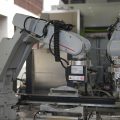
A hollow motor is a motor with a through-hole in the center of its rotating shaft. Since cables, piping, shafts, and other components can be routed through the hollow section, it improves wiring and piping routing in confined spaces, leading to compact motors and greater design flexibility. When performing motor selection, it is important to consider not only the hollow diameter but also the required torque, rotational speed, size, and other factors based on the equipment’s specifications. In this article, we provide an easy-to-understand explanation of the structure of hollow motors, their differences from standard motors, their benefits and precautions, main applications, and key points to check during the selection process. Supervised by: C.I. TAKIRON Corporation Electronic Devices…

Brushless motors are classified into inner-rotor and outer-rotor types based on the rotor’s position. Since structural differences affect torque, responsiveness, rotational stability, and heat dissipation, selecting a type that doesn’t match the application may prevent the motor from delivering the desired performance. When performing motor selection, it is important to understand the characteristics of each type and compare them based on required speed, torque, installation space, and other factors. In this article, we’ll provide a clear explanation of the structural and performance differences between inner-rotor and outer-rotor motors, their pros and cons, main applications, and how to choose the right one. Supervised by: C.I. TAKIRON Corporation Electronic Devices Sales Group This article has been supervised based on the…
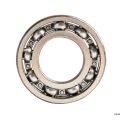
Bearings, used in motors and industrial machinery, are critical components that support rotating shafts while minimizing friction to ensure smooth operation. If the wrong type of bearing is selected or it is not chosen properly, vibration, heat generation, and wear can occur, potentially leading to reduced machine performance and a shorter lifespan. There are various types of bearings, and there are numerous factors to consider, such as structure, load direction, and rotational speed. In this article, we’ll provide an easy-to-understand explanation of everything from the basic mechanisms and types of bearings to how to select them, how to assess their lifespan, and maintenance methods. Supervised by: C.I. TAKIRON Corporation Electronic Devices Sales Group This article has been supervised…

In the manufacturing industry, against a backdrop of labor shortages and a decline in the number of skilled workers, there is a growing need to address labor-saving measures and automation. Among these solutions, “collaborative robots”—designed to work alongside humans in the same workspace—are attracting particular attention. They are easy to integrate into existing processes while ensuring safety, and they help support high-mix, low-volume production and reduce the workload on workers. On the other hand, there are several key points to verify before implementation, such as speed, payload capacity, and safety measures. In this article, we provide an easy-to-understand explanation of how collaborative robots work, how they differ from Industrial robots, their advantages and disadvantages, their main applications, and…
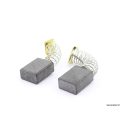
Motor carbon brushes are components that transmit electric current through sliding contact with the commutator (or slip ring); in DC motors, they work in conjunction with the commutator to maintain rotation. They are used in a wide range of equipment, from industrial motors to power tools. If carbon brushes wear out or commutation becomes unstable, it can lead to sparking or damage to the commutator, making them critical from the perspective of maintenance and downtime risks. Carbon brush materials include electrographite, natural graphite, and metal graphite, among others, and selecting the appropriate material based on the application and operating conditions is essential. Understanding how to assess lifespan and replacement timing based on brush wear, as well as how to diagnose…
While a motor is rotating, the torque it outputs is not entirely constant. Instantaneous torque undergoes slight periodic fluctuations, manifesting as variations in rotational force. These periodic torque fluctuations are known as “torque ripple.” Significant torque ripple adversely affects equipment performance, leading to vibration, noise, reduced positioning accuracy, and degraded controllability.This is a technical challenge that cannot be ignored, particularly in fields where smooth operation and precision are directly linked to quality, such as medical equipment, optical equipment, and industrial robots. In this article, after clarifying the basic meaning of torque ripple and its difference from cogging torque, we will explain the main causes of its occurrence and methods for reducing it from the perspectives of design, control, and motor…