
Micromotor Product Site


Exporting to Europe, USA, and Asia.
Dealers available in North America, Europe, and Asia.
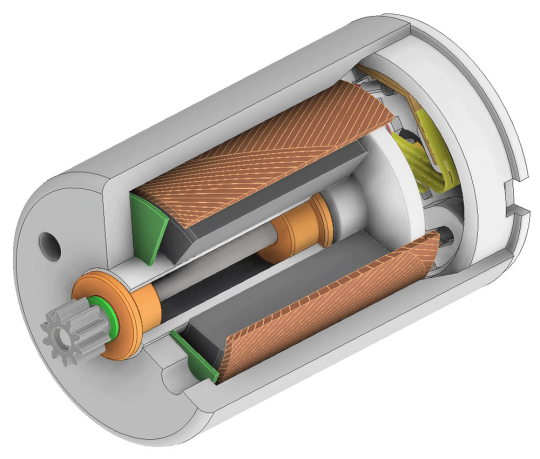
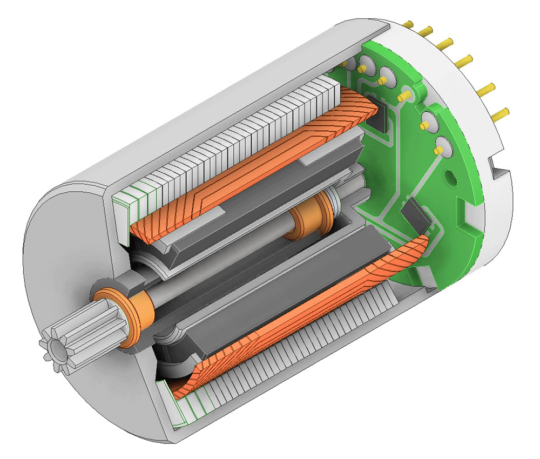
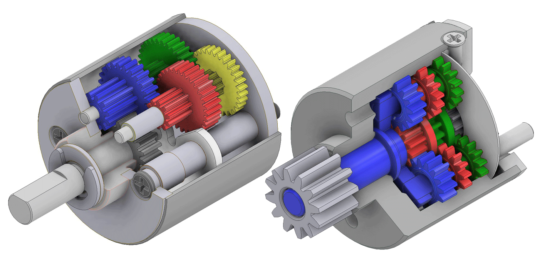
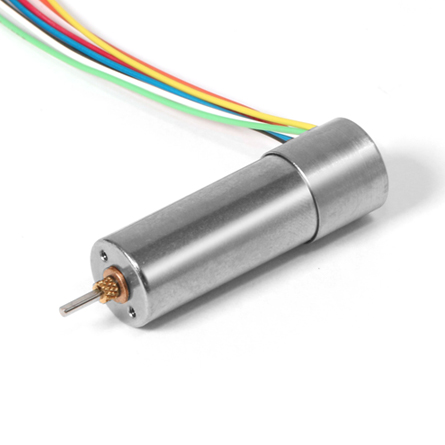

Coreless motors are used in the medical field, where high reliability is required, because they are cogging-free and highly responsive.
Cogging-less, Response, Reliability
View this Application Example
Utilizing its compact, lightweight design and low power consumption, it is incorporated into handheld devices to drive machinery.
Impact, Consumption, Small
View this Application Example
It is used in high-performance cameras that require high responsiveness, taking advantage of its excellent mobility.
Response, Cogging-less, Compact
View this Application Example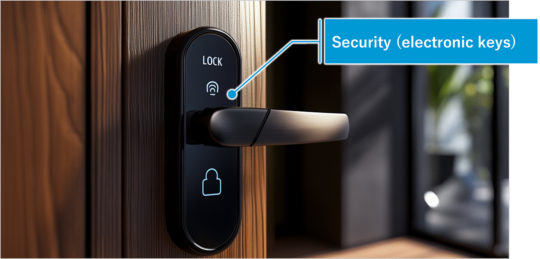
The small size and ability to operate at low voltage make it suitable for use in security doors (Electronic key).
Low voltage start, Small, Long life
View this Application Example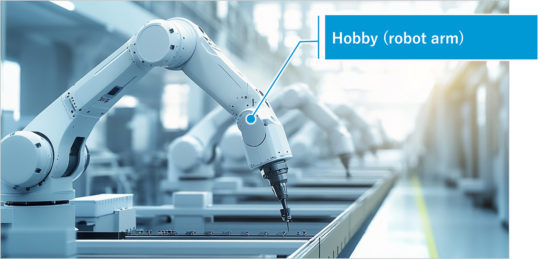
Due to its long lifespan, the motor is used in situations where stable output is required.
Long life, Low vibration, Customization
View this Application Example
Due to its compact and lightweight design, it is installed in portable devices and used not only for driving purposes but also for vibration alerts.
Explosion-proof, Lightweight, Current consumption
View this Application Example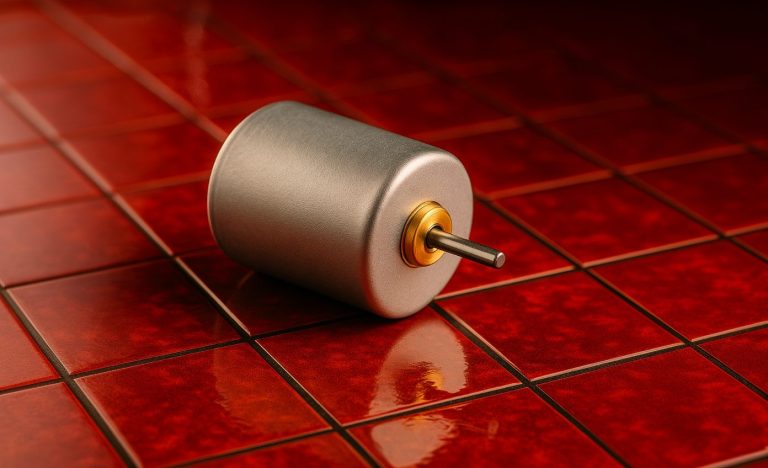
Assumed Applications
Assumed Applications

Assumed Applications
 STEP 01
 Please consult about the desired product specifications and characteristics through the inquiry form on our company website.
Although the required request items are listed below, we will support you from the development stage even if you are unsure about the desired characteristics.
Please fill in the information to the extent you know on the inquiry page and contact us.
・Quantity, approximate price, launch timing
・Application, usage environment
・Motor type (coreless brush, coreless brushless, geared, with encoder)
・Motor diameter, length
・Voltage, starting torque, no-load speed
・Rated torque, rated speed
 STEP 02
 We will inquire about your specific requests via phone or web and conduct a detailed hearing.
The information gathered will be shared with our technical team, and we will evaluate whether we can develop a suitable product.
Even if it is challenging to develop a motor that fully meets your requirements, we will propose a feasible solution.
(Depending on your requirements, it may also be difficult to propose a solution.)
 STEP 03
 After you accept the technical documentation and the quotation, we will send the developed sample to you.
You will conduct testing and evaluation of the sample, and based on your feedback, we will make necessary improvements to finalize a product that meets your requirements.
 STEP 04
 After agreeing to the quotation and specification document for the mass-produced items, we will begin mass production of the products. We ensure strict quality control before delivering the products to you.
Even after delivery, we will assist not only with quality consultations but also with any new inquiries, aiming to build a long-term trust relationship.

C.I. Takiron Corporation leverages the quality control standards characteristic of Japanese manufacturers and the design expertise cultivated over many years to provide Micromotors that deliver high-precision and stable operation. Furthermore, the company is thoroughly committed to achieving low vibration and low noise, and its products are widely adopted in a variety of fields—such as the medical and industrial sectors—where quality and reliability are paramount.

With a diverse lineup that includes coreless, brushless, geared, and encoder-integrated motors, we can provide optimal solutions tailored to our customers’ specific applications and requirements. These motors offer an excellent balance of size, performance, and characteristics, contributing to both space-saving designs and enhanced functionality. We are also actively engaged in the development of new products, such as high-torque coreless motors and dynamos, to support the creation of next-generation equipment.

With our technical support system designed to cover everything from initial consultations to prototyping and mass production, we help our customers improve their development efficiency. We go beyond simply supplying parts; we contribute as a partner dedicated to enhancing the value of your products together. Furthermore, with a network of distributors across Europe and Asia, we have established a support system capable of responding quickly and attentively to requests from both within Japan and overseas.

As medical equipment continues to become smaller and more precise, the role played by the motors that drive it is growing year by year. Compact motors are now incorporated into many devices used in medical settings—such as dental treatment units, endoscopes, electronic pipettes, and surgical assistance robots—and serve as core components that support the functionality and performance of these devices.Motors incorporated into medical equipment tend to be subject to higher performance standards than general-purpose industrial motors. To achieve the operational precision required by the equipment, it is essential to select the optimal motor for the specific application—one that offers smooth rotation, low vibration, a long service life, and a compact design. In this article, we will explain the typical applications…
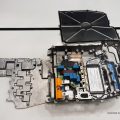
Inverters are power conversion devices used across a wide range of fields, from home appliances to Industrial equipment. They are recognized as a core technology supporting both daily life and industrial operations, enabling energy saving operation of air conditioners and refrigerators, motor control in factories, and smooth acceleration and deceleration in elevators. However, there are few opportunities to systematically understand the internal structure of these devices or how they interact with motors.In this article, we will explain everything step by step—from the basic definition and mechanism of inverters to their role in motor control, real-world application examples, and key points to keep in mind during implementation. We have organized the knowledge essential for design decisions for engineers involved in motor…
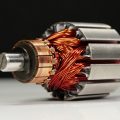
The number of poles in a motor is a basic specification indicating the number of magnetic poles formed inside the motor, and it is a parameter that influences rotational speed and torque characteristics. In the design and procurement of Micromotors, questions often arise regarding whether to choose a 2-pole or 4-pole motor, and how an increase in the number of poles affects performance.The number of poles is not a value determined in isolation; rather, the optimal solution is determined by balancing speed, torque, size, cost, and the technical requirements of each specific application. In this article, we will systematically cover the basics of motor pole count, its relationship to speed, and the approach to motor selection based on application. The…