
Micromotor Product Site


Exporting to Europe, USA, and Asia.
Dealers available in North America, Europe, and Asia.
In this column, engineers from C.I. Takiron. share their expert knowledge on micromotors (coreless motors, brushless motors, and gearheads). We hope you find this information useful when selecting motors for a wide range of applications, including medical devices, industrial tools, and optical equipment.
This guide provides a detailed explanation of the technical considerations for motor selection, aimed at product development engineers and design professionals. It addresses common questions such as, “I don’t know which motor to choose,” and “I want to understand the difference between coreless and brushless motors.”

The ability to accurately measure and control a motor’s rotational speed is critical, as it directly impacts equipment performance and stable operation (required specifications). “I want to know the formula for calculating rotational speed.” “I want to understand how voltage and torque affect rotational speed” “I want to explore methods for achieving precise speed control” To address these technical challenges, this article provides a technically grounded explanation—ranging from the basic calculation formula for DC motor rotational speed to the factors affecting rotational speed, how to interpret T-N characteristics (torque characteristics) and how to use PWM control and feedback control for practical speed control. We provide information that will be useful to engineers in fields where reducing speed fluctuations and maintaining…

As medical equipment continues to become smaller and more precise, the role played by the motors that drive it is growing year by year. Compact motors are now incorporated into many devices used in medical settings—such as dental treatment units, endoscopes, electronic pipettes, and surgical assistance robots—and serve as core components that support the functionality and performance of these devices.Motors incorporated into medical equipment tend to be subject to higher performance standards than general-purpose industrial motors. To achieve the operational precision required by the equipment, it is essential to select the optimal motor for the specific application—one that offers smooth rotation, low vibration, a long service life, and a compact design. In this article, we will explain the typical applications…

Inverters are power conversion devices used across a wide range of fields, from home appliances to Industrial equipment. They are recognized as a core technology supporting both daily life and industrial operations, enabling energy saving operation of air conditioners and refrigerators, motor control in factories, and smooth acceleration and deceleration in elevators. However, there are few opportunities to systematically understand the internal structure of these devices or how they interact with motors.In this article, we will explain everything step by step—from the basic definition and mechanism of inverters to their role in motor control, real-world application examples, and key points to keep in mind during implementation. We have organized the knowledge essential for design decisions for engineers involved in motor…
The number of poles in a motor is a basic specification indicating the number of magnetic poles formed inside the motor, and it is a parameter that influences rotational speed and torque characteristics. In the design and procurement of Micromotors, questions often arise regarding whether to choose a 2-pole or 4-pole motor, and how an increase in the number of poles affects performance.The number of poles is not a value determined in isolation; rather, the optimal solution is determined by balancing speed, torque, size, cost, and the technical requirements of each specific application. In this article, we will systematically cover the basics of motor pole count, its relationship to speed, and the approach to motor selection based on application. The…

In fields such as industrial equipment, medical equipment, and robotics, designs that balance miniaturization with the necessary torque are critical to product performance. Concerns such as “Can we increase the torque a little more while keeping the size the same?” and “We want to make the device smaller, but we’re worried about whether it can withstand the load” are recurring design challenges faced in development environments.In this article, we will provide a comprehensive explanation, covering everything from the basic mechanisms of compact high-torque Torque motors to typical methods for increasing torque, their main applications, and key points to consider during the selection process. We have also compiled frequently asked questions from the design field in a Q&A format. We hope…

In medical pumps used in clinical settings—such as infusion pumps, insulin pumps, and hemodialysis machines—motors that deliver medications and blood with precision are essential. Since even the slightest deviation in flow rate directly affects patient safety, these motors must offer high precision and reliability.Furthermore, with the spread of home healthcare and growing demand for portable devices, requirements for miniaturization, quiet operation, and energy efficiency are increasing year by year. On the other hand, as miniaturization progresses, trade-offs in noise and performance are more likely to occur, making motor selection a critical factor that determines the overall performance of medical equipment. In this article, we will first outline the role of motors in medical pumps and the performance requirements they must…
When installing a motor into equipment, an inappropriate shaft mounting method can result in torque transmission loss due to slippage and abnormal vibration. In the worst-case scenario, there is a risk of accidents caused by parts falling off or equipment damage. In medical equipment and industrial precision equipment, even the slightest mounting defect can affect product performance and safety; therefore, it is essential to select the correct mounting method based on the shaft shape. Three main types of motor shafts are used: D-cut shafts, round shafts, and keyway shafts. Each differs in the fastening methods that can be applied, the torque they can transmit, and the difficulty of machining. This article explains the characteristics of each shaft shape and typical…

Motors are devices that convert electrical energy into mechanical energy, and they are essential components in the development of B2B products such as medical equipment, industrial robots, and optical equipment. However, many developers likely face technical challenges such as “Which motor is best suited for medical device applications?”, “Which type should be chosen to minimize vibration and noise?”, and “How can we achieve both miniaturization and high torque?” This article explains everything from the basic principle of motor operation to specific application examples by industry sector, as well as the optimal motor selection criteria for each application. We will also introduce, with real-world examples, how Coreless motors can solve challenges in the development of medical equipment and precision equipment, where…
In the design and maintenance of mechanical components, “wear” significantly affects component lifespan and product quality. Wear is the phenomenon in which a surface is gradually worn down due to contact and relative motion between solids. In mechanisms involving friction—such as drive components and bearings—measures to counteract wear are essential. The progression of wear causes dimensional changes and performance degradation in parts, and ultimately poses a risk of affecting the reliability of the entire equipment. There are several types of wear, each with different mechanisms of occurrence and corresponding countermeasures. In this article, we will explain the basic definition of wear, the mechanisms behind its occurrence, typical forms of wear and their characteristics, and methods to suppress wear. We hope…
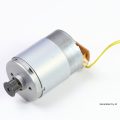
DC motors are motors that use a DC power supply to generate rotational motion.They convert electrical energy into mechanical energy and are used in a wide range of fields, from industrial equipment to medical equipment and automotive electrical components. DC motors come in brushed and Brushless DC Motors varieties, each with different structures and characteristics. Brushed DC motors require no drive circuit and are low-cost, while Brushless DC Motors offer a long service life and excellent quiet operation; they can be selected based on the application and required performance. Furthermore, a clear understanding of the differences between DC motors and AC motors—which operate on alternating current—will help you with motor selection for your application. While DC motors offer greater flexibility…