
Micromotor Product Site


Exporting to Europe, USA, and Asia.
Dealers available in North America, Europe, and Asia.
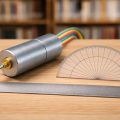
In manufacturing sites and industrial equipment, precise motor control and speed management are essential elements that determine product quality. Crucial to achieving this is a position sensor called encoders. Encoders measure rotational angles or linear displacement with high precision and output this data as electrical signals, enabling precise control of motors and actuators. This article explains the basic mechanism, types, and selection criteria of encoders from an engineer's perspective, providing information useful for your equipment development and product improvement. Development engineers seeking to achieve high-precision position control should read on. ENCODERS FUNDAMENTALS AND ROLE: THE IMPORTANCE OF POSITION DETECTION IN MOTOR CONTROL Encoders are sensors that detect a machine's rotational angle or displacement distance, converting it into digital or...

Brushed motors are widely adopted across diverse fields such as industrial equipment, medical equipment, and security equipment. Their simple structure and ease of control make them a preferred choice for many product development engineers. However, many engineers also have specific needs: "I want to accurately understand the operating principle of a brushed motor," "I want to perform motor selection for my company's products," or "I want to clearly grasp the differences between brushed motors and Brushless motors." This article comprehensively explains Brushed motors from an engineer's perspective, covering everything from their basic structure and rotation principle to their power generation principle and practical characteristics. We also introduce selection points useful for product development, suitable for everyone from new engineers to...

Motors are devices that convert electrical energy into mechanical rotational motion. They are utilized across a wide range of fields, including medical equipment, industrial tools, optical equipment, and security equipment. Correctly understanding the principle of motor operation is essential for product development and equipment selection. This article provides a detailed explanation, accessible to both new engineers and seasoned professionals, covering everything from the fundamental principles of motor operation to the differences between DC motors and AC motors, and the structural variations between Coreless motors and Iron-core motors. If you are struggling with motor selection or seeking higher precision, smaller size, or more energy-efficient motors, please read on to the end. BASIC PRINCIPLES AND ROTATION MECHANISM OF MOTORS The mechanism...

In industrial equipment drive systems, "torque" is a critical factor determining product performance. Particularly in applications requiring stable high torque even at low speeds—such as winding devices, tension control, and pressure-applying operations—appropriate motor selection is essential. Torque motors, characterized by high starting torque and a drooping characteristic, leverage their torque-to-speed ratio characteristics to find applications across a wide range of industrial fields. This article provides a detailed explanation of the basic principles, characteristics, and primary applications of torque motors, while also introducing key points for motor selection that deliver high torque. Engineers facing challenges in motor selection will find this information useful. *Please note that torque motors are not products handled by our company. WHAT ARE TORQUE MOTORS? UNDERSTANDING...

Brushless DC motors are increasingly adopted across diverse fields, from industrial equipment to medical equipment. By resolving issues inherent in conventional brushed DC motors and achieving superior characteristics like long service life, high efficiency, and low noise, they are gaining significant attention in product development. However, many engineers likely feel uncertain about the structure and operating principles of Brushless DC motors or want to understand their actual benefits and suitable applications. This article systematically explains the essential information engineers need to know, covering the basic structure and operating principles of Brushless DC motors, their four main benefits, and specific applications. We hope you find it useful as a reference for motor selection. WHAT ARE BRUSHLESS DC MOTORS? BASIC STRUCTURE...

In the development of industrial equipment, medical devices, and precision instruments, motor selection is a critical factor that determines product performance. In recent years, interest in high-efficiency, long-life Brushless motors has grown, leading to an increasing number of engineers to consider replacing conventional Brushed motors with it. However, determining the specific differences from Brushed motors and assessing applicability to their products requires technical justification and data. This article will seek to explain the basic structure and operating principles of Brushless motors to the detailed comparisons with Brushed motors, their advantages and disadvantages for different applications, and selection points for each industrial sector. The technical information necessary has been organized to assist the reader in making a better-informed choice. BASIC...
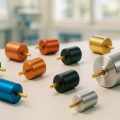
Selecting the appropriate motor is a critical factor that determines product performance in product development requiring precise control, from medical devices to industrial equipment. However, many engineers likely struggle with questions like "What types of motors are available?" and "Which motor is best suited for our specific application?" Motors are classified into various types based on their operating principles and structures, each possessing distinct characteristics and suitable applications. This article provides a clear overview of the main types of small precision motors and key selection criteria, introduces key selection points, and clarifies specialized terminology used in catalogs. This article also introduces the high-performance small motor products offered by C.I. Takiron Corporation, so please consider them. MAJOR TYPES AND CHARACTERISTICS...

Small motors play a vital role across diverse fields, from life-critical medical settings to everyday products, including medical devices, industrial equipment, optical instruments, and security systems. In today's era of increasingly compact and high-performance products, demand for small motors capable of delivering high performance in limited spaces continues to grow. However, many development engineers face questions like "How should I select a small motor?" or "What specifications can solve the challenges in my product?" This article provides a detailed explanation, covering the fundamentals of small motors, their application-specific advantages, the characteristics of coreless and Brushless motors, and key selection criteria. We will also be introducing the high-quality small motor products offered by C.I. Takiron Corporation, and hope this article will...

In developing industrial equipment requiring precise control performance and high efficiency, motor selection is a decisive factor that determines product performance. In recent years, Coreless motors have gained attention in fields demanding miniaturization and high precision, such as medical devices, optical equipment, and security devices. With their unique structure lacking an iron core, Coreless motors achieve both smooth rotation and high-speed responsiveness—features that are difficult to achieve with conventional motors. This article provides a detailed explanation, covering everything from the basic mechanism of Coreless motors to their specific advantages in industrial applications and real-world use cases. It is highly recommended to utilize this information as a reference for motor selection in your product development. WHAT IS A CORELESS MOTOR?...
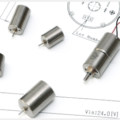
1. C.I. Takiron Corporation.'s Micromotors C.I. Takiron Corporation. with over 100 years of history as a comprehensive resin processing manufacturer, also develops and sells micromotors. Micromotors are small, precise electric motors that play important roles in various industries, including medical devices, robots, FA equipment, and cameras. Micromotors are indispensable for making our lives more convenient and safe. Here, we introduce the background of how C.I. Takiron Corporation. expanded its micromotor business. 2. Birth of the Micromotor Business (1989) In 1988, a salesperson expressed the desire to become a manufacturer that produces higher-priced finished products by applying magnets. In 1989, aiming for business diversification and downstream expansion, the micromotor business was started. 3. Growth Period and Global Expansion (1990s) In the...