


In industrial equipment drive systems, "torque" is a critical factor determining product performance. Particularly in applications requiring stable high torque even at low speeds—such as winding devices, tension control, and pressure-applying operations—appropriate motor selection is essential.
Torque motors, characterized by high starting torque and a drooping characteristic, leverage their torque-to-speed ratio characteristics to find applications across a wide range of industrial fields.
This article provides a detailed explanation of the basic principles, characteristics, and primary applications of torque motors, while also introducing key points for motor selection that deliver high torque. Engineers facing challenges in motor selection will find this information useful.
*Please note that torque motors are not products handled by our company.
目次:
WHAT ARE TORQUE MOTORS? UNDERSTANDING BASIC PRINCIPLES AND CHARACTERISTICS

Torque motors are specialized motors that deliver stable high torque even at low speeds.
While its basic structure is similar to a standard induction motor, it differs in that the rotor resistance is designed to be significantly higher. This enables stable torque output even during low-speed operation or under locked condition, making it suitable for applications with varying loads.
Topics covered in this section
- Operating Principle of Torque motors: Relationship Between Slip and Torque Characteristics
- Main characteristics of Torque motors and voltage control
- Differences from conventional induction motors
Understand the principles and characteristics of Torque motors to make optimal selections.
| OPERATING PRINCIPLE OF TORQUE MOTORS: RELATIONSHIP BETWEEN SLIP AND TORQUE CHARACTERISTICS |
Torque motors generate torque by utilizing the "slip" that occurs between the rotating magnetic field and the rotor. Slip refers to the difference between the speed of the rotating magnetic field and the actual rotational speed of the rotor. Since the rotor resistance is designed to be high, stable operation is possible even under conditions of high slip.
They can output high torque at low speeds, and both rotational speed and torque adjust automatically in response to load changes. The mechanism works such that the greater the speed difference between the rotating magnetic field and the rotor, the stronger the induced electric current flows, increasing the torque.
| MAIN CHARACTERISTICS AND VOLTAGE CONTROL OF TORQUE MOTORS |
The most significant feature of torque motors is their drooping characteristic. They deliver high torque at low rotational speeds and low torque at high rotational speeds. In induction motors, starting torque generally varies proportionally to the square of the applied voltage. Therefore, using a voltage regulator allows easy modification of the torque characteristics.
Lowering the voltage reduces torque, while increasing the voltage increases torque. This allows flexible adaptation to various load conditions through voltage adjustment alone, without requiring complex control systems.
| DIFFERENCES FROM GENERAL INDUCTION MOTORS |
Standard induction motors are designed for constant-speed operation, aiming to maintain a fixed rotational speed despite load changes. In contrast, torque motors allow rotational speed to vary according to load and are designed to prevent burnout even under locked condition. Their high rotor resistance suppresses excessive heat generation even when locked.
They demonstrate their true value in specialized applications where load continuously changes, such as winding or tension control. They enable automatic adjustment of torque and speed, which is difficult to achieve with constant-speed motors.
MAIN APPLICATIONS AND USE CASES FOR TORQUE MOTORS
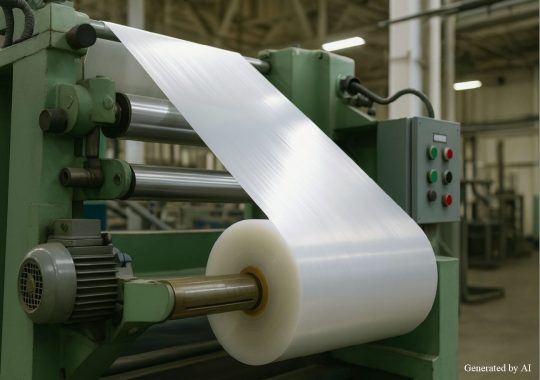
Torque motors leverage their unique torque characteristics for use across various industrial fields. A representative application is constant tension control in winding device. They exhibit ideal torque characteristics for winding operations requiring low-torque, high-speed rotation at the start and high-torque, low-speed rotation at the end.
Content covered in this section
- Application in a winding device: Achieving constant tension control and constant speed control
- Tension Control and Braking Applications: Preventing Slack and Improving Quality
- Pressure application and clamping applications: Stable operation even in a locked condition
Let's explore applications that leverage these characteristics.
| APPLICATIONS IN A WINDING DEVICE: ACHIEVING CONSTANT TENSION CONTROL AND CONSTANT SPEED CONTROL |
In winding operations for fibers, films, paper, wires, etc., maintaining constant tension and speed is essential to preserve product quality. The torque motor's drooping characteristic automatically adjusts torque and speed in response to changes in winding diameter, enabling constant tension winding without complex control systems.
Torque motors operate at high speed and low torque during initial winding when the diameter is small, automatically shifting to low speed and high torque as the diameter increases toward the end of winding. This allows winding with appropriate tension applied to the material without compromising quality.
| TENSION CONTROL & BRAKING APPLICATIONS: PREVENTING SAG AND IMPROVING QUALITY |
Torque motors possess reverse phase braking characteristics, generating braking force when an external force acts in the opposite direction to the motor's rotation. Installed on the unwinding side, they prevent material slack and enable winding while maintaining proper tension. Main applications are as follows.
[Main Applications for Tension Control/Braking]
・Tension control in film manufacturing lines
・Paper feed control in printing presses
・Maintaining yarn tension in textile processing
Maintenance-free due to the absence of mechanical wear, it maintains stable performance over long periods.
| PRESSURE APPLICATION/CLAMPING APPLICATIONS: STABLE OPERATION EVEN IN LOCKED CONDITION |
Torque motors are designed to deliver stable torque even during locked conditions or near-constrained low-speed operation. They are ideal for pressing operations where workpieces are pressed against surfaces and for tightening screws and bolts. Even if in a locked condition after task completion, there is no risk of motor burnout or overheating.
While conventional motors may experience overelectric current during constrained operation, leading to failure, torque motors suppress heat generation due to their high rotor resistance. They excel in applications like pressing parts on assembly lines or continuously rotating until a specified tightening torque is reached.
KEY POINTS FOR MOTOR SELECTION OF HIGH TORQUE AND LATEST TECHNOLOGIES
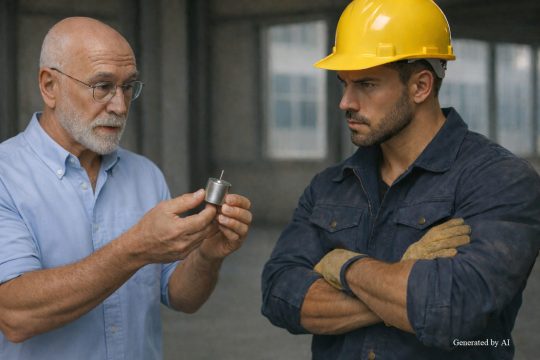
As equipment becomes smaller and more high-performance, demand is growing for compact, high torque motors.
In addition to induction motor torque motors, high-performance Micromotors utilizing coreless structures and brushless technology are gaining attention.
Topics covered in this section
- Key Points for Motor Selection: Balancing Torque, Speed, and Efficiency
- The Potential of High-Performance Micromotors: Achieving high torque Through Coreless Technology
- Optimal solutions tailored to applications: The importance of customization
To select the optimal product for an application, it is necessary to comprehensively evaluate factors such as required torque, rotational speed, operating environment, and control method.
| KEY CONSIDERATIONS FOR MOTOR SELECTION: BALANCING TORQUE, SPEED, AND EFFICIENCY |
When performing motor selection for torque motors, it is necessary to comprehensively evaluate not only the required torque value but also the rotational speed range, efficiency, responsiveness, size, power consumption, and other factors. Depending on the application, a high efficiency small motor may be more suitable than a large induction motor.
The main items to consider during selection are as follows.
| Item | Evaluation Points |
| Required Torque | Verify both startup and steady-state operation |
| Rotational Speed Range | Performance within the speed range appropriate for the application |
| Efficiency and Power Consumption | Pay particular attention during battery operation |
| Size and weight | Constraints on mounting space and portability |
| Responsiveness | Startup/shutdown speed and control precision |
Compact and lightweight, along with high efficiency, are particularly important for portable devices and medical equipment.
| THE POTENTIAL OF HIGH-PERFORMANCE MICROMOTORS: HIGH TORQUE VIA CORELESS TECHNOLOGY |
The latest coreless Micromotors achieve cogging-free (smooth rotation) and high responsiveness through their ironless core structure. They deliver high torque despite their small size and feature low power consumption and long service life.
The main advantages over conventional induction motors are as follows.
Key Advantages of Coreless motors
- Smooth rotation with no cogging due to the absence of an iron core
- Low inertia enables high-speed response
- High efficiency, ideal for battery-powered applications
They are increasingly adopted in fields requiring high precision, such as medical equipment, optical equipment, and industrial tools.
| OPTIMAL SOLUTIONS TAILORED TO APPLICATIONS: THE IMPORTANCE OF CUSTOMIZATION |
As industrial equipment diversifies, requirements that standard products cannot meet are increasing. Some motor manufacturers customize specifications to match customer applications and provide support from the development stage. Choosing a partner capable of addressing individual requirements—such as torque, size, voltage, and control methods—is key to successful product development.
C.I. Takiron Corporation offers comprehensive support from proposing high-performance Micromotors tailored to your application through prototyping, evaluation, and mass production. We can accommodate small lot sizes, so feel free to consult us even for new development projects.
SUMMARY

Torque motors are widely used in applications with varying loads, such as winding devices and tension control, leveraging their drooping characteristic and high starting torque.
Meanwhile, as industrial equipment becomes smaller and more powerful, the importance of motor selection for each application grows. Beyond traditional induction motor types, high-performance Micromotors are also worthy of consideration as viable options.
C.I. Takiron Corporation provides comprehensive support from proposing high-performance Micromotors tailored to your application through prototyping, evaluation, and mass production. If you are seeking motor selection solutions for high torque applications, please feel free to contact us.
Product Information & Inquiries
For detailed information on C.I. Takiron Corporation's Micromotors products, please visit the website below.
- Product Site: https://cik-ele.com/en/
- Coreless motors: https://cik-ele.com/en/products/list/coreless-motors-en/
- Brushless motors: https://cik-ele.com/en/products/list/brushless_motors-en/
- Geared motors: https://cik-ele.com/en/products/list/gearheads-en/
- Encoder: https://cik-ele.com/en/products/list/encoders-en/
If you are having trouble selecting a small motor for your product development, please feel free to consult us via the inquiry form. Our technical staff will discuss your application and requirements and propose the optimal solution.
- Contact Us: https://cik-ele.com/en/contact/