


Motors are devices that convert electrical energy into mechanical rotational motion. They are utilized across a wide range of fields, including medical equipment, industrial tools, optical equipment, and security equipment. Correctly understanding the principle of motor operation is essential for product development and equipment selection.
This article provides a detailed explanation, accessible to both new engineers and seasoned professionals, covering everything from the fundamental principles of motor operation to the differences between DC motors and AC motors, and the structural variations between Coreless motors and Iron-core motors.
If you are struggling with motor selection or seeking higher precision, smaller size, or more energy-efficient motors, please read on to the end.
目次:
BASIC PRINCIPLES AND ROTATION MECHANISM OF MOTORS
The mechanism by which motors rotate is based on the physical law of electromagnetic force.
By utilizing the force generated between a coil carrying an electric current and a magnet, the motor produces continuous rotational motion.
Topics covered in this section
- The Principle of Motor Rotation: Electromagnetic Force and Fleming’s left-hand rule
- The Role of Commutators and Brushes in Achieving Continuous Rotation
- Magnetic field and electric current: fundamental elements of motor rotation
Here, we will examine in detail the fundamental principle that keeps the motor spinning continuously.
| THE PRINCIPLE OF MOTOR ROTATION: ELECTROMAGNETIC FORCE AND FLEMING’S LEFT-HAND RULE |
Motor rotation is achieved through the electromagnetic force generated when electric current flows through a coil placed within a magnetic field. Fleming’s left-hand rule explains this phenomenon.
Pointing your left thumb in the direction of the force, your index finger in the direction of the magnetic field, and your middle finger in the direction of the electric current reveals the relationship between these three elements.
[Three Elements of Fleming’s left-hand rule]
- Thumb: Direction of force (force acting on the coil)
- Index finger: Direction of the magnetic field (from north pole to south pole)
- Middle finger: Direction of electric current (current flowing through the coil)
When the magnetic field created by the permanent magnet and the direction of the coil's electric current are appropriately aligned, the coil is pushed in a specific direction, generating rotational motion. This electromagnetic force forms the basis for all motor operation.
| THE ROLE OF THE COMMUTATOR AND BRUSHES IN ACHIEVING CONTINUOUS ROTATION |
For the coil to keep rotating, the direction of the electric current must be switched at the appropriate timing. The commutator is a cylindrical component mounted on the rotor shaft, structured into multiple segments. The brushes are fixed conductors that contact the commutator's surface. These two components work together to automatically switch the electric current direction.
Each time the coil completes a half-rotation, the commutator segment switches, reversing the electric current direction via the brushes. This mechanism ensures a constant force in the direction necessary to sustain rotation, enabling the DC motors' continuous rotation. The commutator and brushes play an indispensable role in achieving continuous rotation in Brushed DC Motors.
| MAGNETIC FIELD AND ELECTRIC CURRENT: FUNDAMENTAL ELEMENTS OF MOTOR ROTATION |
Two fundamental elements are required for motor rotation: a permanent magnet or electromagnet to generate a magnetic field, and electric current flowing through a coil. A permanent magnet creates a constant magnetic field between its north and south poles, within which the coil is positioned. When electric current flows through the coil, an electromagnetic force is generated, producing a force that pushes the coil.
When using permanent magnets, the strength of the magnetic field is determined by the magnet's material and size. Using powerful magnets like neodymium magnets allows for a strong magnetic field even in small sizes, making them effective for compact motors. Conversely, when using electromagnets, the strength of the magnetic field can be adjusted by controlling the electric current flowing through the coil.
The strength of the magnetic field and the magnitude of the electric current directly affect the torque (rotational force) produced by the motor. A stronger magnetic field and a larger electric current yield greater torque. However, increasing the current also increases heat generation, necessitating considerations for cooling and heat dissipation during continuous operation.
Electric current control methods are a critical factor determining motor performance. By adjusting the voltage to regulate the electric current, the motor's rotational speed can be controlled. For applications requiring precise speed control, electronic circuits are used to finely adjust the current. The interaction of these two elements generates stable rotational force, making motors a power source for various devices.
MOTOR TYPES AND STRUCTURE—DIFFERENCES BETWEEN DC MOTORS AND AC MOTORS
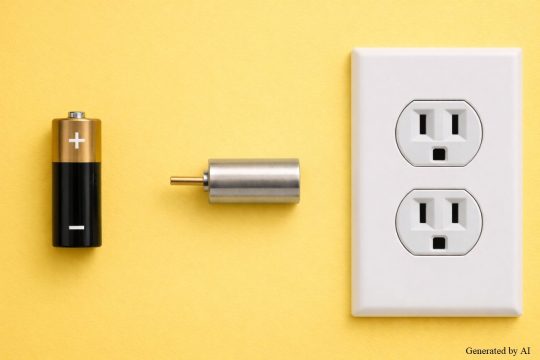
Motors are broadly categorized by power source type into DC motors (direct current motors) and AC motors (alternating current motors). DC motors operate on DC power supply, offering excellent controllability and are widely used in small devices. Conversely, AC motors run on alternating current power and are extensively utilized in industrial applications.
Topics Covered in This Section
- DC motors Structure and Types: Brushed DC Motors and Brushless DC Motors
- AC motors Structure and Types: induction motor and Synchronous motors
- Selecting Motors by Application: Controllability, Efficiency, Size
Understanding the characteristics of each type is key to motor selection.
| DC MOTORS STRUCTURE AND TYPES: BRUSHED DC MOTORS AND BRUSHLESS DC MOTORS |
DC motors include brushed DC motors, which switch electric current using a commutator and brushes, and Brushless DC Motors, which are controlled by electronic circuits. Brushed DC motors feature a simple structure and can directly control rotational speed via voltage control. However, friction between the brushes and commutator causes brush wear, requiring regular maintenance.
Brushless DC Motors control electric current using electronic circuits and sensors instead of commutators and brushes. With fewer mechanical contact points, they experience less wear, enabling long service life and high efficiency operation. They also generate less heat and offer superior quietness, making them suitable for applications demanding high reliability, such as precision equipment and medical equipment. While their initial cost is higher than brushed motors, they often prove advantageous in overall evaluations that include maintenance costs.
| AC MOTORS STRUCTURE AND TYPES: INDUCTION MOTOR AND SYNCHRONOUS MOTORS |
AC motors generate a rotating magnetic field using an AC power source, which in turn drives the rotor. Induction motors derive rotational force from the speed difference (slip) between the rotating magnetic field and the rotor. Their simple, robust structure and ease of maintenance make them the most widely used motors in industrial applications.
Synchronous motors have the characteristic that their rotor rotates at the same speed as the rotating magnetic field. Types using permanent magnets offer high efficiency and enable precise speed control, making them suitable for applications like servo motors. While their control circuits are more complex compared to induction motors, synchronous motors are chosen for applications requiring positioning accuracy and responsiveness.
| SELECTING MOTORS BY APPLICATION: CONTROL, EFFICIENCY, SIZE |
In motor selection, balancing controllability, efficiency, size, and cost is crucial. The optimal motor type varies depending on the specific application.
High torque, high durability, suitable for long-term operation
| Application | Recommended Motor Type | Reason |
| Precision Positioning | Servo Motor (Synchronous motors) | Enables high-precision position control and speed control |
| Compact and lightweight | Coreless motors (DC motors) | Lightweight, compact, and excellent high-speed responsiveness |
| High-output applications | AC motors (induction motor) | High torque, high durability, suitable for long-term operation suitable for extended operation |
| Battery-powered | Brushless DC Motors | High efficiency, low power consumption, long service life |
Selecting the appropriate motor for the application enables both improved product performance and cost optimization. Particularly in small and precision equipment, careful consideration is required as the motor characteristics significantly influence the overall product performance.
THE DIFFERENCE BETWEEN CORELESS MOTORS AND IRON-CORE MOTORS: STRUCTURES ENABLING HIGH PRECISION AND MINIATURIZATION

Based on coil winding methods, motors are classified into Iron-core motors (with iron cores) and Coreless motors (without iron cores). Iron-core motors concentrate magnetic flux via iron cores to achieve high torque but exhibit cogging (rotational irregularity).
In contrast, coreless motors lack an iron core, resulting in structurally minimal cogging torque and enabling smooth, high-precision rotation.
Topics covered in this section
- Features of Iron-core motors: high torque and cogging due to the iron core
- Characteristics of Coreless motors: cogging-free and high-precision rotation
- Applications of Coreless motors: Utilization in medical, optical, and security fields
To select the optimal motor for your application, let's understand the structural differences between the two.
| FEATURES OF IRON-CORE MOTORS: HIGH TORQUE AND IRON CORE COGGING |
Iron-core motors feature coils wound directly onto an iron core, increasing magnetic flux density to achieve high torque. The iron core forms the magnetic circuit, efficiently concentrating the magnetic flux onto the coils. Materials like silicon steel sheets are used for the iron core; selecting materials with excellent magnetic properties minimizes magnetic flux loss. This structure offers the advantage of achieving relatively high output even in compact sizes.
The output characteristics of Iron-core motors are effective in applications requiring high torque, such as industrial equipment and power tools. Furthermore, their relatively low manufacturing cost provides an advantage for adoption in mass-produced items.
However, a magnetic attraction force acts between the iron core and the permanent magnet, causing torque to fluctuate depending on the rotational position. This phenomenon, known as cogging (torque ripple), can cause minute vibrations and rotational irregularities. Cogging is particularly noticeable at low rotational speeds and can pose challenges in applications requiring precise positioning or smooth operation.
For example, in camera lens drives or the precise control of medical equipment, even slight vibrations can potentially affect performance. Therefore, for applications demanding high precision, motor selection with low cogging is essential.
| FEATURES OF CORELESS MOTORS: COGGING-FREE AND HIGH-PRECISION ROTATION |
Coreless motors lack an iron core and consist solely of lightweight coils. These coils are wound into a cylindrical or disc shape and positioned within the magnetic field of permanent magnets. The absence of an iron core eliminates magnetic attraction between the magnets and coils, resulting in minimal cogging.
| Features | Advantages of Coreless motors |
| Cogging | Virtually nonexistent, enabling extremely smooth rotation |
| Response | Low moment of inertia enables excellent high-speed start/stop performance |
| Weight | Lightweight due to absence of iron core, suitable for miniaturization |
| Efficiency | High efficiency operation is possible due to low iron losses from the absence of an iron core in the rotor |
These characteristics enable coreless motors to deliver high performance in applications requiring precise control. Their smooth rotational characteristics directly suppress vibration, providing a significant advantage for use in precision equipment.
| APPLICATIONS OF CORELESS MOTORS: UTILIZATION IN MEDICAL, OPTICAL, AND SECURITY FIELDS |
Coreless motors are adopted across various fields due to their high precision, low vibration, and compact size. In the medical field, they are used in applications where patient safety and equipment reliability are paramount, such as driving endoscope cameras and medication pumps. Their smooth operation reduces discomfort during examinations, while precise control supports accurate procedures.
In optical equipment, they power autofocus mechanisms in digital cameras and lens drives in surveillance cameras. Their cogging-free rotation suppresses micro-vibrations during lens movement, enabling high-precision focus adjustment. Their high-speed responsiveness ensures rapid focusing, never missing a shot.
In the security field, they are adopted in the locking mechanisms of electronic locks and the drive units of smart locks. Many models can start up even at low voltages, contributing to the long-term operation of battery-powered devices. Their power efficiency and long service life eliminate the need for frequent battery replacement, enhancing user convenience.
【Key Fields Where Coreless motors Excel】
- Medical Equipment: Endoscopes, drug pumps, surgical instruments
- Optical equipment: Camera autofocus, surveillance cameras, microscopes
- Security equipment: Electronic locks, smart locks, access control devices
- Industrial equipment: Precision positioning devices, inspection equipment, measuring instruments
In these applications, motor performance directly impacts the overall quality and reliability of the product, making the adoption of high-precision, stable Coreless motors an effective choice.
SUMMARY

Understanding the principle of motor operation forms the foundation for proper motor selection and product development. Grasping the mechanism of rotation via electromagnetic force, the differences between DC motors and AC motors, and the structural distinctions between Iron-core and Coreless motors enables selection of the optimal motor for the application.
Coreless motors are a particularly strong choice for developing medical equipment, optical equipment, and security equipment where high precision, compact size, and low power consumption are required.
C.I. Takiron Corporation provides high-performance Micromotors, including Coreless motors, and offers customization and technical support tailored to customer applications.
Product Information & Inquiries
For detailed information on C.I. Takiron Corporation's Micromotors products, please visit the website below.
- Product Site: https://cik-ele.com/en/
- Coreless motors: https://cik-ele.com/en/products/list/coreless-motors-en/
- Brushless motors: https://cik-ele.com/en/products/list/brushless_motors-en/
- Geared motors: https://cik-ele.com/en/products/list/gearheads-en/
- Encoder: https://cik-ele.com/en/products/list/encoders-en/
If you are having trouble selecting a small motor for your product development, please feel free to consult us via the inquiry form. Our technical staff will discuss your application and requirements and propose the optimal solution.
- Contact Us: https://cik-ele.com/en/contact/