



Motors are used as power sources in various industrial fields, including manufacturing, medical equipment, and precision instruments. Since their performance directly affects the overall quality of the product and production efficiency, it is essential to correctly understand and manage the “lifespan” of motors.
In this article, we systematically explain the essential knowledge engineers need to know—from the precise definition of motor lifespan to the factors that affect it, and key selection and operational points for maximizing lifespan. By selecting the right motor, you can reduce maintenance costs and improve uptime.
| Supervised by: C.I. TAKIRON Corporation Electronic Devices Sales Group This article has been supervised based on the advanced technical expertise and insights we have cultivated since our founding in 1919 as a leading company in plastic processing. Our department continuously analyzes market trends and the latest technologies in ultra-compact, high-precision micro motors, focusing on providing high-value-added information to designers and developers. As a team of experts with in-depth knowledge of product characteristics, we support our customers’ problem-solving and technological innovation by delivering accurate and practical content. |
目次:
Definition and Criteria for Motor Service Life
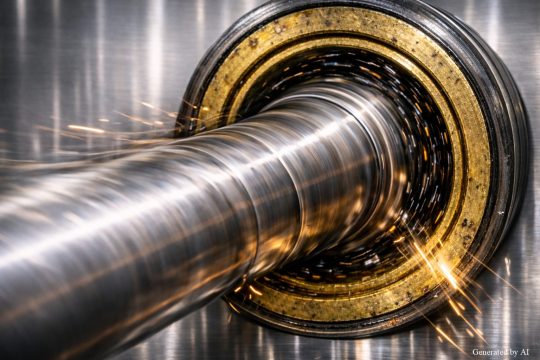
To accurately understand motor lifespan, it must be assessed based on performance criteria rather than simply the state of inactivity.
Contents of this section
- Mechanical Life and Electrical Life
- Major Symptoms Indicating Performance Degradation
Below, we will examine each of these criteria in detail.
Mechanical Life and Electrical Life
Motor lifespan can be broadly categorized into mechanical lifespan and electrical lifespan. Mechanical lifespan is caused by wear on moving parts such as bearings and brushes. As the motor rotates repeatedly, the grease in the bearings degrades, and increased friction between metal parts leads to the onset of abnormal noises and vibrations.
On the other hand, electrical life is caused by the deterioration of winding insulation and coils. In high-temperature environments or during overload operation, insulation materials degrade, increasing the risk of short circuits and electrical leakage.
Since which of these reaches the end of its lifespan first depends on the operating environment and load conditions, evaluation from both perspectives is necessary. In applications involving frequent start-stop cycles, mechanical life tends to be reached first, while in environments with continuous operation and exposure to high temperatures, electrical life is often reached first.
Major Symptoms Indicating Performance Degradation
As a motor nears the end of its service life, several symptoms appear. A typical symptom is a deviation from the specified rotational speed. When the motor can no longer maintain its rated speed, it affects the performance of the entire driven equipment.
Additionally, a decrease in torque results in output falling below the specified level. An increase in current consumption is another key indicator that should not be overlooked, as it is evidence of reduced efficiency. Furthermore, the occurrence of abnormal noise or vibration indicates bearing wear or imbalance. Increased heat generation also requires attention.
While the end of a motor’s life is often perceived as the point when it stops functioning, it is important to recognize that once these symptoms appear, the motor is no longer maintaining its rated performance, and appropriate measures should be considered. From a preventive maintenance perspective, it is necessary to establish a system for regularly monitoring these symptoms to detect signs of the end of life at an early stage.
Major Factors Affecting Motor Service Life
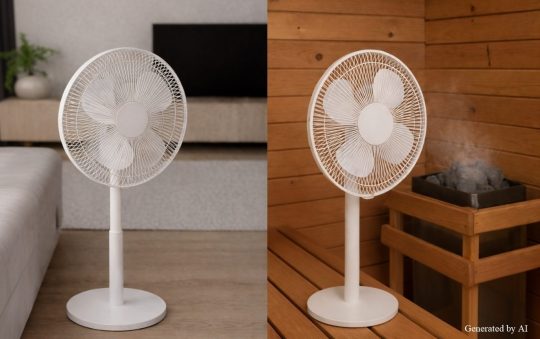
Motor service life is largely determined by three factors: the operating environment, load conditions, and maintenance management.
Contents covered in this section
- Temperature, Humidity, and Foreign Objects Affect Service Life
- Risks of Overload and Frequent Start-Stop Cycles
- Extending Service Life Through Proper Lubrication and Regular Inspections
Environmental factors such as ambient temperature and humidity, load factors such as overloading and frequent starts and stops, and the presence or absence of proper lubrication management and regular inspections can cause service life to vary by a factor of several times.
In particular, insulation material degradation accelerates in high-temperature environments, and bearing wear progresses during overload operation, making careful consideration from the design stage essential.
Temperature, Humidity, and Foreign Objects Affect Service Life
The operating environment directly affects motor lifespan. High-temperature environments accelerate the degradation of insulation materials and significantly shorten lifespan. In general insulation systems, based on the Arrhenius rule, a rule of thumb states that a 10°C increase in temperature halves the lifespan.
For example, if a motor designed for a rated temperature of 40°C is used in a 50°C environment, its expected service life may be halved. In high-humidity environments, insulation resistance decreases, which is a significant factor that can cause malfunctions such as leakage currents and short circuits.
Furthermore, the ingress of dust and foreign objects can cause bearing wear and poor brush contact. Particular caution is required in manufacturing environments and outdoor installations, and it is essential to select a motor with an appropriate protection rating (IP rating).
Risks of Overload and Frequent Start-Stop Cycles
Load conditions are also a major factor affecting motor lifespan. Applying loads exceeding the rated capacity increases internal motor temperature and mechanical stress, accelerating wear on bearings and brushes. Operation beyond the rated torque increases heat generation in the windings and accelerates insulation degradation.
Furthermore, frequent starts and stops shorten service life due to electrical stress from inrush current and impact loads during startup. In particular, applications involving hundreds of start-stop cycles per day tend to result in a significantly shorter service life compared to normal continuous operation. For equipment requiring repetitive motion, such as industrial robots and automatic doors, it is necessary to select motors designed to withstand frequent starts and stops.
Extend Service Life with Proper Lubrication and Regular Inspections
The quality of maintenance determines the actual service life of a motor. The main maintenance items and their effects are as follows*:
| Maintenance Item | Details and Effects |
| Grease Replenishment | Proper grease replenishment in the bearings reduces friction and prevents abnormal noise and overheating. |
| Brush Replacement | Regular replacement of brushes prevents poor contact and maintains a stable electrical connection. |
| Noise, Vibration Detection | Early detection prevents sudden failures and enables planned component replacement. |
| Cleaning | Removing external dust maintains cooling performance and prevents foreign object intrusion. |
Scheduled maintenance prevents sudden failures and minimizes downtime. By adopting a preventive maintenance approach and establishing a regular inspection schedule, you can maximize motor lifespan and reduce total costs.
*The table is an example and does not represent the full capabilities of our motors.
Key Considerations for Selecting Long-Life Motors and C.I. Takiron’s Solutions
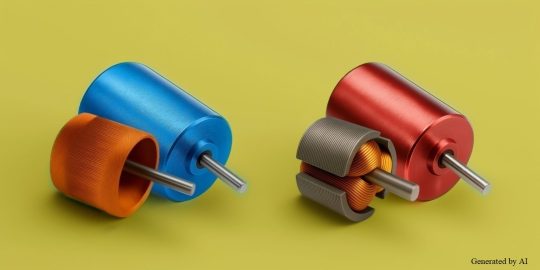
To maximize motor lifespan, the most effective approach is to select a motor with a structure and specifications suited to the operating conditions during the initial selection stage.
Contents covered in this section
- Reliability Achieved Through Core-less Construction
- Track Record in the Medical, Industrial, and Optical Fields
- The Triad of Selection, Operation, and Maintenance
Core-less motors, in particular, achieve a long service life because their core-less structure eliminates iron loss and reduces heat generation.
C.I. Takiron’s micro motors have a proven track record of adoption in fields requiring high reliability, such as medical and precision equipment. Their features—including cogging-free operation, low vibration, and high efficiency—enable them to maintain stable performance over the long term even in harsh environments.
Reliability Achieved Through a Core-less Structure
Core-less motors achieve a long service life thanks to a structure that differs from conventional motors. A key feature is that, because there is no iron core, heat generation due to iron loss is minimal, which helps suppress internal temperature rise. Since temperature rise directly leads to the degradation of insulation materials, low heat generation directly contributes to extending the service life.
Additionally, since cogging torque (rotational irregularity) is virtually zero, mechanical stress is minimized, reducing the load on bearings. Furthermore, the absence of an iron core makes the motor lightweight, and its low moment of inertia results in a design with excellent responsiveness. The structure also minimizes shock during start-up and stop-up, enabling stable performance even in applications involving frequent cycling.
These characteristics allow for reduced heat generation and mechanical stress compared to conventional iron-core motors, leading to an expected longer service life.
Proven Track Record in Medical, Industrial, and Optical Fields
C.I. Takiron’s micro motors have a proven track record of meeting the stringent requirements of various industries. The main application fields and features are as follows.
| Field | Required Characteristics | C.I. Takiron’s Solution |
| Medical Devices | High Reliability Low Vibration Compact Design | Development of motors with superior precision control and low-noise performance |
| Industrial Equipment | Long-term continuous operation Impact resistance | Maintains stable performance even during continuous operation thanks to a low-heat design |
| Optical equipment | High-precision positioning Quiet operation | High responsiveness supports precise control for functions such as autofocus |
| Security | Low-voltage startup Low power consumption | Operates from as low as 1.0 V, extending battery life |
We provide optimal solutions through customization to meet the requirements of each field and a support system that begins at the prototyping stage.
Motor lifespan depends on optimization during the design phase
Extending motor lifespan cannot be achieved by a single factor alone. It is crucial to select specifications appropriate for the application and to keep load, temperature, and power supply conditions within the design range. In particular, since small motors are designed without the expectation of maintenance, optimization during the initial design phase significantly influences their lifespan.
C.I. Takiron goes beyond simply providing products; we support our customers in optimizing motor lifespan from the design stage through evaluation testing and condition verification.
Summary

Motor lifespan refers to the point at which rated performance can no longer be maintained, and is influenced by a combination of environmental, load, and maintenance factors. The most effective approach to extending lifespan is to select a motor suited to the operating conditions at the initial stage. Coreless motors, in particular, achieve high reliability and long lifespan due to their structural advantages.
C.I. Takiron’s micro motors have a proven track record across a wide range of fields, including medical, industrial, and optical applications. Through customization and technical support, we contribute to our customers’ product development and improved production efficiency. Please contact C.I. Takiron for consultations regarding motor selection or service life.
Product Information & Inquiries
For more details on C.I. Takiron’s micro motor products, please visit the website below.
- Product Site: https://cik-ele.com/en/
- Coreless Motors: https://cik-ele.com/en/products/list/coreless_motor/
- Brushless Motors: https://cik-ele.com/en/products/list/brushless_motor/
- Geared Motors: https://cik-ele.com/en/products/list/gearhead/
- Encoders: https://cik-ele.com/en/products/list/encoder/
If you are having trouble selecting a small motor for your product development, please feel free to contact us via the inquiry form. Our technical staff will discuss your application and requirements with you and propose the optimal solution.
- Inquiries: https://cik-ele.com/en/contact/