


Brushless DC motors are increasingly adopted across diverse fields, from industrial equipment to medical equipment. By resolving issues inherent in conventional brushed DC motors and achieving superior characteristics like long service life, high efficiency, and low noise, they are gaining significant attention in product development.
However, many engineers likely feel uncertain about the structure and operating principles of Brushless DC motors or want to understand their actual benefits and suitable applications.
This article systematically explains the essential information engineers need to know, covering the basic structure and operating principles of Brushless DC motors, their four main benefits, and specific applications. We hope you find it useful as a reference for motor selection.
| Supervised by: C.I. TAKIRON Corporation Electronic Devices Sales Group This article has been supervised based on the advanced technical expertise and insights we have cultivated since our founding in 1919 as a leading company in plastic processing. Our department continuously analyzes market trends and the latest technologies in ultra-compact, high-precision micro motors, focusing on providing high-value-added information to designers and developers. As a team of experts with in-depth knowledge of product characteristics, we support our customers’ problem-solving and technological innovation by delivering accurate and practical content. |
目次:
WHAT ARE BRUSHLESS DC MOTORS? BASIC STRUCTURE AND OPERATING PRINCIPLE
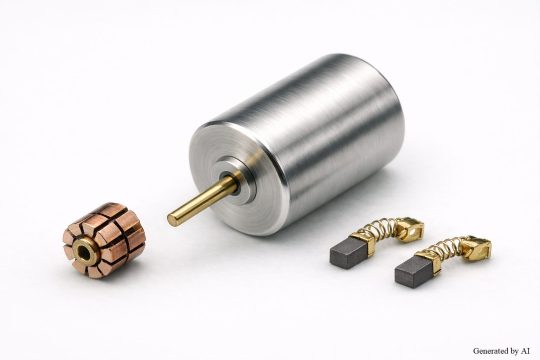
A Brushless DC motor is a motor that uses semiconductor devices to switch electric current, eliminating the need for brushes and commutators. It features coils on the stator and permanent magnets on the rotor. While it requires a dedicated control circuit for operation, the absence of brushes and commutators prevents contact wear and sparking, significantly improving lifespan, reliability, and efficiency.
Here, we explain in detail the structure, operating principle, and differences from brushed DC motors.
Contents covered in this section
- Structure of Brushless DC motors
- Operating Principle and Drive Methods
- Structural Comparison with DC motors
Understanding each of these elements will clarify the advantages of Brushless DC motors.
STRUCTURE OF BRUSHLESS DC MOTORS
Brushless DC motors consist of a stator made of coils and a rotor equipped with permanent magnets. Instead of brushes and a commutator, they use a magnetic pole sensor and a drive circuit to control the electric current.
When electric current flows through the stator coils, a magnetic field is generated. This magnetic field interacts with the permanent magnets in the rotor, creating rotational force. With fewer components, it enables miniaturization. Since brushes and commutators are unnecessary, there is no contact wear or sparking at the electrical connection points, significantly improving lifespan, reliability, and efficiency.
OPERATING PRINCIPLE AND DRIVE METHOD
The rotor’s magnetic pole position is detected by a magnetic pole sensor. Semiconductor switches sequentially switch the electric current to the stator coils, maintaining rotation. Precise control of the electric current switching timing enables high-speed rotation and smooth torque output.
A dedicated control circuit is essential for driving, managing electric current on/off states via microcontrollers or driver ICs. Precise electric current switching through electronic control underpins the high performance of Brushless DC motors.
STRUCTURAL COMPARISON WITH BRUSHED DC MOTORS
Brushed DC motors place coils on the rotor and magnets on the stator, switching electric current via brushes and commutators. In contrast, Brushless DC motors employ the opposite configuration, utilizing electronic control via semiconductors.
Eliminating brushes and commutators prevents contact wear and sparking at the electrical connection points, achieving long service life and reduced noise. While the required control circuit increases cost, the appeal lies in its maintenance-free operation and long-term stable performance.
FOUR KEY BENEFITS OF BRUSHLESS DC MOTORS
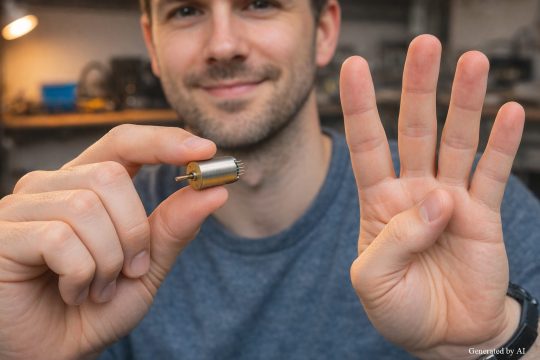
Brushless DC motors overcome the limitations of traditional brushed DC motors through their brushless and commutator less design. Their four key advantages are: ① Long lifespan, ② Low electrical noise, ③ Compact and lightweight, and ④ High energy conversion efficiency.
These characteristics drive their adoption across diverse applications, including industrial equipment requiring continuous operation and medical equipment demanding high-precision control.
Contents Explained in This Section
- Benefit 1: Achieving Long Service Life
- Benefit 2: Reduced Electrical Noise
- Benefit 3: Compact and Lightweight Design
- Benefit 4: High Energy Conversion Efficiency
Let’s examine how each benefit contributes value to product development.
BENEFIT 1: LONG SERVICE LIFE
With no brush or commutator wear, DC brushless motors achieve a lifespan over ten times longer than brushed DC motors. While brushed motors typically last only thousands of hours, DC brushless motors can operate continuously for tens of thousands of hours.
This significantly reduces maintenance frequency, making them highly valued in applications requiring long-term stable operation, such as industrial equipment and medical equipment. By reducing component replacement costs and maintenance work, they also contribute to lower overall lifecycle operating costs.
BENEFIT 2: REDUCED ELECTRICAL NOISE
With no mechanical contacts and electric current controlled by semiconductors, there is no spark noise generated during brush-commutator contact. This minimizes interference with surrounding electronic equipment, making them suitable for medical equipment and measurement devices requiring precise control.
It also reduces the risk of communication errors and malfunctions, making it particularly advantageous for applications demanding high reliability. It can also reduce design effort and shielding material costs associated with electrical noise countermeasures.
BENEFIT 3: COMPACT AND LIGHTWEIGHT DESIGN
The motor can be made compact and lightweight because it requires fewer necessary parts, such as brushes and commutators. While no formal standard exists, motors with a mounting angle under 90mm are often considered small, making them suitable for integration into compact enclosures.
They also contribute to overall equipment miniaturization, making them ideal for use in portable devices and medical handheld devices where space is limited. Their lightweight design reduces the burden of transportation and installation work, leading to improved overall product usability.
BENEFIT 4: HIGH ENERGY CONVERSION EFFICIENCY
The miniaturization of components reduces the required energy input, with some products achieving energy conversion efficiencies exceeding 90%. Their low power consumption and excellent energy saving performance contribute to extended operation in battery-powered devices and reduced operational costs through lower electricity bills.
Amid growing demands for carbon neutrality, adopting high efficiency motors is an effective environmental impact reduction measure for companies. Extended battery life also reduces replacement frequency and waste.
PURPOSE AND APPLICATION EXAMPLES OF BRUSHLESS DC MOTORS

The outstanding characteristics of Brushless DC motors are utilized across diverse industrial sectors. In home appliances, they deliver long service life and high efficiency in washing machines, air conditioners, and vacuum cleaners. In the automotive field, adoption is advancing for applications like electric power steering and drive motors. Furthermore, their durability, capable of withstanding continuous operation, is valued in industrial robots, while applications leveraging their compact size, high-speed rotation, and low noise characteristics are expanding in medical equipment.
Here, we introduce representative purposes and specific examples.
Contents covered in this section
- Applications in Home Appliances
- Applications in Industrial Equipment and Robotics
- Use in medical equipment and optical equipment
Let’s examine how Brushless DC motors are utilized in each field.
APPLICATIONS IN HOME APPLIANCES
They are widely adopted in home appliances that operate continuously for years, such as washing machines, air conditioners, fans, and vacuum cleaners. They play a key role in products like the following.
[Examples of Adoption in Home Appliances]
- Washing machine and dryer drive motors
- Air conditioner and fan blowers
- Vacuum cleaner drive and suction motors
- Rotating parts in mixers and blenders
- Hair dryer airflow mechanism
- Refrigerator compressors
Their high efficiency in reducing electricity costs and long service life in reducing replacement frequency are highly valued by consumers, driving their widespread adoption. For products emphasizing energy saving performance, the adoption of Brushless DC motors is likely the key to competitiveness.
APPLICATIONS IN INDUSTRIAL EQUIPMENT AND ROBOTICS
In industrial robots and transport equipment at manufacturing sites, durability for continuous operation and high heat dissipation are prioritized. Brushless DC motors deliver stable performance even during prolonged operation.
[Examples of Adoption in Industrial equipment]
- Arm drive for Industrial robot
- Automotive assembly line equipment
- Operation mechanisms for picking robots
- Travel motors for AGVs (Automated Guided Vehicles)
- Feed mechanisms in machine tools
- Semiconductor manufacturing equipment transport systems
Highly valued for its maintenance-free, long-term stable operation even on production lines requiring extended continuous operation. Reducing downtime directly improves productivity, making motor selection with reliability critical.
APPLICATIONS IN MEDICAL EQUIPMENT AND OPTICAL EQUIPMENT
Adoption is expanding in medical and optical fields, including ventilators, surgical pulse washers, dental drills, and endoscope camera focus mechanisms. Its compact and lightweight design, high-speed rotation capability, and low noise/vibration make it ideal for applications requiring precise control. It contributes to enhanced patient safety and serves as a foundational technology supporting the advancement of medical equipment.
In optical equipment, they excel in applications requiring precise positioning, such as camera autofocus mechanisms, image stabilization, and microscope lens drives. Their low cogging torque enables smooth operation, minimizing impact on image quality.
SUMMARY
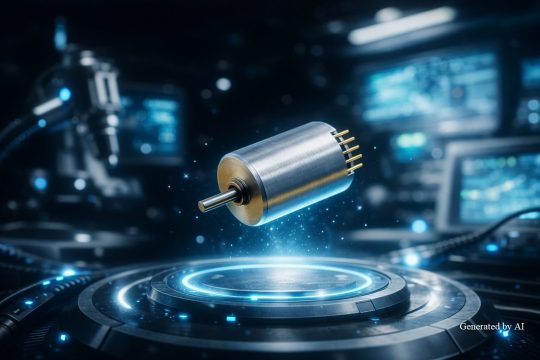
Brushless DC motors achieve four key advantages—long service life, low noise, compact and lightweight, and high efficiency—through their structure without brushes or commutators. They are adopted in a wide range of applications, from home appliances to industrial equipment and medical equipment, contributing to higher product performance and energy saving.
The absence of brushes and commutators eliminates contact wear and sparking at electrical contact points, significantly improving lifespan, reliability, and efficiency.
Product Information & Inquiries
For detailed information on C.I. Takiron Corporation’s Micromotors products, please visit the website below.
- Product Site: https://cik-ele.com/en/
- Coreless motors: https://cik-ele.com/en/products/list/coreless-motors-en/
- Brushless motors: https://cik-ele.com/en/products/list/brushless_motors-en/
- Geared motors: https://cik-ele.com/en/products/list/gearheads-en/
- Encoder: https://cik-ele.com/en/products/list/encoders-en/
If you are having trouble selecting a small motor for your product development, please feel free to consult us via the inquiry form. Our technical staff will discuss your application and requirements and propose the optimal solution.
- Contact Us: https://cik-ele.com/en/contact/