


In the development of industrial equipment, medical devices, and precision instruments, motor selection is a critical factor that determines product performance.
In recent years, interest in high-efficiency, long-life Brushless motors has grown, leading to an increasing number of engineers to consider replacing conventional Brushed motors with it. However, determining the specific differences from Brushed motors and assessing applicability to their products requires technical justification and data.
This article will seek to explain the basic structure and operating principles of Brushless motors to the detailed comparisons with Brushed motors, their advantages and disadvantages for different applications, and selection points for each industrial sector. The technical information necessary has been organized to assist the reader in making a better-informed choice.
| Supervised by: C.I. TAKIRON Corporation Electronic Devices Sales Group This article has been supervised based on the advanced technical expertise and insights we have cultivated since our founding in 1919 as a leading company in plastic processing. Our department continuously analyzes market trends and the latest technologies in ultra-compact, high-precision micro motors, focusing on providing high-value-added information to designers and developers. As a team of experts with in-depth knowledge of product characteristics, we support our customers’ problem-solving and technological innovation by delivering accurate and practical content. |
BASIC STRUCTURE AND OPERATING PRINCIPLE OF BRUSHLESS MOTORS
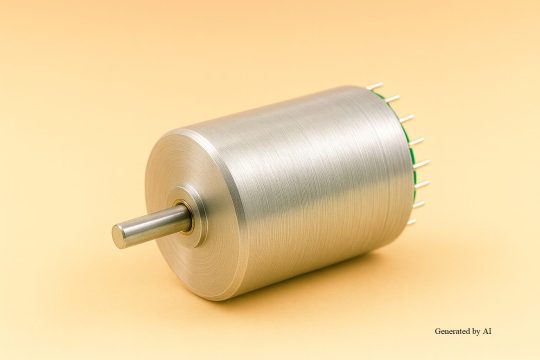
Unlike conventional Brushed motors, Brushless motors are characterized by a structure that lacks mechanical contact components such as brushes and commutators. Instead, rotation is controlled by switching the direction of the current using electronic circuits. This structure means Brushless motors are not subject to lifespan limitations due to brush wear, enabling long-lasting and highly efficient operation. Below, we explain the basic mechanism of Brushless motors from three perspectives.
Contents covered in this section
- What is a Brushless motor?
- Structural differences from Brushed motors
- How Brushless motors operate
Understanding this fundamental knowledge allows for a more accurate assessment of applicability to your own products.
WHAT IS A BRUSHLESS MOTOR?
A Brushless motor is, as the name suggests, a motor that rotates without using brushes. While Brushed motors switch the current flow to the coils through physical contact, Brushless motors control the current direction using electronic circuits.
Since they lack components that are prone to wear-and-tear like brushes and commutators, they are maintenance-free and maintain stable performance over extended periods. This makes them widely adopted in applications demanding high reliability, such as medical devices and industrial robots.
STRUCTURAL DIFFERENCES FROM BRUSHED MOTORS
Brushed motors typically have coils on the rotor and permanent magnets on the stator. In contrast, our Brushless motors places the permanent magnets on the rotor and coils on the stator, switching the magnetic field via electronic control.
A key feature is the reversal of the roles of the rotor and stator. This structural difference eliminates mechanical contact points, significantly reducing heat generation and wear-and-tear. Consequently, it achieves high durability capable of withstanding long periods of continuous operation.
OPERATING PRINCIPLE OF BRUSHLESS MOTORS
A Brushless motor rotates by attracting or repelling the rotor’s magnets. This is achieved by switching the direction of the current flowing through the stator coils using an inverter circuit. The rotor’s position is detected by Hall sensors or encoders, enabling precise timing for current switching. This allows for efficient and smooth rotation.
This electronic control method enables precise control of rotational speed and torque, making it suitable for applications requiring high precision, such as lens drives in optical equipment and the precise operation of security devices.
DETAILED COMPARISON: BRUSHED VS. BRUSHLESS MOTORS
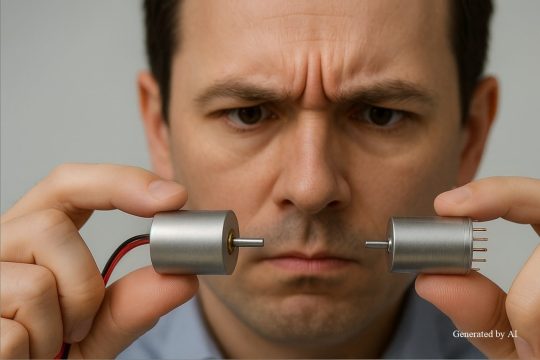
Brushed motors and Brushless motors each possess distinct characteristics. Brushed motors feature a simple structure and are easy to control but requires attention to lifespan due to the wearing down of the brush. Brushless motors, on the other hand, offer high efficiency, long lifespan, and superior quietness, but necessitate a drive circuit and are slightly more costly. Below, we compare both types from multiple perspectives – lifespan, efficiency, quietness, etc. – and present selection criteria based on the application.
Topics covered in this section
- Differences in Lifespan and Maintainability
- Differences in Efficiency and Heat Generation
- Differences in Noise and Quietness
Understanding these differences enables more informed selection of a motor that is best suited based on a product’s requirements.
THE DIFFERENCE BETWEEN LIFESPAN AND MAINTAINABILITY
Brushed motors and Brushless motors exhibit significant differences in lifespan and maintainability. The main differences are summarized in the table below.
| Item | Brushed motor | Brushless motor |
| Lifespan | Hundreds to thousands of hours | Tens of thousands of hours or more |
| Maintenance | Regular brush replacement is required (Our motors are designed so that brushes cannot be replaced.) | Maintenance-free |
| Wear Parts | Brushes and commutator wear | Fewer mechanical wear points than brushed motors |
| Downtime | Occurs when replacing the motor | Virtually zero |
Brushed motors require replacement every several hundred to several thousand hours due to brush wear. Depending on the operating environment and load conditions, motor replacement may be required even more frequently.
In contrast, Brushless motors have fewer mechanical wear points than brushed motors, allowing them to operate until bearing failure. They typically achieve a long service life of tens of thousands of hours or more and can run maintenance-free. This reduction in downtime and overall cost savings offers significant advantages in applications requiring continuous operation, such as industrial robots and medical equipment.
DIFFERENCES IN EFFICIENCY AND HEAT GENERATION
Energy efficiency and heat generation characteristics are critical criteria for motor selection. The table below compares the differences between the two.
| Item | Brushed motor | Brushless motor |
| Efficiency* | Moderate | High Efficiency |
| Energy Loss | Significant due to contact resistance and friction | Minimized by electronic control |
| Heat generation | High | Can be reduced by control methods |
| Energy efficiency | Standard | Excellent |
*May vary depending on usage conditions.
Brushed motors experience energy loss due to contact resistance and brush friction, resulting in moderate efficiency. This loss is dissipated as heat. In contrast, Brushless motors achieve high efficiency with minimal wasteful loss through electronic control. Furthermore, heat generation can potentially be reduced through control methods. This contributes to energy savings and provides practical benefits such as extended operating time for battery-powered security equipment and portable medical devices.
DIFFERENCE BETWEEN NOISE AND QUIETNESS
Noise characteristics are particularly important in applications requiring quiet operation, such as medical devices and precision instruments. The table below summarizes the difference between noise and quietness.
| Item | Brushed motor | Brushless motor |
| Mechanical Noise | Generated by brush friction | Fewer contact points |
| Electrical Noise | Prone to occur | Minimized |
| Quiet operation | Low | High |
| Impact on peripheral devices | Risk of electrical noise interference | Minimal |
Brushed motors are prone to generating mechanical and electrical noise due to friction between the brushes and commutator, making them unsuitable for applications requiring quiet operation. Electrical noise may also affect nearby precision equipment.
In contrast, Brushless motors excel in quiet operation due to fewer contact points and can minimize electrical noise generation. They are increasingly adopted in fields requiring quiet environments, such as medical equipment, office equipment, and optical devices, contributing to improved comfort for patients and users.
ADVANTAGES, DISADVANTAGES, AND APPLICATIONS OF BRUSHLESS MOTORS

While Brushless motors offer numerous advantages, they also present disadvantages such as higher initial costs and more complex control circuits. They are the preferred choice in fields demanding high reliability and long service life, such as medical equipment, industrial robots, precision instruments, and security devices.
Below, we outline the specific advantages and disadvantages of Brushless motors and explain their suitability for various applications, accompanied by examples of their use across different industrial sectors.
Contents Explained in This Section
- Main Advantages of Brushless motors
- Disadvantages and Considerations for Brushless motors
- Application examples and selection criteria by industrial sector
With this information, one can organize the technical basis necessary for adoption decisions.
KEY ADVANTAGES OF BRUSHLESS MOTORS
The main advantages of Brushless motors are fourfold: long lifespan, high efficiency, low noise, and maintenance-free operation. The table below summarizes the primary benefits.
| Advantages | Details |
| Long service life | Fewer wear parts enable operation for tens of thousands of hours or more |
| High Efficiency | Minimized energy loss achieves high efficiency |
| Low Noise | Minimal mechanical and electrical noise for quiet operation |
| Maintenance-free | Eliminates the need for regular part replacement, reducing downtime |
High reliability with few wear parts enables continuous operation while saving energy. Superior quietness and low electrical noise make it suitable for precision control and medical applications. Furthermore, compact and lightweight designs are possible, increasing design flexibility.
These characteristics simultaneously enhance product reliability and reduce total cost.
DISADVANTAGES AND CONSIDERATIONS OF BRUSHLESS MOTORS
Brushless motors typically require dedicated inverter circuits or drivers for operation, leading to higher initial costs compared to Brushed motors. Their complex control systems also necessitate specialized knowledge for design and tuning.
If circuit design or programming skills are lacking, collaboration with external partners is essential. However, in the long term, the benefits of reduced maintenance costs and high efficiency significantly outweigh the initial investment, making payback entirely feasible. A comprehensive evaluation balancing the initial investment cost against long-term cost savings is necessary.
APPLICATION EXAMPLES AND SELECTION POINTS BY INDUSTRY SECTOR
Brushless motors are adopted across various industrial sectors to meet differing requirements. The table below summarizes key application examples and selection points by major industry sector.
| Industrial Sector | Primary Application Examples | Desired Characteristics | Advantages of Brushless motors |
| Medical Equipment | Endoscopes Pumps Surgical Instruments | High precision High reliability Long service life | Maintenance-free to ensure patient safety |
| Industrial Robot | Transport robots Assembly robots | Continuous operation High Torque | High efficiency for improved productivity and reduced downtime |
| Optical Equipment | Camera lens drive Microscopes | Precision control Low vibration High Responsiveness | Achieves high-precision positioning with smooth operation |
| Security Equipment | Electronic locks Surveillance cameras | Power saving Compact size Long lifespan | Long battery life enables extended operation |
In medical devices, such as endoscopes and pumps, where high precision and reliability are essential, the characteristics of long life and maintenance-free operation are valued to prioritize patient safety.
In industrial robots, long continuous operation and high torque are required, and the long life and high efficiency of Brushless motors contribute to improved productivity.
In optical equipment, precise control of lens drives is essential, making low vibration and high responsiveness critical characteristics.
In security equipment, they meet the demand for low power consumption and miniaturization, driving adoption in battery-powered electronic locks.
Selecting the optimal Brushless motor according to each field’s requirements is key to enhancing product competitiveness.
SUMMARY
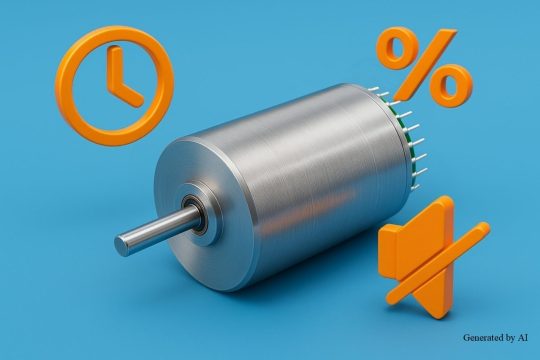
Brushless motors offer superior characteristics compared to brushed motors, including longer lifespan, higher efficiency, and lower noise. Their adoption is expanding across diverse fields such as medical, industrial, precision equipment, and security. While initial costs are slightly higher, they enable long-term cost savings through maintenance-free operation. Selecting the optimal motor for each application significantly impacts product performance, making it crucial to choose a partner capable of technical consultation and specification customization.
C.I. Takiron Corporation provides compact motor solutions tailored to customer applications, including cogging-free, high-precision Coreless motors.
Since launching our Micromotors business in 1989, we have continuously innovated, building a strong track record across diverse fields including medical equipment, industrial robots, optical devices, and security systems. Our domestically designed motors, backed by rigorous quality control, deliver high reliability. Combined with our capability for specification customization tailored to specific applications, we provide robust support for your product development. If you are facing challenges in motor selection, please feel free to consult with us.
Product Information & Inquiries
For detailed information on C.I. Takiron Corporation’s Micromotors products, please visit the website below.
- Product Site: https://cik-ele.com/en/
- Coreless motors: https://cik-ele.com/en/products/list/coreless-motors-en/
- Brushless motors: https://cik-ele.com/en/products/list/brushless_motors-en/
- Geared motors: https://cik-ele.com/en/products/list/gearheads-en/
- Encoder: https://cik-ele.com/en/products/list/encoders-en/
If you are having trouble selecting a small motor for your product development, please feel free to consult us via the inquiry form. Our technical staff will discuss your application and requirements and propose the optimal solution.
- Contact Us: https://cik-ele.com/en/contact/