

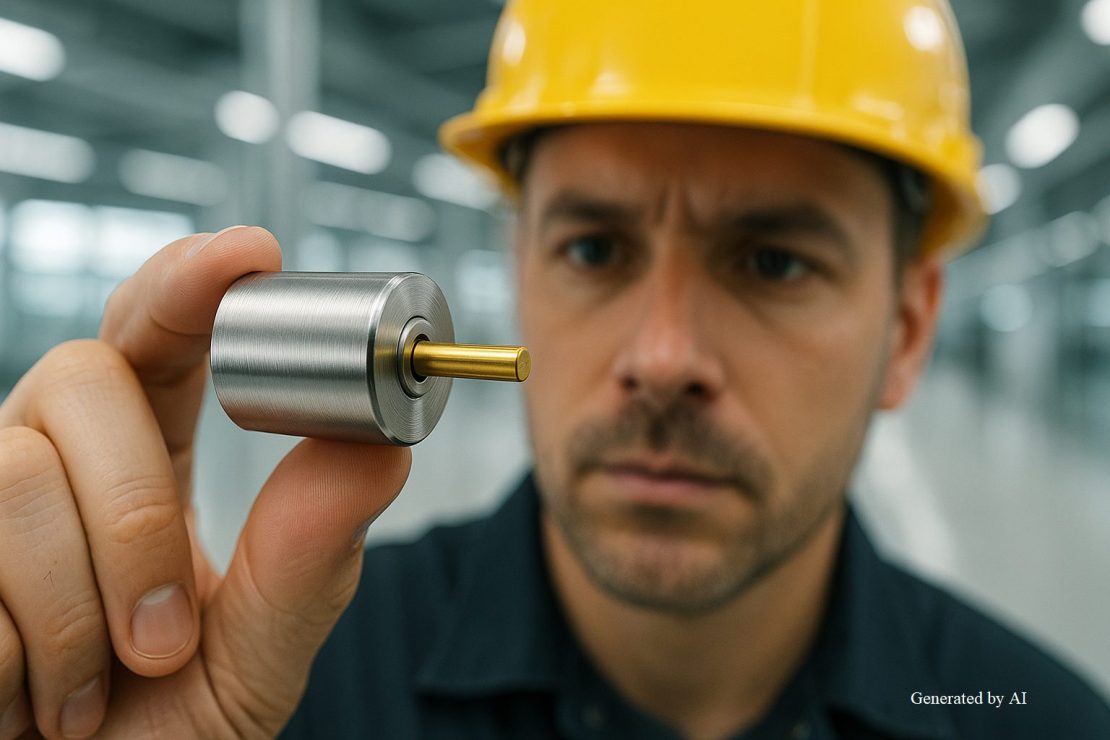
In developing industrial equipment requiring precise control performance and high efficiency, motor selection is a decisive factor that determines product performance. In recent years, Coreless motors have gained attention in fields demanding miniaturization and high precision, such as medical devices, optical equipment, and security devices.
With their unique structure lacking an iron core, Coreless motors achieve both smooth rotation and high-speed responsiveness—features that are difficult to achieve with conventional motors.
This article provides a detailed explanation, covering everything from the basic mechanism of Coreless motors to their specific advantages in industrial applications and real-world use cases. It is highly recommended to utilize this information as a reference for motor selection in your product development.
| Supervised by: C.I. TAKIRON Corporation Electronic Devices Sales Group This article has been supervised based on the advanced technical expertise and insights we have cultivated since our founding in 1919 as a leading company in plastic processing. Our department continuously analyzes market trends and the latest technologies in ultra-compact, high-precision micro motors, focusing on providing high-value-added information to designers and developers. As a team of experts with in-depth knowledge of product characteristics, we support our customers’ problem-solving and technological innovation by delivering accurate and practical content. |
WHAT IS A CORELESS MOTOR? BASIC STRUCTURE AND OPERATING PRINCIPLE
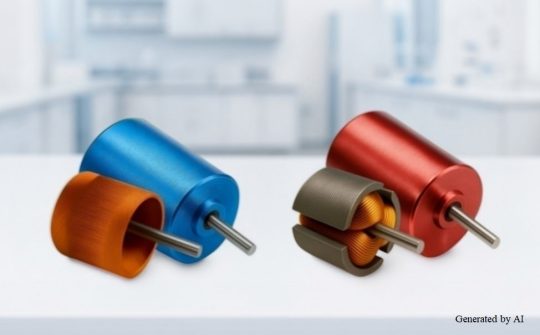
This section explains the basic structure and operating principle of Coreless motors. It details how their unique ironless design significantly reduces cogging torque, enabling smooth rotation.
Contents covered in this section
- Basic Structure of Coreless motors
- Structural Differences from Conventional Motors
- Operating Principle and Cogging-Free Mechanism
The following sections examine each aspect in detail.
BASIC STRUCTURE OF CORELESS MOTORS
Coreless motors employ a structure where coils are wound into a cylindrical or flat plate shape without using an iron core. While conventional DC motors place an iron core at the center of the rotor, Coreless motors do not contain an iron core, featuring only the coil structure.
The absence of an iron core significantly reduces the weight of the rotor section and lowers its moment of inertia. This characteristic improves responsiveness during start-up and stopping, enabling high-speed, precise control. The cylindrical coil is positioned either inside or outside a permanent magnet, creating a mechanism where it rotates within the magnetic field.
STRUCTURAL DIFFERENCES FROM CONVENTIONAL MOTORS
Compared to conventional DC motors with iron cores, Coreless motors exhibit several distinct structural differences. The main differences are summarized in the table below.
| Item | Conventional DC motors | Coreless motors |
| Rotor Structure | Iron core present | Ironless (coil only) |
| Cogging Torque | Occurs | Virtually none |
| Rotor weight | Relatively heavy | Lightweight |
| Moment of inertia | Large | Small |
| Responsiveness | Standard | High-speed response |
| Iron loss | Present | None |
| Efficiency | Standard | High efficiency |
The most significant difference is the absence of an iron core in the rotor. In conventional motors, the iron core is used to efficiently concentrate the magnetic flux, but it simultaneously generates magnetic irregularities (cogging torque).
By eliminating the iron core, Coreless motors nearly completely eliminate magnetic irregularities. Furthermore, the absence of the iron core reduces the rotor’s weight, resulting in a smaller moment of inertia. Additionally, the absence of iron losses due to the core enables highly efficient operation.
OPERATING PRINCIPLE AND COGGING-FREE MECHANISM
The reason Coreless motors do not generate cogging torque stems from the absence of an iron core. In conventional motors, magnetic attraction occurs between the iron core and permanent magnets, causing torque fluctuations known as cogging depending on the rotational position.
In a Coreless motor, only the coil rotates within the magnetic field, eliminating this magnetic attraction. When current flows through the coil, an electromagnetic force is generated according to Fleming’s left-hand rule, producing smooth rotational torque. The uniform magnetic flux flow results in minimal rotational irregularities, enabling extremely precise speed control and positioning.
FIVE BENEFITS OF CORELESS MOTORS AND THEIR INDUSTRIAL APPLICATIONS

This section details the five primary benefits that make Coreless motors suitable for industrial equipment.
Contents covered in this section
- Benefit 1: High-Precision Control via Cogging-Free Operation
- Benefit 2: High-Speed Response and Starting Performance
- Benefit 3: Space-Saving Design Through Compact Size
- Benefit 4: Low Power Consumption and Extended Battery Life
- Benefit 5: Long service life and high reliability
We will explain specifically how each of these characteristics delivers value in different applications.
BENEFIT 1: HIGH-PRECISION CONTROL VIA COGGING-FREE OPERATION
The absence of an iron core virtually eliminates cogging torque, enabling exceptionally smooth rotation. Rotational irregularities are minimized, dramatically improving the precision of speed control and positioning.
In medical devices like infusion pumps and ventilators, precise flow rate adjustments directly impact patient safety, making high-precision control essential. The smooth rotation characteristic of Coreless motors enables accurate flow rate control.
In lens drives for optical equipment, even slight vibrations can degrade image quality. The cogging-free characteristics maintain high-definition image quality.
BENEFIT 2: HIGH-SPEED RESPONSIVENESS AND START-UP PERFORMANCE
The lightweight rotor structure minimizes inertia, enabling rapid start-up and stop. The time from rotation initiation to reaching target speed is reduced, minimizing control delays.
In digital camera autofocus mechanisms, high-speed lens drive is required the instant the subject is captured, demanding responsiveness. The high-speed response of Coreless motors enables precise focusing that never misses the shutter opportunity.
This characteristic is also leveraged in servo mechanisms for industrial robots, where instantaneous switching of operations is required.
BENEFIT 3: SPACE-SAVING EQUIPMENT DESIGN THROUGH COMPACT SIZE
The structure, which eliminates the iron core, enables a compact motor design. Maintaining equivalent output while reducing space improves overall design flexibility for the product.
In portable medical devices, miniaturization is essential to reduce patient burden. Adopting Coreless motors allows for maintaining necessary performance while keeping the overall size and weight of the device low.
In handheld tools, it contributes to reducing operator fatigue and improving operability, leading to enhanced work efficiency. For electronic devices integrating multiple functions into limited space, the compact design of Coreless motors is a significant advantage.
*Note: While the absence of an iron core allows for a lighter rotor, it may not necessarily result in a lighter motor overall.
BENEFIT 4: LOW POWER CONSUMPTION AND EXTENDED BATTERY LIFE
High-efficiency design reduces current consumption, enabling extended operation of battery-powered devices. Without iron losses from the core, input power is efficiently converted into rotational force.
For electronic locks and smart locks, frequent battery replacement compromises user convenience. The low power consumption characteristic of Coreless motors typically allows operation for six months to one year per battery replacement.
For portable security devices requiring extended continuous monitoring, extended battery life directly reduces operational costs. This energy-saving performance is also valued from an environmental impact reduction perspective.
BENEFIT 5: LONG SERVICE LIFE AND HIGH RELIABILITY
They exhibit minimal mechanical wear and maintain stable performance over extended periods. Compared to conventional motors with iron cores, Coreless motors reduce bearing load through their lightweight rotors. Additionally, the smaller rotational inertia minimizes mechanical stress during start-up and stop-down.
They are adopted in applications demanding high reliability where failure is unacceptable, such as medical and safety equipment. Industrial gas detectors require continuous operation in hazardous environments and minimized maintenance frequency. The long-life characteristics of Coreless motors ensure stable operation over extended periods, contributing to improved overall system reliability.
INDUSTRIAL APPLICATIONS AND USE CASES OF CORELESS MOTORS

This section introduces specific applications and examples of how Coreless motors are actually utilized in various industrial fields.
Contents covered in this section
- Applications in the Medical Device Field
- Applications in the optical equipment field
- Applications in Security and Safety Equipment
- Applications in industrial tools and equipment
We explain specific applications in each field and how the characteristics of Coreless motors contribute to improving product performance.
APPLICATIONS IN THE MEDICAL DEVICE FIELD
Coreless motors are highly valued for their controllability and reliability in medical devices requiring high-precision, stable operation for patient safety, such as endoscope pump drives and joints in medical robots.
Infusion pumps require precise control of medication flow rates, with no tolerance for even slight rotational irregularities. The cogging-free characteristics of Coreless motors enable stable maintenance of constant flow rates.
In ventilators, precise control of respiratory assistance directly impacts patient condition, making high-precision motor performance essential. Furthermore, portable medical devices demand compactness and lightness, and the space-saving design of Coreless motors supports product development.
As described above, Coreless motors may be used as one type of motor suitable for the drive units of medical devices.
APPLICATIONS IN THE OPTICAL EQUIPMENT FIELD
In optical equipment that requires minimal vibration, such as autofocus mechanisms and image stabilization in digital cameras, or lens drives in microscopes, the smooth rotation characteristics of cogging-free motors contribute to high image quality.
In camera autofocus, rapid and precise subject acquisition requires high-speed responsiveness. The lightweight rotor structure of Coreless motors enables instantaneous lens drive.
In image stabilization mechanisms, even slight vibrations can degrade image quality, making Coreless motors—which generate almost no cogging torque—the optimal choice.
In surveillance camera pan-tilt mechanisms, their smooth operation and quietness are also widely appreciated.
APPLICATIONS IN SECURITY AND SAFETY EQUIPMENT
In optical equipment that requires minimal vibration, such as autofocus mechanisms and image stabilization in digital cameras, or lens drives in microscopes, the smooth rotation characteristics of cogging-free motors contribute to high image quality.
In camera autofocus, rapid and precise subject acquisition requires high-speed responsiveness. The lightweight rotor structure of Coreless motors enables instantaneous lens drive.
In image stabilization mechanisms, even slight vibrations can degrade image quality, making Coreless motors—which generate almost no cogging torque—the optimal choice.
In surveillance camera pan-tilt mechanisms, their smooth operation and quietness are also widely appreciated.
APPLICATIONS IN INDUSTRIAL TOOLS AND EQUIPMENT
In industrial equipment requiring both portability and power, such as electric screwdrivers, handheld tools, and small pumps, lightweight, high-efficiency Coreless motors contribute to enhancing product competitiveness.
In battery-powered tools, the high efficiency of Coreless motors is leveraged because of their power-saving properties extend operating time. Coreless motors are also selected for compact pumps and conveying equipment where compact design and stable operation are required.
SUMMARY
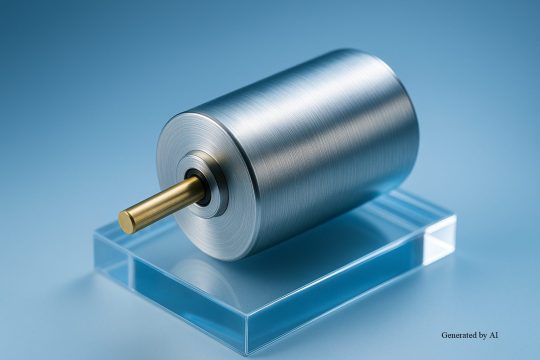
Coreless motors achieve numerous advantages through their unique structure without an iron core: cogging-free smooth rotation, high-speed responsiveness, compact and lightweight design, low power consumption, and long lifespan. Their characteristics are valued across diverse fields including medical equipment, optical devices, security systems, and industrial tools. These properties enable enhanced product performance and differentiation.
The significant reduction in cogging torque resulting from the absence of an iron core is particularly valuable in applications demanding precise control. The superiority of Coreless motors is clear in scenarios where even slight vibration is unacceptable, such as precise flow control in medical devices or maintaining high-definition image quality in optical equipment. Furthermore, the high-speed responsiveness enabled by the lightweight rotor structure is an essential characteristic for applications requiring instantaneous action, like autofocus mechanisms and servo control in industrial robots.
The compact, lightweight design and low power consumption are major strengths in developing portable devices and battery-powered products. Electronic locks and security devices require long battery life, and the Coreless motor’s energy efficiency directly translates to reduced operational costs. Furthermore, its low mechanical wear and long lifespan minimize maintenance frequency, contributing to reliability in applications where failure is unacceptable.
C.I. Takiron Corporation provides comprehensive support, from proposing Coreless motors tailored to your application, to customization and assistance starting from the prototype stage. If you are facing challenges in selecting motors for your product development, please feel free to consult with us.
Product Information & Inquiries
For detailed information on C.I. Takiron Corporation’s Micromotors products, please visit the website below.
- Product Site: https://cik-ele.com/en/
- Coreless motors: https://cik-ele.com/en/products/list/coreless-motors-en/
- Brushless motors: https://cik-ele.com/en/products/list/brushless_motors-en/
- Geared motors: https://cik-ele.com/en/products/list/gearheads-en/
- Encoder: https://cik-ele.com/en/products/list/encoders-en/
If you are having trouble selecting a small motor for your product development, please feel free to consult us via the inquiry form. Our technical staff will discuss your application and requirements and propose the optimal solution.
- Contact Us: https://cik-ele.com/en/contact/