

In the design and maintenance of mechanical components, “wear” significantly affects component lifespan and product quality. Wear is the phenomenon in which a surface is gradually worn down due to contact and relative motion between solids. In mechanisms involving friction—such as drive components and bearings—measures to counteract wear are essential.
The progression of wear causes dimensional changes and performance degradation in parts, and ultimately poses a risk of affecting the reliability of the entire equipment. There are several types of wear, each with different mechanisms of occurrence and corresponding countermeasures.
In this article, we will explain the basic definition of wear, the mechanisms behind its occurrence, typical forms of wear and their characteristics, and methods to suppress wear. We hope you will gain a proper understanding of wear to help achieve a long service life for components and reduce maintenance costs.
| Supervised by: C.I. TAKIRON Corporation Electronic Devices Sales Group This article has been supervised based on the advanced technical expertise and insights we have cultivated since our founding in 1919 as a leading company in plastic processing. Our department continuously analyzes market trends and the latest technologies in ultra-compact, high-precision micro motors, focusing on providing high-value-added information to designers and developers. As a team of experts with in-depth knowledge of product characteristics, we support our customers’ problem-solving and technological innovation by delivering accurate and practical content. |
Definition and Mechanism of Wear
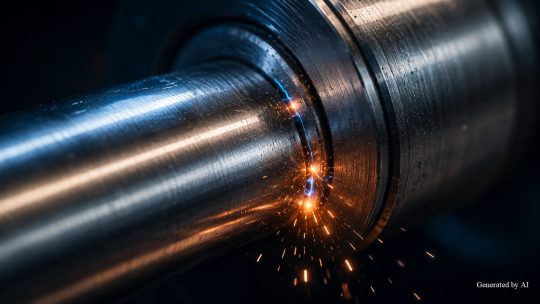
To properly understand wear, it is important to first grasp its definition and the mechanisms of surface contact, and then identify the various factors that influence the progression of wear. Below, we will explain these concepts step by step, starting with the basic concepts of wear, moving on to the characteristics of surface contact, and concluding with the three factors involved in wear.
Contents of This Section
- Definition of Wear and Fundamentals of Wear Resistance
- The Relationship Between Actual Contact Area and Wear Occurrence
- Three Factors Affecting Wear
Here, we will explain the basic concepts of wear step by step, breaking down technical terms so that even new engineers can understand them.
Definition of Wear and Basics of Wear Resistance
Metal wear is defined as the condition in which a metal’s surface becomes damaged or worn down due to friction forces generated by contact with other solids.
For components subject to friction—such as drive parts and bearings—resistance to wear is considered a property that determines the product’s lifespan. This resistance is called “wear resistance” and is one of the fundamental evaluation metrics in the design of mechanical parts with sliding surfaces. If a material with low wear resistance is used for sliding surfaces, the dimensional accuracy of the parts may be lost in a short period, potentially leading to a decline in the overall performance of the equipment.
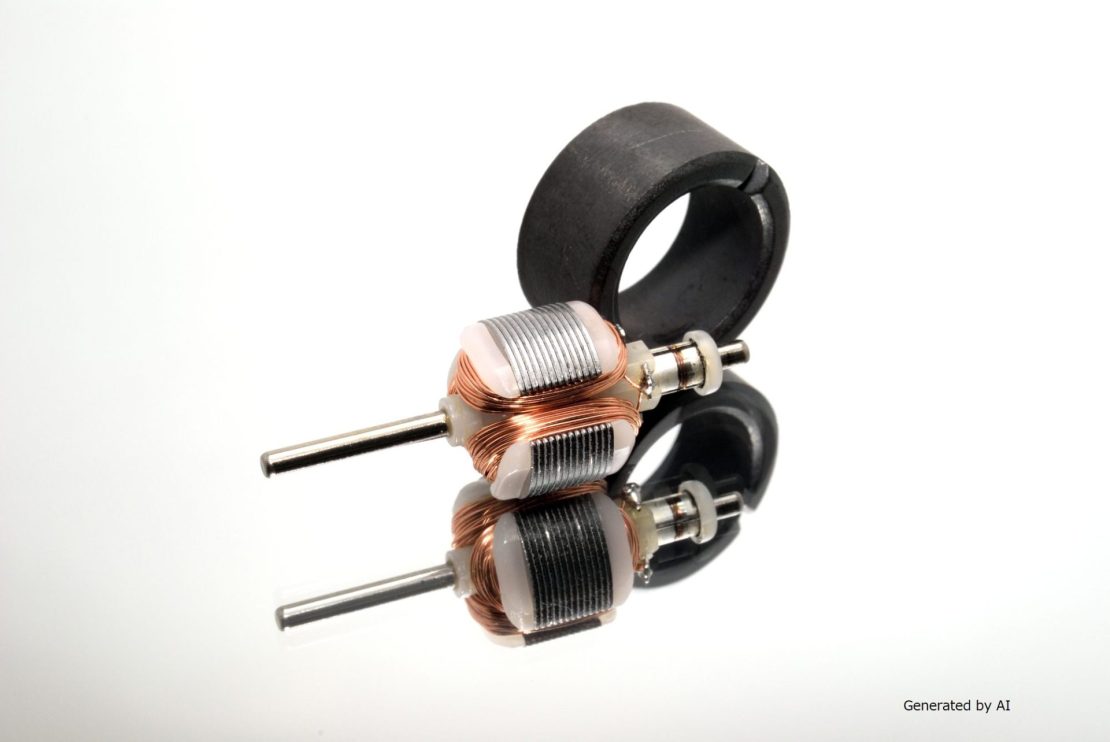
For example, at points where the brushes and commutator come into contact inside a motor, or where the tooth surfaces of gears mesh, material is gradually lost due to repeated sliding. It is important to note that as wear progresses, the clearance between components increases, which can cause vibration, abnormal noise, and operational malfunctions. Efforts to anticipate wear based on operating conditions during the design phase and to reflect this in appropriate material selection and structural design contribute to ensuring product reliability.
The Relationship Between True Contact Area and Wear
Solid surfaces have microscopic roughness and undulations; even when two flat surfaces come into contact, it is actually the protrusions on each surface that make contact. The areas where these protrusions come into contact are called “true contact areas.” Since these areas are smaller than the apparent contact area and bear a concentrated load, they play a significant role in the occurrence of wear.
The differences between the true contact area and the apparent contact area are summarized below.
| Item | Apparent Contact Area | True Contact Area |
| Definition | The area where the outer surfaces of the parts come into contact | The sum of the minute areas where protrusions actually come into contact |
| Size of the area | The range visible to the naked eye | Approximately 1/10 to 1/1000 of the apparent contact area |
| Load distribution | Assumed to be distributed across the entire surface | Load concentrated on minute protrusions |
The true contact area is considered to be small, ranging from approximately 1/10 to 1/1000 of the apparent contact area. Even if it appears that contact is occurring over a wide surface area, in reality, the load is supported by only very narrow protrusions. The basic mechanism of wear involves stress concentrated on these protrusions causing deformation or fracture of the material, which then breaks off as wear particles.
Since materials with higher surface roughness values have greater variations in protrusion height, the true contact area becomes even smaller, and localized stress tends to increase. In the design of mechanical components, the first step in suppressing wear is to appropriately manage the surface finish and machining accuracy of sliding surfaces to increase the true contact area.
Three Factors Affecting Wear
Three factors influence wear: mechanical factors, material factors, and environmental factors. Since the rate of wear progression varies depending on the complex interplay of these factors, a multifaceted approach is required to develop countermeasures.
[Three Factors Affecting Wear]
- Mechanical Factors: Load, Contact Pressure, Stiffness
- Material Factors: Mechanical Properties, Surface Geometry, Surface Roughness
- Environmental Factors: Temperature, Humidity, Atmosphere
Regarding mechanical factors, the greater the load and contact pressure, the higher the localized stress at the actual contact point, which tends to accelerate wear. If a component lacks sufficient rigidity, deformation at the contact surface increases, raising the risk of wear occurring in unexpected locations.
Regarding material factors, in addition to mechanical properties such as hardness and toughness, surface roughness influences the shape and distribution of protrusions, thereby affecting the contact conditions that serve as the starting point for wear. Generally, materials with higher hardness are considered to have better wear resistance; however, materials with low toughness are prone to cracking, so material selection must balance hardness and toughness.
Regarding environmental factors, it is said that materials may soften in high-temperature environments, and that humidity or corrosive atmospheres can promote chemical reactions that accelerate wear. When considering countermeasures against wear, it is essential to evaluate these three factors comprehensively, taking into account the entire operating environment rather than considering them in isolation.
Major Types and Characteristics of Wear
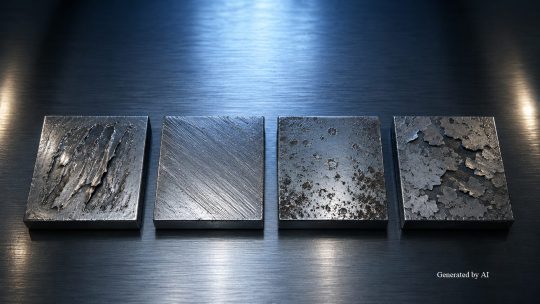
Wear is classified into several types based on its mechanism of occurrence, with the most representative forms being adhesive wear, abrasive wear, corrosive wear, and fatigue wear. Since each form differs in its mechanism of occurrence and damage patterns, it is necessary to select countermeasures appropriate for each type. A fundamental approach to preventing wear-related problems is to thoroughly understand the characteristics of each type before considering countermeasures.
Topics Covered in This Section
- Mechanisms of Adhesive Wear and Its Two Classifications
- The Two Forms of Abrasive Wear
- Characteristics of Fatigue Wear and Typical Damage
Below, we will explain in detail the mechanisms and characteristics of the three forms of wear—adhesive wear, abrasive wear, and fatigue wear—which are closely related to the design of mechanical components and motors.
Mechanisms and Two Classifications of Adhesive Wear
Adhesive wear is a phenomenon in which microscopic irregularities on sliding surfaces cause metal bonding (adhesion) due to friction heat and pressure; wear progresses as part of the bonded material breaks off due to shear forces generated by the frictional motion and adheres to the opposing surface.A key characteristic is that it occurs particularly easily between parts made of the same material. The mechanism of adhesion is widely recognized in the field of tribology (the science of friction and wear) as a process in which materials bond at the true contact area, and when shear force is applied, a portion of the material’s interior breaks off and is generated as wear particles.
Adhesive wear is broadly classified into two types based on its severity.
| Classification | Characteristics |
| Severe Wear | Wear is severe, resulting in deep surface scratches and large wear particles. In severe cases, it can contribute to seizure. |
| Mild Wear | Wear is relatively minor, and the surface wears smoothly. The wear particles are fine and contain oxides. |
In severe wear, the wear particles are coarse and have a metallic luster, and deep grooves and significant irregularities appear on the worn surface.In contrast, in mild wear, the wear particles consist of fine oxides, and the worn surface remains relatively smooth. It is important to note that if adhesive wear progresses to the severe wear stage, it may manifest as seizure, which could lead to component failure. When selecting materials for sliding components, it is effective to consider combinations of dissimilar metals or surface treatments to suppress the occurrence of adhesion.
Two Forms of Abrasive Wear
Abrasive wear is classified into two types: “two-body wear,” in which surface protrusions of a hard material scrape away a soft sliding surface, and “three-body wear,” in which hard solid particles become embedded between materials and scrape the surface. Also known as scratching wear or grinding wear, it is characterized by a higher wear rate compared to adhesive wear.
[Two Classifications of Abrasive Wear]
- Two-body wear: A form in which surface protrusions of a hard material directly scrape away the softer sliding surface
- Three-body wear: A form of wear in which hard solid particles (wear particles or foreign matter) become embedded between materials and scrape away the surface
Since two-body wear occurs when the harder component cuts into the softer one, the fundamental countermeasure is to select materials that take into account the hardness balance of the sliding surfaces. For example, when metals with significantly different hardnesses slide against each other, the surface of the softer component is unilaterally worn away.
Three-body wear is caused by hard wear particles or foreign matter entering from the outside; therefore, effective countermeasures include sealing structures that prevent particle intrusion into the sliding surfaces and mechanisms for regular removal of foreign matter. Since the risk of three-body wear increases for equipment operating in machining facilities or dusty environments, wear management combined with dust prevention measures is required.
Characteristics and Typical Damage of Fatigue Wear
Fatigue wear is a phenomenon in which repeated contact stresses cause microscopic cracks to form on the material surface, eventually leading to surface delamination and progressive wear. This type of wear occurs as a result of metal fatigue caused by repeated cycles of operation and stoppage, and is commonly observed on rolling contact surfaces. It tends to occur in components subjected to repetitive loads, such as bearings and gear tooth surfaces.
There are two typical forms of damage caused by fatigue wear: flaking, in which the surface peels off in scale-like fragments, and peeling, in which the surface peels off in large, flat patches. Flaking is a typical form of damage that occurs on the rolling surfaces of bearings; it manifests as scale-like peeling when the stress accumulated beneath the surface exceeds a certain limit each time a rolling element passes over it.Peeling is a phenomenon in which the surface layer detaches over a wider area than in flaking, and it is characterized by its tendency to occur under high-load conditions.
Unlike adhesive wear or abrasive wear, fatigue wear rarely shows noticeable changes over a short period but tends to progress rapidly once a certain number of cycles is exceeded.Even if no abnormalities are visible externally, cracks may be progressing inside the material; therefore, relying solely on visual inspection may result in overlooking signs of fatigue wear. For components subjected to repeated loads over long periods—such as motor bearings and the tooth surfaces of Geared motors—it is essential to estimate the fatigue lifespan during the design phase and incorporate this into a regular inspection schedule.
Measures Against Wear and a Long Service Life for Motors
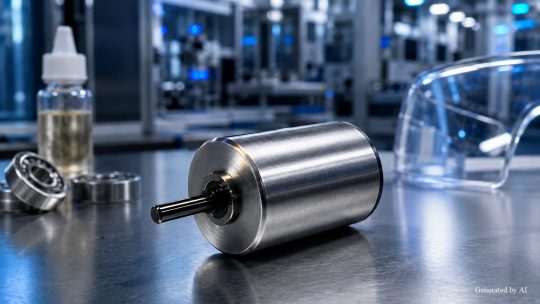
To minimize component degradation caused by wear, it is essential to select appropriate countermeasures based on the type of wear. In motors, the mechanisms of wear and the approach to lifespan differ depending on whether the motor uses brushes or not. Here, we will explain step-by-step, starting with general concepts of wear countermeasures and moving on to the challenges and solutions related to wear in motors.
Contents of This Section
- Countermeasures by Type of Wear
- The Impact of Brush Wear in Brushed Motors
- Resolving Wear Issues with Brushless Motors
In the first half of this section, we will organize general wear countermeasures by type, and in the second half, we will explain the challenges of wear in motors and the solutions offered by Brushless motors.
Countermeasures by Type of Wear*
Countermeasures for wear vary depending on the type. For adhesive wear, using dissimilar metals, applying lubricants, and surface treatments are effective. For abrasive wear, increasing material hardness and preventing solid particles from entering the sliding surfaces are effective measures. For corrosive wear, selecting highly corrosion-resistant materials and applying surface treatments such as plating and coatings are recommended countermeasures.
The relationship between the main types of wear and their corresponding countermeasures is summarized below.
| Type of Wear | Countermeasures |
| Adhesive Wear | Combination of dissimilar metals, use of lubricants, application of surface treatments |
| Abrasive Wear | Increasing material hardness; preventing solid particles from entering the sliding surfaces |
| Corrosion Wear | Selection of highly corrosion-resistant materials; surface treatments such as plating and coating |
| Fatigue wear | Reduction of cyclic stress; material and structural design that takes fatigue lifespan into account |
Even for materials with low wear resistance, it is believed that the effects of wear can be minimized by adjusting the surface finish through machining to create a shape that reduces friction. For example, techniques such as reducing surface roughness through polishing or simultaneously improving the hardness and lubricity of sliding surfaces with DLC (diamond-like carbon) coating are widely adopted for a variety of sliding components.Please consider measures that combine material selection and surface treatment tailored to the operating environment and sliding conditions.
*Please note that some of these measures may not be applicable to our products.
The Impact of Brush Wear in Brushed Motors
In brushed motors, the brushes and commutator rotate while in constant contact, causing both to gradually wear down due to friction. As the brushes wear down, they can no longer maintain contact with the commutator, preventing the normal flow of electricity and causing the motor to malfunction.
Friction caused by physical contact is not the only factor that causes brush wear.
[Main Factors That Accelerate Brush Wear]
- Friction caused by physical contact
- Heat generation due to changes in electric current density
- Surface melting caused by sparks
Physical friction is an unavoidable factor as long as the brushes and commutator are in constant contact. In addition, as the motor rotates and the electric current path switches, the current density changes, causing localized heat generation at the contact points. It is also important to note that sparks generated during these switching events can melt the brush surface, accelerating brush wear in some cases.
Since the deterioration of brushes is caused by the combined effects of these three factors—friction, heat generation, and sparks—the lifespan of a brushed motor depends heavily on the brush wear condition. For applications involving prolonged continuous operation or high-load environments, thorough evaluation using the actual equipment in advance is essential.
Resolving Wear Issues with Brushless Motors
Brushless motors do not have brushes or a commutator; instead, their rotation is controlled by electronic circuits, so brush wear does not occur. Because brushless motors lack brushes, they are considered to offer superior lifespan, maintainability, and lower dust generation compared to brushed motors. The motor’s lifespan is determined by bearing life rather than brush wear, enabling a long service life.
The differences between Brushed motors and Brushless motors regarding brush wear are summarized below.
| Comparison Criteria | Brushed motors | Brushless motors |
| Brush-Commutator Sliding | Present (constant contact) | None (controlled by the control circuit) |
| brush wear | Occurs (primary cause of lifespan) | Does not occur |
| Factors Affecting Lifespan | Brush wear condition | Bearing lifespan |
| Generation of wear particles | Present | Virtually none |
| Mechanical contact | High | Low |
In the past, mechanical commutators were used to switch the direction of the electric current, which had the drawback of causing commutator wear, making it difficult to achieve a long service life. With the widespread adoption of semiconductors, electronic circuits have been able to take the place of commutators, enabling Brushless motors to achieve a lifespan that is incomparably longer than that of motors with mechanical commutators.
Furthermore, the design with minimal mechanical contact is effective in suppressing the generation of wear particles, as well as reducing friction noise and vibration. Brushless motors are a strong choice for long periods of continuous operation and for use in clean environments where wear particles are undesirable.
Summary
Wear is a phenomenon in which surfaces are worn down due to contact and friction between solids, and it is broadly classified into adhesive wear, abrasive wear, corrosive wear, and fatigue wear. Since the mechanisms behind each type differ, it is necessary to select countermeasures appropriate for the specific type of wear, such as increasing material hardness, using lubricants, or applying surface treatments.Anticipating wear during the design phase and adopting materials and structures suited to the operating environment leads to a long service life for components and reduced maintenance costs.
In motors, brush wear caused by the sliding contact between brushes and the commutator is a key factor limiting the lifespan; however, Brushless motors structurally eliminate this wear between brushes and the commutator, thereby achieving a long service life. Because the design minimizes mechanical contact , it reduces the generation of wear particles and vibration, making it suitable for long periods of continuous operation and use in clean environments.
C.I. Takiron Corporation offers Brushless motors characterized by a long service life and low vibration. If you have concerns regarding wear prevention or motor selection, please feel free to contact us.
Product Information & Inquiries
For more details on C.I. Takiron’s micro motor products, please visit the website below.
- Product Site: https://cik-ele.com/en/
- Coreless Motors: https://cik-ele.com/en/products/list/coreless_motor/
- Brushless Motors: https://cik-ele.com/en/products/list/brushless_motor/
- Geared Motors: https://cik-ele.com/en/products/list/gearhead/
- Encoders: https://cik-ele.com/en/products/list/encoder/
If you are having trouble selecting a small motor for your product development, please feel free to contact us via the inquiry form. Our technical staff will discuss your application and requirements with you and propose the optimal solution.
- Inquiries: https://cik-ele.com/en/contact/