

As medical equipment continues to become smaller and more precise, the role played by the motors that drive it is growing year by year. Compact motors are now incorporated into many devices used in medical settings—such as dental treatment units, endoscopes, electronic pipettes, and surgical assistance robots—and serve as core components that support the functionality and performance of these devices.Motors incorporated into medical equipment tend to be subject to higher performance standards than general-purpose industrial motors. To achieve the operational precision required by the equipment, it is essential to select the optimal motor for the specific application—one that offers smooth rotation, low vibration, a long service life, and a compact design. In this article, we will explain the typical applications of motors in medical equipment, the performance requirements, and key points to consider during motor selection. We hope this serves as a useful reference for those responsible for developing medical equipment.
| Supervised by: C.I. TAKIRON Corporation Electronic Devices Sales Group This article has been supervised based on the advanced technical expertise and insights we have cultivated since our founding in 1919 as a leading company in plastic processing. Our department continuously analyzes market trends and the latest technologies in ultra-compact, high-precision micro motors, focusing on providing high-value-added information to designers and developers. As a team of experts with in-depth knowledge of product characteristics, we support our customers’ problem-solving and technological innovation by delivering accurate and practical content. |
Typical Applications of Motors in Medical Equipment
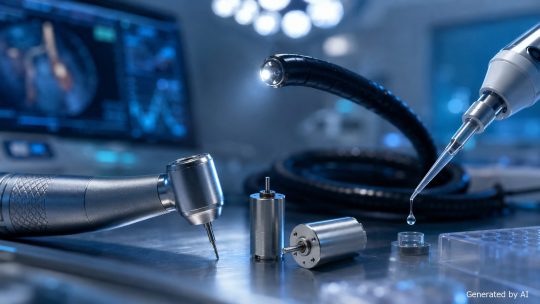
Motors incorporated into medical equipment serve as the driving force behind the equipment’s operation.Dental treatment units, endoscopes, and electronic pipettes are all representative devices designed specifically to be driven by motors. Medical equipment used in settings spans a wide range of fields, from respiratory support to diagnostics and treatment, and motor drive technology is integral to all of it. The role that motors play in each device varies depending on its application. We will examine representative devices in order and explain where motors are utilized within each device.
Contents of This Section
- Rotary Drive for Tip Tools in Dental Treatment Units
- Precision Drive of Tip Mechanisms in Endoscopes
- Precise control of liquid volume in electronic pipettes
We will examine the specific functions that motors perform in each device, along with their respective applications.
Rotary Drive for Handpieces in Dental Treatment Units
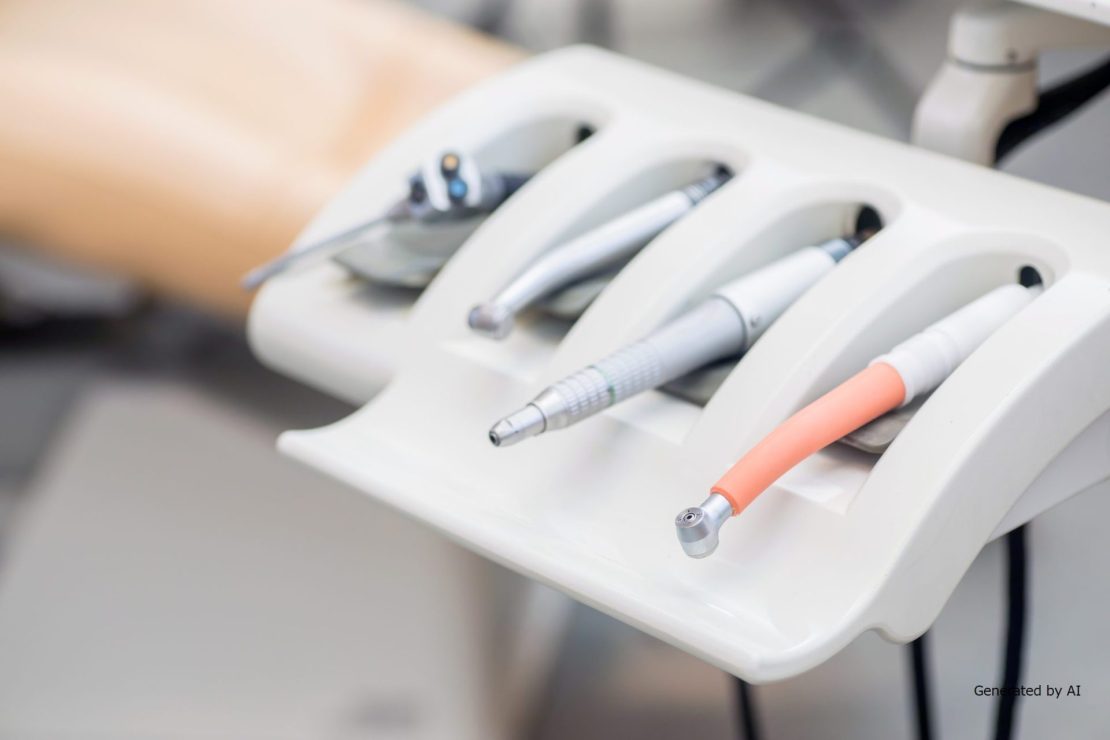
Micromotors built into the handpiece are used to drive the rotation of the tip tools in dental treatment units.This drive component is responsible for rotating tools such as drills and reamers at high speeds and with stability, and it plays a crucial role in determining the outcome of the procedure. The rotational speed of dental Micromotors (dental electric motors) is generally considered to be approximately 100 to 40,000 revolutions per minute , and some models allow users to select rotational characteristics tailored to specific procedures, ranging from root canal treatment to cutting.Since the handpiece of a dental treatment unit is held by the dentist and operated inside the mouth, compact size and stable output—which ensure ease of use—are key design requirements. High rotational speeds are required for cutting and polishing, while root canal treatment demands precise rotational control; therefore, designs that allow for selecting the appropriate rotational range based on the procedure are employed. In dental treatment, vibrations transmitted through the jawbone and the noise of the rotating drill are major factors contributing to patient anxiety.Handpiece design must therefore incorporate features such as quiet operation and reduced vibration. The performance of the motor, which smoothly drives the tip tool, is key to balancing treatment quality with patient comfort.
Precision Drive of Endoscopic Tip Mechanisms
Precise drive of the tip mechanism in endoscopes requires technology capable of operating multiple mechanisms inside the thin tube inserted into the body. The tip is equipped with a compact image sensor and an objective lens, and the bending mechanism—which changes the direction of observation—is designed to move up, down, left, and right in coordination with the angle knob on the control unit.Endoscopes are used for observation and treatment within the body, such as in the digestive tract and bronchi; in videoscopes, the images captured by the imaging sensor at the tip are transmitted externally as electrical signals. Since the insertion tube travels along pathways within the body, the tip mechanism must combine a small diameter with smooth operation.To move the tip mechanism as intended, compact motors that fit within the limited space and deliver delicate, smooth drive characteristics are essential. Since endoscopes are used for both observation and procedures, the tip mechanism must also maintain stable, continuous operation. The stability of the drive unit is a key factor in determining the accuracy of examinations and procedures. The performance of motors that operate stably even in narrow internal spaces supports the observation quality and operability of endoscopes.
Precise Control of Liquid Volume in Electronic Pipettes
Precise liquid volume control in electronic pipettes is achieved through a mechanism in which an internal piston is driven by a motor. Used in research and development as well as clinical testing, these devices must be capable of accurately handling minute volumes of liquid. There are also products designed to aspirate and dispense liquids within a volume range of 0.5 μL to 10 mL ; the piston moves in response to user input, enabling highly reproducible results. Since electronic pipettes allow the dispensing volume to be set digitally and are designed to consistently reproduce the same conditions, they help minimize variability between experiments. The functions performed by the motor in an electronic pipette are as follows.
| Function | Functions Performed by the Motor |
| Aspiration | Pulls the piston to draw in liquid |
| Dispensing | Pushes the piston to dispense liquid |
| Stop | Stop the piston to lock in the liquid volume |
By precisely controlling these operations, electronic pipettes achieve stable dispensing accuracy. Another feature of electronic pipettes is the ability to finely adjust the speeds of aspiration and dispensing. In experiments involving microvolumes, the precision of the piston drive ensures the reliability of measurement results.
Three Performance Requirements for Motors for Medical Equipment
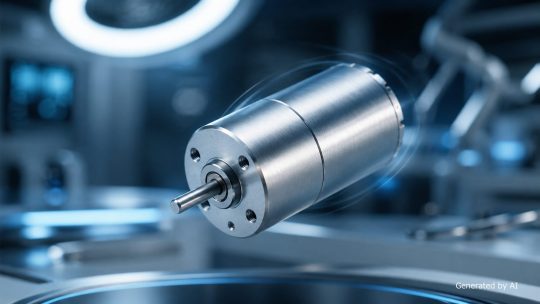
Motors for medical equipment must meet specific requirements distinct from those of industrial motors to ensure the operational accuracy and stability of the equipment.Smooth drive characteristics with minimal rotational irregularities, a lifespan capable of withstanding prolonged operation, and compact design to fit within the device are performance metrics common to many devices, regardless of their application. When conducting motor selection to meet these performance requirements, it is helpful to understand the differences in characteristics between various motor designs. We will explain the performance requirements for medical equipment motors, broken down by each of these perspectives.
Contents of This Section
- Smooth Rotational Characteristics with Minimal Cogging
- Design with a long service life supporting long-term operation
- Compact Design to Fit Within Limited Space
We will examine the three performance requirements that serve as criteria for motor selection, along with the background behind each.
Smooth Rotational Characteristics with Reduced Cogging
Smooth rotational characteristics with reduced cogging are one of the essential performance features that motors for medical equipment must possess. Cogging refers to the uneven rotation that occurs in motors with iron cores. Since coreless motors lack an iron core, they exhibit virtually no cogging caused by magnetic attraction, resulting in smooth rotation and significantly reduced vibration and noise.Cogging is a phenomenon in which torque fluctuates depending on the rotational position, manifesting as pulsations or vibrations during low-speed operation.Since coreless motors lack an iron core, the rotating parts have low inertia, resulting in fast start-up and stop response times and the ability to smoothly track even subtle speed changes. With their high responsiveness and controllability, coreless motors are ideally suited for medical applications such as endoscopes and dental treatment equipment. For devices requiring precise movements—such as flow rate control in infusion pumps or the drive mechanisms of endoscopes—smooth rotation is a fundamental performance characteristic that underpins control accuracy.
Design with a Long Service Life Supporting Continuous Operation
A design with a long service life that supports long-term operation is a key factor to consider during motor selection for medical equipment. Medical equipment includes equipment that operates 24 hours a day and devices where failure during use is unacceptable; therefore, a design with a long service life that minimizes maintenance frequency is essential. Since shutting down the device for each maintenance task disrupts examinations and treatments, there is a high demand for designs that minimize the frequency of replacements and adjustments.Designs that do not rely on regular component replacement also help reduce operational burdens. The following methods support designs aimed at achieving a long service life.
[Examples of Designs Supporting a Long Service Life]
- Adoption of Brushless DC Motors with minimal mechanical contact
- Use of high-quality bearings
- High-efficiency structures that minimize heat generation
Because Brushless DC Motors lack brushes, there is no wear caused by the sliding motion between the brushes and the commutator, thereby reducing wear points. In devices that perform repetitive micro-movements, high-precision design that minimizes play caused by wear and aging is also a key factor in ensuring a long lifespan. When it comes to maintaining stable operation of equipment over the long term, lifespan design is a critical consideration in motor evaluation.
Compact Design to Fit into Limited Spaces
Compact motors to fit within limited space are a performance requirement common to medical equipment.The interior of medical equipment is densely packed with numerous components, such as electronic circuit boards, sensors, and cooling structures, leaving very little space available for the motor. Depending on the device, space for storing medical fluids and tubing for piping must also be accommodated internally, further limiting the area available for the motor. Therefore, a high-power-density design capable of generating the required torque despite its small size is essential.Compact, high-power-density motors are effective for making the entire device more compact and increasing design flexibility. When the motor’s operating voltage can be set to a lower level, the required insulation structure can be simplified, contributing to improved cost efficiency and space-saving results. From the initial stages of designing the device’s exterior and internal layout, the balance between the motor’s dimensions and output determines the product’s overall quality.
Three Key Points to Consider During Motor Selection for Medical Equipment
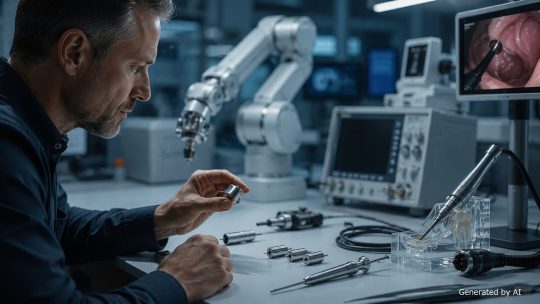
When performing motor selection for incorporation into medical equipment, it is essential to comprehensively evaluate the device’s application requirements, compliance with international standards, and the development and mass production infrastructure.In recent years, demand has expanded in fields requiring precise position control, such as surgical assistance robots, and the performance required of motors has become increasingly sophisticated. Verifying each of these aspects early in the process is essential for ensuring that development proceeds according to plan. We will systematically organize and explain the key points to keep in mind for steady product development.
Contents of This Section
- Selecting a Motor with Specifications Suited to the Application
- Verifying compliance with international standards
- Selecting a supplier with a support system covering everything from prototyping to mass production
We will examine the three key factors for motor selection, along with the background for each.
Selecting a Motor with Specifications Suited to the Application
Selecting a motor with specifications suited to the application is the starting point for medical equipment development. The required rotational characteristics, torque, and size vary by device, necessitating optimization for each specific application. The main applications and their specification requirements are summarized below.
| Application | Typical Specification Requirements |
| Dental Treatment Units | Drive characteristics capable of handling high-speed operation |
| Endoscopes | Compact size and low-vibration drive |
| Surgical Assistance Robots | High-precision position control and high torque |
When optimizing specifications, it is essential not only to consider rotational speed and torque values but also to select the specific type of motor based on the application.Motors with different structures, such as coreless motors and Brushed DC motors, are selected and used according to their respective operational characteristics. In surgical assistance robots, the motors that drive endoscopes (cameras) and forceps play an indispensable role in ensuring precise positioning. Carefully assessing the characteristics of the equipment and making informed decisions regarding motor type and specifications are key to achieving optimal product performance.
Verifying Compliance with International Standards
Verifying compliance with international standards is an essential step in the development of medical equipment. For medical electrical equipment, IEC 60601-1 are the international standards that form the foundation of design, establishing requirements for basic safety and essential performance. The main points required by IEC 60601-1 include the following items.
[Key Requirements of IEC 60601-1]
- Protection against electrical hazards
- Protection against mechanical hazards
- Protection against thermal hazards
- EMC (Electromagnetic Compatibility)
- Maintenance of Basic Performance
Although IEC 60601-1 does not specify requirements for individual motors, the motor selection to be incorporated into medical equipment is critical to the overall safety design of the equipment from the perspectives of protection against electrical and thermal hazards, as well as EMC (electromagnetic compatibility) as defined in the associated standard IEC 60601-1-2. For example, selecting a lower drive voltage may allow for a simpler insulation structure to meet the requirements.Since motors also contribute to heat generation in medical electrical equipment, high efficiency operation is effective for managing temperature. Because motors and drive circuits can also be sources of noise, it is necessary to verify their types and drive methods from an EMC perspective. Selecting specifications in accordance with standard requirements facilitates the certification of the entire device.
Choose a manufacturer with a support system that spans from prototyping to mass production
Selecting a manufacturer with a support system that spans from prototyping to mass production helps ensure a smooth development process. In medical equipment development, collaborating with a motor manufacturer that can provide consistent support from the conceptual stage through mass production is effective for both advancing development and ensuring quality. Being able to consult with the manufacturer from the early stages of development allows for early specification adjustments and identification of issues, thereby minimizing rework in later stages. The following items are examples of support details you should confirm with your partner.
[Support Services to Confirm with the Manufacturer]
- Specification proposals based on standard products
- Customization based on application
- Provision of prototype samples
- Technical support during the development phase
In the development of medical equipment and analytical instruments, a support system capable of handling everything from identifying challenges to proposing standard and custom products, as well as providing documentation and samples, supports the decision-making process of development personnel. Even if standard products cannot meet requirements ( ), having a system in place to receive proposals for custom solutions tailored to the application can minimize the need for design changes to the equipment itself. Choosing a manufacturer that can provide the necessary support is a key factor in determining how smoothly the entire development process proceeds.
Summary
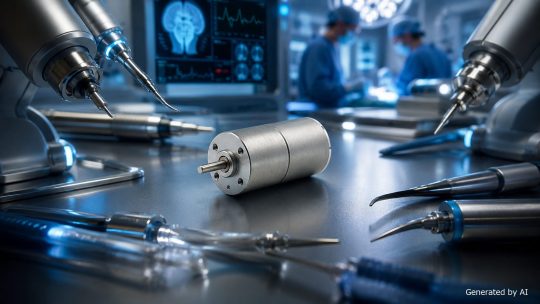
Motors in medical equipment serve as core components that support the functionality of the equipment, such as driving the rotation of handpieces in dental treatment units, providing precise drive for the tip mechanisms in endoscopes, and enabling precise control of liquid volume in electronic pipettes. Typical performance requirements include smooth rotational characteristics with minimal cogging, a long service life to support long-term operation, and compact design to fit within limited spaces.When selecting a motor, the three key criteria for evaluation are compliance with application requirements, adherence to international standards, and the availability of a support system capable of assisting from prototyping through mass production. Coreless motors are characterized by their structure, which lacks an iron core, resulting in virtually no cogging and smooth rotation, as well as excellent response characteristics during start-up and stop. At C.I. Takiron Corporation, we specialize in proposing Micromotors for Medical Device Applications, with a focus on coreless motors.If you are having trouble with motor selection for medical equipment applications, please feel free to contact us via the inquiry form.
Product Information & Inquiries
For more details on C.I. Takiron’s micro motor products, please visit the website below.
- Product Site: https://cik-ele.com/en/
- Coreless Motors: https://cik-ele.com/en/products/list/coreless_motor/
- Brushless Motors: https://cik-ele.com/en/products/list/brushless_motor/
- Geared Motors: https://cik-ele.com/en/products/list/gearhead/
- Encoders: https://cik-ele.com/en/products/list/encoder/
If you are having trouble selecting a small motor for your product development, please feel free to contact us via the inquiry form. Our technical staff will discuss your application and requirements with you and propose the optimal solution.
- Inquiries: https://cik-ele.com/en/contact/