

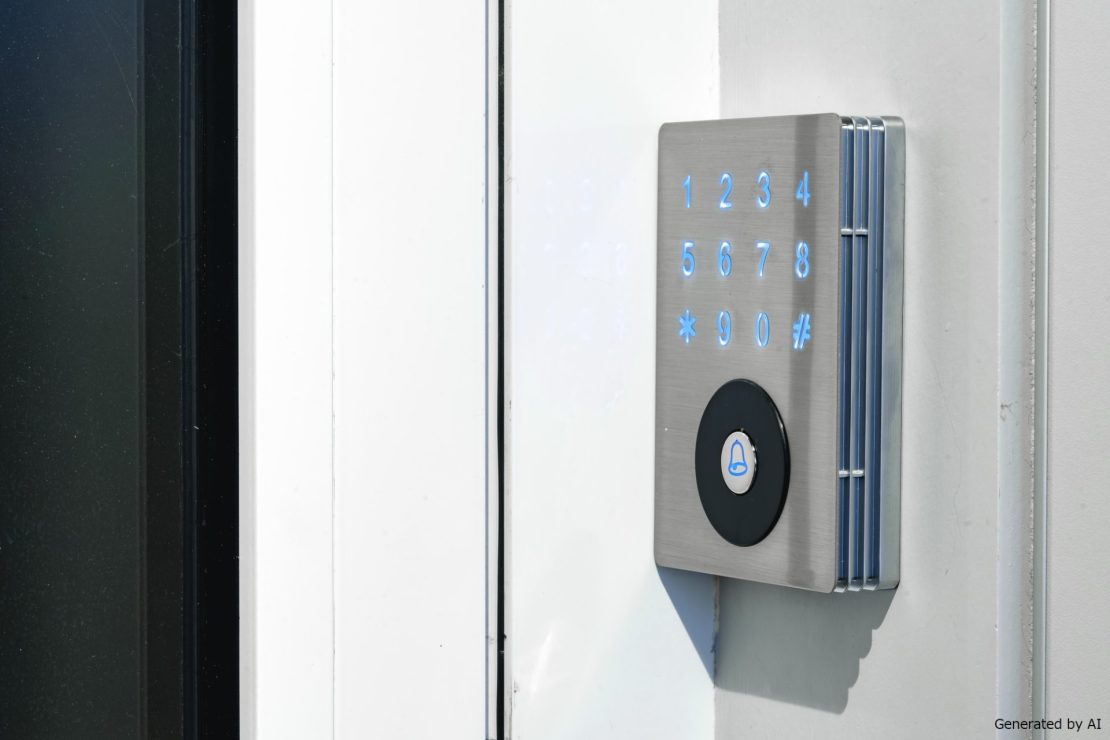
This article was created by translating a Japanese article.
In offices, factories, research facilities, and other settings, it’s important not only to prevent unauthorized entry but also to properly manage “who entered, when, and where.” However, relying solely on physical keys requires significant effort—not only to prevent loss, duplication, and forgetting to lock doors, but also to manage access for each user.
Electric locks, which use electricity to control locking and unlocking, help solve these challenges. In this article, we’ll provide an easy-to-understand explanation of the types of electric locks and the benefits of installing them, as well as the mechanism of motorized locks—which offer high security—and key points to consider when selecting a system.
| Supervised by: C.I. TAKIRON Corporation Electronic Devices Sales Group This article has been supervised based on the advanced technical expertise and insights we have cultivated since our founding in 1919 as a leading company in plastic processing. Our department continuously analyzes market trends and the latest technologies in ultra-compact, high-precision micro motors, focusing on providing high-value-added information to designers and developers. As a team of experts with in-depth knowledge of product characteristics, we support our customers’ problem-solving and technological innovation by delivering accurate and practical content. |
What Are Electric Locks?
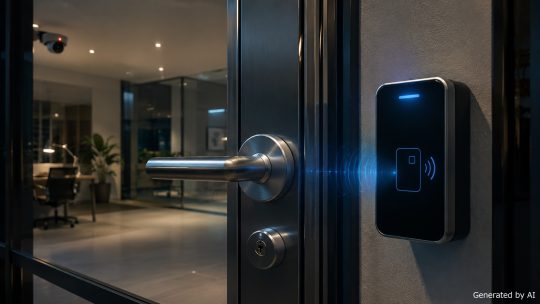
In offices, factories, research facilities, and other settings, it is necessary not only to prevent unauthorized entry but also to properly manage access for each user. Electric locks are devices that, when combined with authentication devices and management systems, can enhance both security and ease of management.
First, let’s look at the basic mechanism of electric locks and how they differ from conventional locks.
Overview of Electric Locks
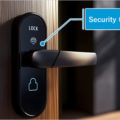
An electric lock is a locking device that uses electrical signals to control locking and unlocking. It primarily consists of an “operator unit” that verifies identity using IC cards or PIN codes, a “control unit” that receives signals and determines the action to take, and a “lock case” that actually locks and unlocks the door.
Once a user is authenticated, a signal is sent from the control unit, activating the motor or solenoid inside the lock case to unlock the door. Depending on the system configuration, the system can also support remote operation, automatic locking, and the logging of entry and exit records. A key feature of electronic locks is their ability to provide management functions not found in physical keys.
Differences from Conventional Locks
Electric locks differ from conventional locks not only in how they are locked and unlocked, but also in key management and system integration. The main differences are as follows.
| Comparison Criteria | Conventional Locks | Electric Locks |
| Unlocking Method | Physical key | IC cards, PIN codes, biometric authentication, etc. |
| Entry/Exit Logs | Generally not recorded | Can be recorded and verified |
| Access Control | Requires key distribution and collection | Can be configured within the system |
| System integration | Difficult | Can be integrated with security cameras and remote management systems |
By integrating with an access control system, electronic locks allow you to manage access permissions and entry/exit logs for each user. The main differences compared to physical keys are that they are easier to manage and their functionality can be expanded as needed.
Main Types of Electric Locks
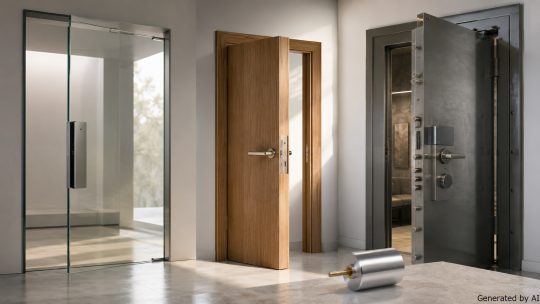
Electric locks come in various types that differ in their operating principles and structures. The most common types are “electromagnetic locks,” which secure the door using magnetism; “electric strikes,” which control a strike plate on the door frame; and “motorized locks,” which use a motor to operate the deadbolt.
| Types | Mechanism | Features | Main Applications |
| Electromagnetic Lock | Secures the door using magnetic force | Fewer moving parts, so it operates quietly | Doors in common areas, server rooms, and restricted access areas, etc. |
| Electric Strike | Electrically controlled strike plate | Easy to retrofit onto existing doors | Offices, retail stores, common areas, etc. |
| Motorized lock | Drives the deadbolt with a motor | Ideal for secure locking | Exterior doors, high-security areas, common entrances, etc. |
The appropriate system depends on the door’s structure and the required level of security. Below, we explain the mechanisms and features of each in detail.
Electromagnetic Lock
An electromagnetic lock is an electric lock that uses the magnetic force of an electromagnet to secure the door. When electricity is applied, the electromagnet on the door frame and the attraction plate on the door are strongly drawn together, maintaining the locked state.
Since they lack physical moving parts such as deadbolts, they are characterized by the absence of mechanical wear and produce virtually no operating noise. Additionally, many products feature a fail-safe design that automatically unlocks during a power outage, making it easier to secure evacuation routes in emergencies.
They are used not only in offices, common areas of apartment buildings, and server rooms, but also on sliding doors and large steel doors.
Electric Strike
An electric strike is a mechanism that electrically controls a receiving plate—called a strike—located on the door frame. Since it can be used in combination with existing doors and locks, it is relatively easy to install an electric lock without replacing the entire door, typically requiring only minor modifications to the door frame.
By utilizing existing infrastructure, installation costs can be kept low, and the system supports access control and automatic locking. It is ideal for adding security features to existing doors, such as office entrances, store backrooms, and common areas.
Motorized Locks
A motorized lock is an electric lock that uses the rotation of a built-in motor to move a component called a deadbolt, which secures the door. After authentication, the motor and gear mechanism activate, locking or unlocking the door by extending or retracting the deadbolt.
They operate relatively quietly and smoothly, and some models can maintain the locked state even during a power outage. This system is well-suited for locations that require high security and reliable locking performance, such as common entrances in apartment buildings, office entrances, and restricted areas. We’ll explain the detailed mechanism later.
Benefits of Installing an Electric Lock
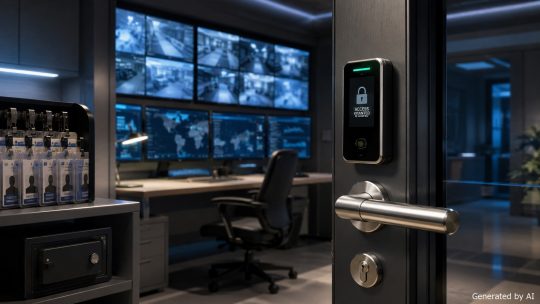
Installing an electric lock not only automates locking and unlocking but also reduces the burden of managing physical keys. Furthermore, by integrating with an access control system, it is possible to manage access permissions and entry/exit logs for each user.
Here, we’ll introduce the three main benefits of installing electric locks.
Enhanced Security
A major benefit of installing electronic locks is that they enhance facility security. When combined with IC cards, PIN codes, or biometric authentication, they help mitigate the risk of unauthorized entry caused by the illegal duplication of physical keys or lock picking.
Using the auto-lock feature also helps prevent forgetting to lock the door. Furthermore, with systems that support remote operation, administrators can control locking and unlocking from a remote location.
Since entry and exit logs are recorded, it is easy to verify when and by whom the facility was accessed in the event of suspicious activity. This is useful not only for day-to-day security measures but also for assessing the situation when incidents occur.
Streamline Key Management
Installing electronic locks reduces the administrative burden associated with distributing and collecting physical keys. Since authentication is performed using IC cards or PINs, there is no need to create duplicate keys for each user, which also minimizes the risks associated with lost or stolen keys.
Access permissions can be centrally managed through the management system. Even when employees join, leave, or are transferred, you can easily add, modify, or remove access permissions.
This reduces the costs and effort associated with making duplicate keys and replacing locks, and the more users a facility has, the greater the expected improvement in management efficiency.
Integrates with Access Control Systems
By integrating with an access control system, electric locks can further streamline facility management. Since they record “who,” “when,” and “which door” was accessed, they can be used to monitor access to restricted areas and verify locations during emergencies.
You can also set which areas and time periods users are permitted to access based on their department or role. Furthermore, by integrating with security cameras and security systems, you can cross-reference access logs with video footage.
By integrating these devices and systems, it becomes easier to centrally manage security measures for the entire facility, rather than managing each door individually.
What Is a Motorized Lock?
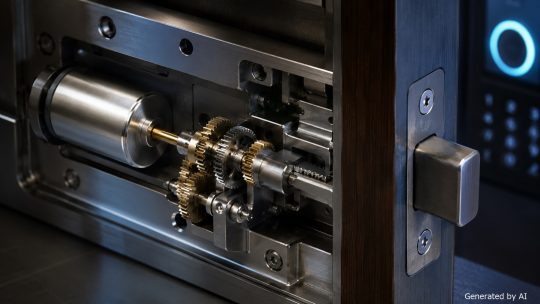
A motorized lock is a type of electric lock that uses compact motors to move a deadbolt, thereby locking and unlocking the door. Because it physically secures the door, it is used in locations where high security and reliable locking performance are required.
Here, we’ll explain in detail how motorized locks work, why they’re gaining attention, and how they differ from other electric locks.
How Motorized Locks Work
Motor locks operate by using the rotation of a compact motor to move the deadbolt, thereby locking and unlocking the door. When authentication is completed via an IC card or PIN, the motor rotates and moves the deadbolt in a linear motion via a gearhead (reduction gear).
A key feature is its ability to reliably move the deadbolt by converting the motor’s rotational force into significant mechanical force. Although the operating speed is slightly slower than that of solenoid-type locks, they operate quietly and smoothly.
In the event of a power outage, the lock maintains its most recent locking state (fail-secure design), and some models also allow manual operation using a physical key or thumb turn.
Why Motorized Locks Are Gaining Attention
Motorized locks are gaining attention because they combine high security with reliable locking performance. By using the motor’s power to insert the deadbolt into the strike plate on the door frame and physically secure the door, they help prevent incomplete locking.
Another key feature is that the motor’s rotation is transmitted via gears, making it easier to generate the force required to drive the deadbolt. Since the operation is relatively quiet and smooth, these locks are used in locations where doors are opened and closed frequently—such as offices and common areas in apartment buildings—where operational noise is a concern.
Differences Between Motorized Locks and Other Electric Locks
Motorized locks differ from other electric locks in terms of the mechanism used to secure the door and their operational characteristics. The main differences are as follows:
| Types | Mechanism for Securing the Door | Main Features |
| Motorized Locks | Deadbolt driven by a motor | Quiet operation and capable of generating high force |
| Electromagnetic Lock | Holds the door in place with magnetic force | Fewer moving parts result in quiet operation |
| Electric strike | Controls the strike plate on the door frame | Easy to install on existing doors |
Motorized locks physically secure the door by directly operating the deadbolt, ensuring reliable locking. They operate quietly and smoothly and can generate significant force, making them ideal for exterior doors and high-security areas where security, quiet operation, and durability are priorities.
Main Applications for Motorized Locks
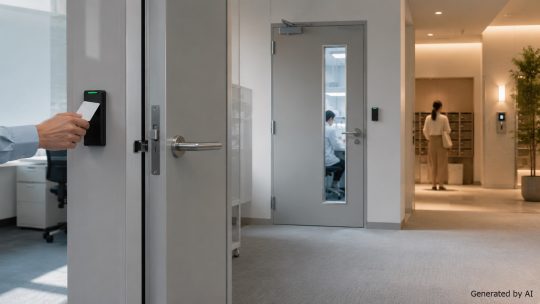
Motorized locks are installed in a wide range of facilities, leveraging their high level of security and reliable locking performance. They are particularly well-suited for offices and business premises requiring access control, as well as factories and research facilities where strict security is essential.
Here, we introduce the main scenarios where motorized locks are used.
Offices and Business Premises
Motorized locks are used in offices and business premises where employee access control is necessary. When combined with IC card readers or PIN entry devices, they ensure that only authorized employees can enter and allow for the recording of who entered or exited and when.
By linking access logs with time-and-attendance systems, attendance management can be streamlined. In areas handling important documents or confidential information, access permissions can be set for each user, and doors can be securely locked with deadbolts to minimize the risk of unauthorized entry.
Factories and Research Facilities
Motorized locks are also well-suited for factories and research facilities that require strict security management. By creating an environment where only authorized employees can enter areas such as research and development zones or hazardous material storage areas, the risk of information leaks and accidents can be minimized.
By setting access permissions based on department or job title, these systems can also be utilized for maintaining confidentiality and ensuring safety management. In the event of an incident, access logs can be used to verify employee movements, helping to assess the situation.
In the event of a disaster, this system also serves as a means to confirm who is inside the facility.
Apartment Buildings and Public Facilities
Motorized locks are also used in apartment buildings and public facilities where both safety and convenience are required. At the common entrance of an apartment building, combining them with automatic locking systems or IC card authentication creates an environment where residents can enter and exit smoothly while preventing unauthorized access by outsiders.
Depending on the product, it is possible to maintain the locked state during a power outage or to unlock the door using a physical key or thumb turn in an emergency. Furthermore, simple operation via IC cards and similar methods is well-suited for public facilities and welfare facilities with a wide range of users, helping to balance safety and ease of use.
Key Considerations When Selecting Electric Locks and Motorized Locks
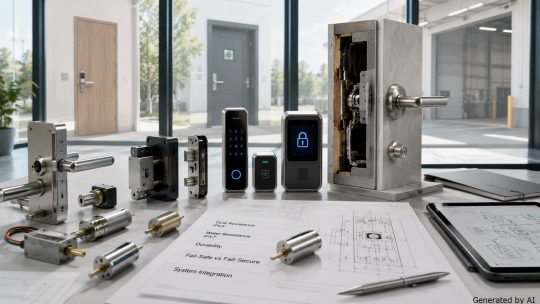
Since electric locks and motorized locks vary in mechanism and features depending on the type, it is important to choose a product suited to the installation location and intended use. To ensure stable operation after installation, it is necessary to verify not only compatibility with the door but also durability and interoperability with other systems.
Below, we explain three key points to keep in mind during the selection process.
Choose a System Suited to the Installation Location
When selecting an electric lock or motorized lock, it is important to choose a system suited to the installation location and the door’s structure. The appropriate system varies depending on the purpose—for example, an electric strike is ideal for utilizing existing doors, while a motorized lock is better suited for locations where security is a priority.
In addition to the door’s thickness, material, and frame shape, you’ll need to consider factors such as traffic frequency and exposure to rain and wind outdoors. You should also determine whether you need a “fail-safe” system—which unlocks the door during a power outage—or a “fail-secure” system—which maintains the locked state.
Verify Durability and Reliability
Since electric locks and motorized locks are equipment intended for long-term use, verifying their durability and reliability is essential. Particularly at entrances and exits with high traffic volume, where the number of opening and closing cycles increases, it is important to check the operating cycle counts and durability test results published by the manufacturer.
When installing in outdoor locations or factories, it is also necessary to verify dustproof and waterproof performance, corrosion resistance, and the applicable temperature range. Additionally, be sure to confirm the post-installation support system, including response to malfunctions, parts supply, and maintenance services.
It is important to select a product not only based on its performance but also by taking into account the actual installation environment and frequency of use.
Verify Ease of System Integration
When selecting electric locks or motorized locks, you need to verify whether they can integrate with the authentication devices and management systems you plan to implement. Be sure to check compatibility in advance with the devices you intend to use, such as IC card readers, PIN pads, and biometric authentication devices.
If you plan to track access logs or configure access permissions, compatibility with dedicated control panels and network connections is also important. Additionally, anticipating future integration with security cameras and remote management systems will make it easier to expand your infrastructure.
Rather than basing your decision solely on the features needed at the time of installation, checking for compatibility with devices and systems that may be added in the future will help minimize the burden when expanding your system.
Summary
Electric locks help mitigate issues such as lost or duplicated physical keys and forgotten locking, while also improving the efficiency of access control. There are various types, including electromagnetic locks, electric strikes, and motorized locks, and the most suitable type varies depending on the installation location and the required level of security.
Motorized locks, in particular, use a motor to move the deadbolt and secure the door, making them ideal for locations that require high security and reliable locking performance. If you wish to enhance security in offices, factories, research facilities, or similar settings, be sure to select an electric lock that matches your specific application and door structure.
Product Information & Inquiries
For more details on C.I. Takiron’s micro motor products, please visit the website below.
- Product Site: https://cik-ele.com/en/
- Coreless Motors: https://cik-ele.com/en/products/list/coreless_motor/
- Brushless Motors: https://cik-ele.com/en/products/list/brushless_motor/
- Geared Motors: https://cik-ele.com/en/products/list/gearhead/
- Encoders: https://cik-ele.com/en/products/list/encoder/
If you are having trouble selecting a small motor for your product development, please feel free to contact us via the inquiry form. Our technical staff will discuss your application and requirements with you and propose the optimal solution.
- Inquiries: https://cik-ele.com/en/contact/