



In fields such as industrial equipment, medical equipment, and robotics, designs that balance miniaturization with the necessary torque are critical to product performance. Concerns such as “Can we increase the torque a little more while keeping the size the same?” and “We want to make the device smaller, but we’re worried about whether it can withstand the load” are recurring design challenges faced in development environments.In this article, we will provide a comprehensive explanation, covering everything from the basic mechanisms of compact high-torque Torque motors to typical methods for increasing torque, their main applications, and key points to consider during the selection process. We have also compiled frequently asked questions from the design field in a Q&A format. We hope this content will serve as a useful reference when conducting motor selection or preparing materials for internal reviews.
| Supervised by: C.I. TAKIRON Corporation Electronic Devices Sales Group This article has been supervised based on the advanced technical expertise and insights we have cultivated since our founding in 1919 as a leading company in plastic processing. Our department continuously analyzes market trends and the latest technologies in ultra-compact, high-precision micro motors, focusing on providing high-value-added information to designers and developers. As a team of experts with in-depth knowledge of product characteristics, we support our customers’ problem-solving and technological innovation by delivering accurate and practical content. |
Basics of Compact High-Torque Torque Motors
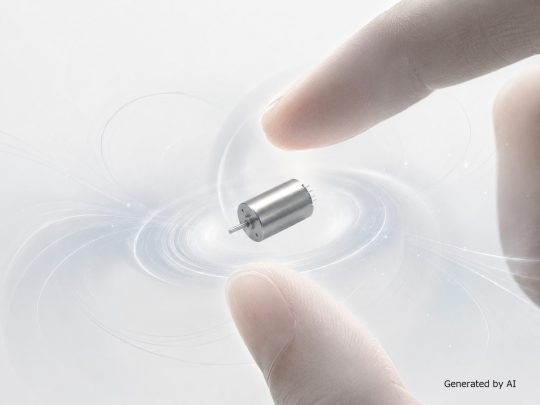
When performing motor selection for a compact high-torque motor, establishing a common understanding of basic terminology and numerical values first will facilitate subsequent comparisons of methods and evaluations of applications. Understanding the meaning of torque, the range of Torque motors, and the challenge of simultaneously achieving miniaturization and high torque are essential prerequisites for making informed design decisions. In this chapter, we will systematically review the fundamentals—from three perspectives—that will lead to a better understanding of technical concepts and torque-enhancement strategies.
Contents of This Section
- What Are Compact High-Torque Torque Motors?
- Torque Basics and Units
- The Significance of Balancing Miniaturization and High Torque
By following this sequence, you will establish a connection between the definitions of terms and their significance in design, preparing you to interpret methods for improving torque.
WHAT ARE COMPACT HIGH-TORQUE TORQUE MOTORS?
A compact high-torque Torque motor refers to a Torque motor designed to be small in size yet capable of generating high torque—the rotational force. High-torque Torque motors are generally defined as Torque motors with high rotational force. On the other hand, there is no clear, industry-standard definition for “compact motors.” Some sources classify motors with an output of 100 W or less as compact motors and those with 3 W or less as ultra-compact motors , but the definition itself is considered unclear.In this article, we will focus on motors that combine small size with high torque. The Micromotors developed by C.I. Takiron Corporation fall into the category of motors capable of generating torque in the mN·m range, as described later. Since their design principles differ from those of large industrial motors operating at the N·m level, readers will gain a deeper understanding by approaching this article with the premise of high torque within compact devices.
Basics of Torque and Units
Torque is a measure of the rotational force (moment of force) acting on a shaft. In technical terminology explanations within the FA field, torque is defined as the rotational force acting around a shaft, and its unit is the International System of Units (SI) N·m (newton-meter).Based on the Measurement Units Act, N·m is defined as: the moment of force when a force of 1 N is applied perpendicular to a point 1 m away . In the field of compact motors, units smaller than N·m—specifically mN·m—are used. The relationship between the two is as follows.
| Unit | Pronunciation | Magnitude Relationship |
| N・m | Newton-meter | A derived unit in the International System of Units (SI) representing the moment of a force |
| mN・m | millinewton-meter | One-thousandth of a N·m |
The torque generated by Micromotors is limited to the mN·m range, which is an order of magnitude different from the N·m handled by large motors. When evaluating drive sources for small devices, maintaining a consistent understanding of units improves the accuracy of torque estimates and product comparisons.
The Significance of Achieving Both Miniaturization and High Torque
Here, we explain the significance of achieving both miniaturization and high torque. Generally, larger motors tend to generate greater torque. If high torque can be achieved without increasing the size, it becomes possible to design a compact motor that delivers the same torque performance as a larger one. Compact motors are found in many everyday devices, such as smartphones, vacuum cleaners, and hair dryers.As devices become smaller, the dimensions of the motors that can be incorporated into them are subject to greater constraints. The goal is to design motors that secure the necessary torque within these constraints, thereby achieving both the miniaturization of the entire device and the maintenance of its performance. In fields where installation space is limited, such as medical equipment and precision instruments, compact motors that deliver sufficient torque expand the design flexibility of the product.
METHODS FOR INCREASING TORQUE IN COMPACT, HIGH-TORQUE TORQUE MOTORS
A motor’s torque is determined by its internal electromagnetic design and its external reduction mechanism. To increase torque while maintaining the same size, a design that optimizes the combination of these elements is required. Methods for increasing torque can be categorized from multiple perspectives. In this chapter, based on this approach, we will explain typical torque-enhancement strategies for compact motors, organized into three categories.
Contents of This Section
- Optimization of Magnets and Core Materials
- Winding and Air Gap Design
- Achieving Low Speed and High Torque with Geared Motors
By comparing approaches based on internal design with those based on external mechanisms, you can gain the perspective needed to select the torque-enhancement strategy that best suits your specific application.
Optimization of Magnets and Core Materials
Optimizing magnets and core materials is a method for increasing torque through the motor’s internal electromagnetic design. The following two internal factors influence torque:
| Factors | Contribution to Torque Improvement |
| Redesigning the Magnets | Increase torque by replacing magnets with ones that have stronger magnetic force |
| Improvement of core material | Use high-permeability electrical steel to increase magnetic flux density |
There are various types of magnets, such as ferrite, neodymium, and samarium-cobalt. While neodymium magnets possess strong magnetic force, they are sensitive to heat; for standard grades, the general guideline is to limit the operating temperature to around 80°C. Regarding core materials, the higher the magnetic permeability, the better the core functions as an electromagnet, leading to high torque. By selecting magnets and core materials that match the temperature conditions of the application, it becomes possible to design a system that increases torque while maintaining the same size.
WINDING AND AIR GAP DESIGN
Optimizing the windings and air gap is another method for increasing torque through internal design. For the windings, increasing the number of coil turns or using thicker wire results in higher electric current and magnetic flux, leading to increased torque. When the wire diameter is increased, the starting torque and starting current increase in proportion to the square of the wire diameter. However, once a certain threshold is exceeded, this quadratic relationship tends to break down.The air gap refers to the space between the rotor and the stator. The narrower the air gap, the greater the magnetic force that can be harnessed. Since the windings and the air gap are interrelated, a design that adjusts both factors in conjunction is effective.
Achieving Low Speed and High Torque with Geared Motors
Using Geared motors to achieve low speed and high torque is a method of increasing torque through an external reduction mechanism. Geared motors are products that combine a motor and a gearhead (reduction gear), and they can increase the output torque depending on the reduction ratio. The output torque when a gearhead is installed is calculated using the formula “Tout = Tin × i × η” (output torque = input torque × reduction ratio × transmission efficiency) . While the output torque increases in proportion to the reduction ratio, the rotational speed decreases accordingly. Integrating the motor and gearbox into a single unit results in higher torque but lower rotational speed, so optimal design that takes rotational speed into account is essential.C.I. Takiron Corporation’s geared motors combine a gearhead with a Coreless motor or Brushless motor, making them an ideal choice for applications in compact equipment where low speed and high torque are required.
Main Applications and Selection Criteria for Compact High Torque Torque Motors

Compact high-torque Torque motors are widely used in fields such as medical equipment and industrial equipment, where the required torque must be delivered within limited spaces. To proceed with adoption, it is helpful to understand the intended application and to have a list of selection criteria and answers to common design questions ready, as this will facilitate a smooth evaluation process. This chapter explains typical applications, key selection points, and frequently asked questions in that order.
Contents of This Section
- Main Applications of Compact High-Torque Torque Motors
- Key Considerations for Compact Motor Selection
- Frequently Asked Questions About Compact High-Torque Torque Motors
By following this step-by-step process—from understanding applications to verifying selection criteria and resolving on-site questions—you’ll gather the information needed to prepare materials for internal review.
Main Applications of Compact High-Torque Torque Motors
The primary applications of compact high-torque Torque motors are expanding into fields that require precise torque control at the mN·m level within limited spaces. Typical application areas include the following.
[Main Application Fields for Compact High Torque Torque Motors]
- Medical Equipment (Endoscopes, Catheters)
- Industrial equipment (power tools)
- Optical equipment (lens drive systems)
- Security equipment (electronic locks)
High-torque torque motors are used in a wide range of fields, including industrial equipment, robotics, and medical equipment. Ultra-compact motors with hollow shafts are expected to be utilized in medical and industrial fields, such as OCT and endoscopes. Since the required torque and rotational speed vary by field, the basic approach to design evaluation is to select a motor based on the application’s requirements.
Key Considerations for Motor Selection
When performing motor selection, it is essential to take a comprehensive approach that compares the required torque, rotational speed, power supply conditions, lifespan, and size. This process requires a thorough comparison of each motor’s features, performance, and characteristics. The main items to verify in advance are summarized below.
| Checklist | Details |
| Torque and Speed | Understand the balance between the required torque and speed |
| Power Supply Conditions | Verify that the drive voltage and electric current fall within the supply range |
| Operating Environment | Take into account operating environment conditions such as temperature |
It is generally understood that as the ambient temperature rises, the winding resistance increases, the magnetic force of the magnets decreases, and the starting torque drops. By organizing the specifications while taking the operating temperature into account, you can perform motor selection so that the motor will perform as expected in actual use.
Frequently Asked Questions About Compact High-Torque Torque Motors
Here, we address frequently asked questions regarding the evaluation of compact Torque motors in a Q&A format.
Q1. Is it possible to increase torque without changing the size?
- Yes, it is possible. By reevaluating the magnets, windings, air gap, core material, and core stack height, it is possible to increase torque while maintaining the same size.
Q2. Is a design that uses a gear to reduce speed and increase torque a compromise?
- Not necessarily. Speed reduction via gears is an effective means of achieving high torque. However, the design must strike a balance between precision, noise, and lifespan.
Q3. Does increasing high torque lead to more heat generation?
- Yes, it does. Increasing torque requires a higher electric current, and losses in the windings lead to heat generation.
Q4. Why do the power supply and driver reach their limits during startup?
- During motor startup, a peak electric current several times the rated current flows. When the power supply’s overcurrent protection trips, the output voltage drops; this reduction in applied voltage causes torque to decrease, making it impossible to achieve maximum torque at startup.
It is easier to organize these issues—which often arise in design—by separating them into two categories: torque improvement measures and power supply conditions.
Summary
This article covers everything from the basic concepts of compact high-torque Torque motors to typical methods for increasing torque, main applications and selection criteria, and frequently asked questions.To increase torque while maintaining the same size, an effective approach is to optimize the internal design—including the magnets, core, and windings—and combine this with speed reduction using Geared motors. Additionally, clarifying application-specific requirements and considering temperature conditions in the operating environment are key points to keep in mind during the selection process. C.I. Takiron Corporation offers support for reviewing Micromotor specifications tailored to your application and provides custom solutions. If you have any questions regarding your design, please feel free to contact us.
Product Information & Inquiries
For more details on C.I. Takiron’s micro motor products, please visit the website below.
- Product Site: https://cik-ele.com/en/
- Coreless Motors: https://cik-ele.com/en/products/list/coreless_motor/
- Brushless Motors: https://cik-ele.com/en/products/list/brushless_motor/
- Geared Motors: https://cik-ele.com/en/products/list/gearhead/
- Encoders: https://cik-ele.com/en/products/list/encoder/
If you are having trouble selecting a small motor for your product development, please feel free to contact us via the inquiry form. Our technical staff will discuss your application and requirements with you and propose the optimal solution.
- Inquiries: https://cik-ele.com/en/contact/