


A hollow motor is a motor with a through-hole in the center of its rotating shaft. Since cables, piping, shafts, and other components can be routed through the hollow section, it improves wiring and piping routing in confined spaces, leading to compact motors and greater design flexibility.
When performing motor selection, it is important to consider not only the hollow diameter but also the required torque, rotational speed, size, and other factors based on the equipment’s specifications. In this article, we provide an easy-to-understand explanation of the structure of hollow motors, their differences from standard motors, their benefits and precautions, main applications, and key points to check during the selection process.
| Supervised by: C.I. TAKIRON Corporation Electronic Devices Sales Group This article has been supervised based on the advanced technical expertise and insights we have cultivated since our founding in 1919 as a leading company in plastic processing. Our department continuously analyzes market trends and the latest technologies in ultra-compact, high-precision micro motors, focusing on providing high-value-added information to designers and developers. As a team of experts with in-depth knowledge of product characteristics, we support our customers’ problem-solving and technological innovation by delivering accurate and practical content. |
What Is a Hollow-Shaft Motor?

A hollow-shaft motor refers to a motor that, unlike a typical solid-shaft motor, has a through-hole in the center of its rotating shaft. The space in the center can be utilized as a pathway for wiring, piping, shafts, and other components.
Effective use of the hollow section reduces the amount of wiring and piping required around the motor, leading to space-saving results in the equipment and greater flexibility in layout. Additionally, depending on the configuration, direct connection to the driven shaft is possible.
It is important to perform motor selection not simply based on performance alone, but by taking into account the equipment’s structure, intended application, and the required hollow shaft diameter.
Structure and Mechanism of Hollow Motors
Like standard motors, hollow motors consist primarily of a stator (fixed part) and a rotor (rotating part). A key feature is the through-hole located at the center of the rotor or the rotating shaft.
Since power and signal cables, air tubes, shafts, and other components can be routed through the hollow section, this reduces the number of parts and wiring that need to be placed on the outside of the motor. Depending on the configuration of the product or equipment, it is also possible to pass the driven shaft through the hollow section, secure it there, and connect it directly to the motor.
Utilizing the hollow structure makes it easier to configure drive mechanisms while making effective use of limited space.
Differences from Conventional Motors
The main difference between a conventional motor and a hollow motor is whether the center of the rotating shaft can be utilized. While conventional motors with solid shafts transmit power from the shaft ends, hollow motors have a through-hole in the center that allows wiring, piping, shafts, and other components to pass through.
The main differences are summarized in the table below.
| Comparison Criteria | Conventional Motor (Solid Shaft) | Hollow-Shaft Motor |
| Shaft Structure | Solid shaft filled all the way to the center | A shaft with a through-hole in the center |
| Use of the center | Generally cannot be used | Can accommodate wiring, piping, shafts, etc. |
| Connection to the driven shaft | Most configurations involve connection via a coupling or similar device | Some configurations allow for direct connection by passing the shaft through the hollow section |
| Suitable Applications | General drive applications | Applications requiring secure wiring routes or space-saving designs |
Hollow motors are effective for applications requiring sufficient wiring space or space-saving designs. However, this does not mean they outperform standard motors in terms of performance.
It is important to select the appropriate motor based on the equipment’s structure, application, and required torque and rotational speed.
Advantages of Hollow Motors

Hollow motors allow for the effective use of the central space, which helps reduce the size of equipment and improve the routing of wiring and piping. Depending on the equipment configuration, they can also help reduce the number of parts and assembly time.
Here, we introduce the main benefits of adopting a hollow structure.
Routing Wiring and Piping Through the Hollow Section
A major advantage of hollow motors is the ability to route cables and tubing through the central cavity. By consolidating power cables, signal lines, and air tubes within the hollow section, the amount of wiring and piping running along the exterior of the motor is reduced, making it easier to organize the interior of the equipment.
Particularly in moving parts, cables may interfere with surrounding components or be subjected to stress due to repetitive motion. Proper wiring helps minimize interference with surrounding components and makes it easier to protect the cables, which is another key benefit.
In devices with multiple joints, such as robots, bundling the wiring also makes maintenance and inspection easier.
Leads to Space-Saving Designs
Using a hollow motor allows wiring, piping, shafts, and other components to be routed through the center, enabling effective use of the space around the motor. A key benefit is that there is less need to secure wiring paths on the exterior, making it easier to design the entire device in a compact manner.
Furthermore, depending on the configuration, direct connection to the driven shaft may be possible, which can reduce the number of transmission components such as couplings, belts, and pulleys. Space-saving designs that utilize the hollow structure are particularly effective for robot joints and automated equipment where drive mechanisms and wiring must be accommodated within limited space.
Increased Design and Assembly Flexibility
Another benefit is that the hollow section can be used as a path for wiring, piping, shafts, and other components, thereby expanding the options for equipment layout. Since it is not necessary to plan wiring routes solely on the exterior of the motor, it becomes easier to consider equipment configurations even in limited spaces.
Furthermore, in configurations where the driven shaft can be connected directly, transmission components such as couplings can be omitted, which may lead to a reduction in the number of parts and assembly labor. While weight reduction may be possible depending on the product or structure, it is important to consider not only weight reduction but also the overall equipment configuration when adopting hollow motors.
Disadvantages and Precautions of Hollow Motors
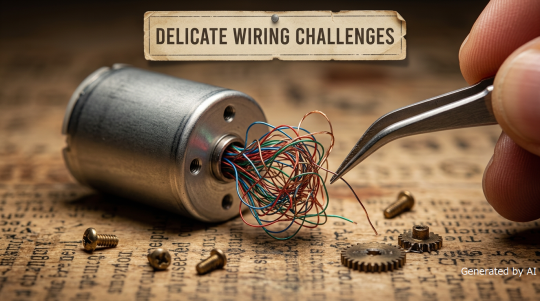
While hollow motors offer many advantages, they are not suitable for every application. It is important not to select a motor based solely on the required hollow diameter, but to also consider the motor’s performance, cost, and compatibility with peripheral equipment.
Here, we explain the points to consider before adopting them.
Balancing Hollow Diameter and Motor Performance
When selecting a hollow-shaft motor, it is important to verify the balance between the required hollow shaft diameter and motor performance. If a large hollow shaft diameter is required, you must confirm whether the necessary torque and rigidity can be achieved simultaneously, taking into account the motor’s external dimensions and internal structure.
Even with the same hollow shaft diameter, the available torque, rotational speed, and external dimensions vary by product. After clarifying the required diameters for wiring and shafts passing through the hollow section, verify the torque, rotational speed, size, and loads on the shaft, and select a product that meets the requirements of the entire system.
Check Costs and Compatibility with Peripheral Equipment
When adopting a hollow-shaft motor, it is necessary to consider not only the price of the motor itself but also the costs associated with peripheral equipment and integration. Since products with a hollow-shaft structure may be more expensive than equivalent solid-shaft motors, it is important to make a decision that takes into account the benefits gained from their implementation.
Additionally, when combining the motor with components such as gearheads, encoders, and drivers, it is necessary to verify the specifications and connection methods for each device. Even in configurations where direct coupling reduces the number of parts, the design and assembly effort will vary depending on the mounting method.
Do not base your decision solely on the motor itself; evaluate the entire system, taking into account the overall cost and maintainability of the equipment.
Main Applications and Examples of Hollow Motors
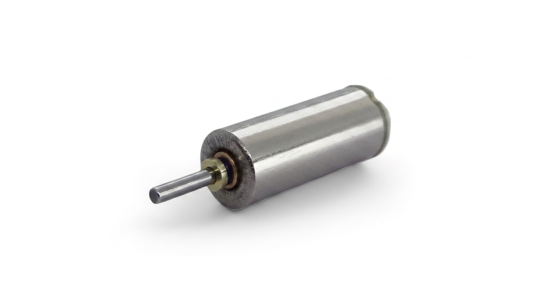
View the Coreless Motors Product List
Hollow motors are used in a wide variety of equipment and devices, taking advantage of their design, which allows wiring, piping, shafts, and other components to pass through the center. They are particularly effective in applications that require space-saving designs or the organization of complex wiring.
Typical applications and ways to utilize the hollow section are summarized below.
| Application Examples | Main Ways to Utilize the Hollow Section |
| Robots | Routing signal cables, air tubes, and other components |
| Conveyor Systems and Roller Drives | Forming drive mechanisms by threading roller shafts, etc |
| Spin Coater | Used as a path for air intake |
The use of hollow sections varies depending on the structure and purpose of the equipment. Below, we present specific application examples, divided into robots and automation equipment, and precision instruments and industrial equipment.
Robots and Automation Equipment
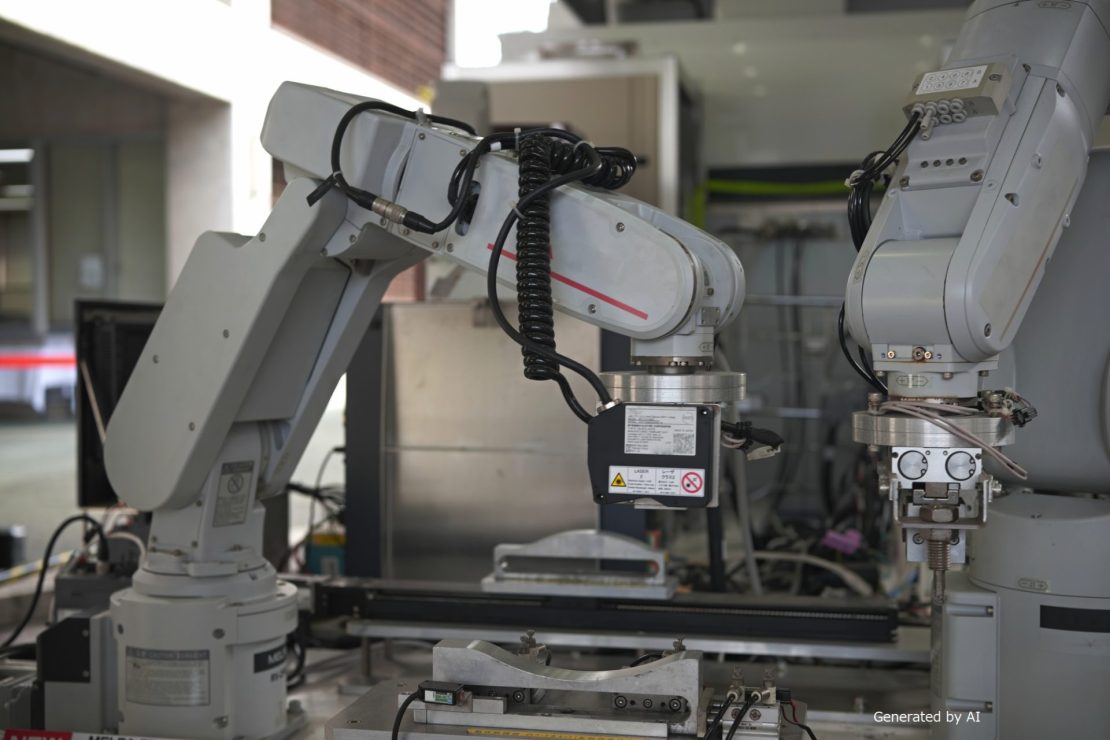
Hollow motors are used in robot arm joints and swivel axes. By routing signal cables and air tubes connecting to the tip through the hollow section, the amount of wiring running along the outside of the joint is reduced, making it easier to compactly organize the surrounding mechanisms.
Furthermore, routing wiring and piping internally makes it easier to prevent interference with surrounding components caused by the robot’s movements. In automated equipment, such as material handling systems, utilizing a hollow structure offers the advantage of making it easier to accommodate drive units and wiring within limited installation spaces.
Precision Equipment and Industrial Machinery
Hollow motors are also used in precision instruments and industrial equipment, including roller drives and spin coaters. In roller drives, by passing the roller shaft through the hollow section for direct connection, it is possible—depending on the configuration—to reduce the number of components such as couplings and design the drive unit more compactly.
A spin coater is a device that rotates workpieces such as wafers and substrates and uses centrifugal force to apply liquid in a thin, uniform layer. Hollow motors are also used in configurations where air is drawn through the hollow section to secure the workpiece while it rotates.
A key feature is the ability to utilize the hollow section in ways tailored to the equipment’s purpose, such as passing a shaft through it or using it as an air passage.
Key Considerations When Selecting a Hollow-Shaft Motor

When performing motor selection, relying solely on the hollow diameter as a criterion may result in the motor failing to meet the required drive performance or installation conditions. It is important to organize the equipment’s requirements—such as the required torque, rotational speed, external dimensions, and installation environment—and compare products accordingly.
The main items to check during selection are as follows.
- What will pass through the hollow section and the required inner diameter
- Required torque and rotational speed
- Motor outer diameter, overall length, and weight
- Installation environment, such as operating temperature and humidity
- Compatibility with gearheads, encoders, and drivers
- Wiring and piping routing, as well as maintainability
It is important to select a product not based solely on the bore diameter, but by considering the configuration of the entire system. Below, we will explain in detail the key points you should pay particular attention to.
Determine the Required Hollow Diameter
When selecting a hollow motor, first clarify what will be routed through the hollow section and determine the required hollow diameter. Power and signal cables, air tubes, shafts, and other components each require different amounts of space.
When bundling multiple cables, it is important to consider not only the outer diameter but also the thickness of the bundle and how it will route. When routing air tubes or similar components, you must ensure there is sufficient clearance for them to be positioned without strain.
Determine the required hollow diameter by anticipating the actual installation method, and then narrow down your options to products that meet these conditions.
Check Torque and RPM
Even if the required inner diameter is secured, the motor cannot be considered appropriate if it fails to meet the torque and rotational speed requirements of the equipment. It is important to calculate the required torque based on the size of the load being driven and to verify the rotational speed based on operating conditions such as the equipment’s speed and acceleration/deceleration.
When comparing products, check the rated torque, maximum torque, and maximum speed. Since high torque may be required temporarily during startup or acceleration/deceleration, it is important not to base your decision solely on normal operating conditions.
You must select a motor with sufficient margin, taking into account the load and operating conditions.
Check Size and Installation Requirements
In addition to the hollow shaft diameter and drive performance, you must also verify whether the motor can be seamlessly integrated into the equipment. Check whether the outer diameter, overall length, and weight fit within the installation space, and compare environmental conditions—such as operating temperature and humidity—with the product specifications.
If you plan to use a gearhead, encoders, brake, driver, or similar components, verify that the connection methods and specifications are compatible. Wiring and piping routing, ease of maintenance, and assembly labor requirements are also critical factors that must not be overlooked.
Taking these conditions into account, the decision must be based not only on the motor itself but also on the overall configuration and cost of the system.
Summary

Hollow motors take advantage of their structure, which allows wiring, piping, and shafts to pass through the center, helping to achieve space-saving results in equipment and improve design flexibility. These motors are a strong choice for applications—including robots and automated equipment—where limited space must be utilized effectively.
When selecting a motor, it is essential to conduct a comprehensive evaluation that considers not only the hollow shaft diameter but also the required torque, rotational speed, external dimensions, and compatibility with peripheral equipment.
At C.I. Takiron Corporation, we offer consultation services for motor selection and development tailored to your specific applications and requirements. If you have any questions regarding the specifications or selection of hollow motors, please feel free to contact us.
Product Information & Inquiries
For more details on C.I. Takiron’s micro motor products, please visit the website below.
- Product Site: https://cik-ele.com/en/
- Coreless Motors: https://cik-ele.com/en/products/list/coreless_motor/
- Brushless Motors: https://cik-ele.com/en/products/list/brushless_motor/
- Geared Motors: https://cik-ele.com/en/products/list/gearhead/
- Encoders: https://cik-ele.com/en/products/list/encoder/
If you are having trouble selecting a small motor for your product development, please feel free to contact us via the inquiry form. Our technical staff will discuss your application and requirements with you and propose the optimal solution.
- Inquiries: https://cik-ele.com/en/contact/