


Bearings, used in motors and industrial machinery, are critical components that support rotating shafts while minimizing friction to ensure smooth operation. If the wrong type of bearing is selected or it is not chosen properly, vibration, heat generation, and wear can occur, potentially leading to reduced machine performance and a shorter lifespan.
There are various types of bearings, and there are numerous factors to consider, such as structure, load direction, and rotational speed. In this article, we’ll provide an easy-to-understand explanation of everything from the basic mechanisms and types of bearings to how to select them, how to assess their lifespan, and maintenance methods.
| Supervised by: C.I. TAKIRON Corporation Electronic Devices Sales Group This article has been supervised based on the advanced technical expertise and insights we have cultivated since our founding in 1919 as a leading company in plastic processing. Our department continuously analyzes market trends and the latest technologies in ultra-compact, high-precision micro motors, focusing on providing high-value-added information to designers and developers. As a team of experts with in-depth knowledge of product characteristics, we support our customers’ problem-solving and technological innovation by delivering accurate and practical content. |
What Are Bearings?

A bearing is a mechanical component that supports a rotating shaft while bearing a load. It keeps the shaft in the proper position while minimizing friction in the rotating parts, thereby ensuring smooth motion.
Bearings are used in a wide range of machinery, including automobile wheels and transmissions, as well as motors, pumps, conveyors, washing machines, fans, and robots. The English word “bear” means “to support,” and bearings are one of the essential components for ensuring the stable operation of rotating machinery.
The Role of Bearings
The primary role of a bearing is to support a rotating shaft while minimizing friction between the shaft and surrounding components. If the shaft and surrounding components rub directly against each other, sliding friction can easily cause wear and heat generation.
In rolling-element bearings, the shaft is supported by rolling elements such as balls or rollers, which replaces sliding friction with rolling friction and reduces frictional resistance. Another important role is to maintain the proper position of the shaft and minimize runout and misalignment.
Since this also helps suppress friction, wear, and heat generation, bearings can be considered essential components that support the stable operation of machinery.
Basic Structure of Bearings
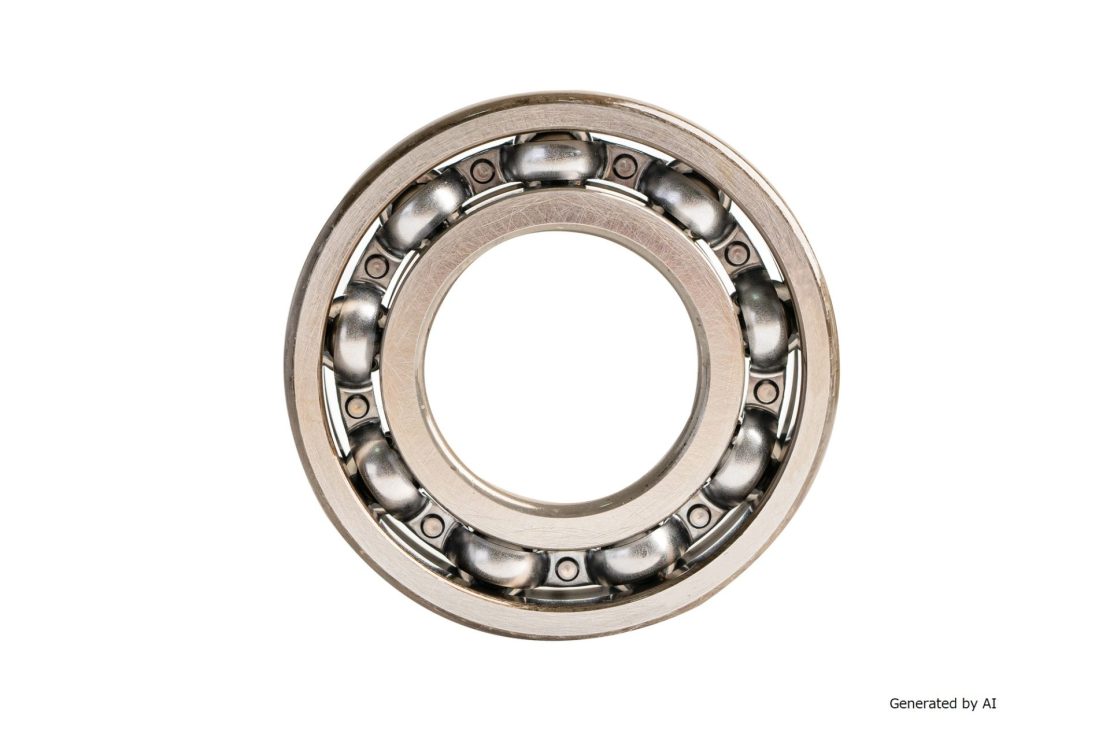
Typical rolling bearings consist primarily of an “inner ring,” an “outer ring,” “rolling elements,” and a “cage.” The inner ring is mounted on the shaft side, and the outer ring is mounted on the housing side; the rolling elements—such as balls or rollers—roll between the two rings.
The cage serves to maintain the rolling elements at appropriate intervals and prevent them from coming into contact with one another. Depending on the product, some types are equipped with seals or shields to prevent the ingress of foreign matter and lubricant leakage.
Lubricants, such as grease, used inside the bearing are also important for reducing friction and wear and maintaining smooth rotation.
Main Types of Bearings

There are various types of bearings, and they can be classified based on multiple criteria—such as the mechanism for supporting the shaft, the shape of the rolling elements, and the direction of the load—rather than just a single standard. Since each type is suited for different operating conditions, it is important to understand their characteristics and select the one that best fits the application.
The following summarizes the typical classifications and characteristics of bearings.
| Classification | Type | Main Characteristics |
| Shaft Support Mechanism | Rolling Bearings | Supports the shaft by rolling balls or rollers, thereby reducing friction |
| Shaft Support Mechanism | Sliding Bearings | The shaft and bearing surface make sliding contact, and the shaft is supported using lubricants or other means |
| Shape of Rolling Elements | Ball bearings | Uses balls; has relatively low friction and is suitable for high-speed rotation |
| Shape of Rolling Elements | Roller bearings | Uses rollers and is capable of withstanding heavy loads |
| Load Direction | Radial bearings | Primarily supports loads perpendicular to the shaft |
| Load Direction | Thrust bearings | Primarily support loads in a direction parallel to the shaft |
The points of comparison vary depending on the classification method. Let’s take a closer look at the differences between them from three perspectives: the mechanism for supporting the shaft, the shape of the rolling elements, and the direction of the load.
Rolling Bearings and Sliding Bearings
Bearings are broadly classified into “rolling bearings” and “sliding bearings” based on the mechanism used to support the shaft. Rolling bearings feature balls or rollers arranged between the inner and outer rings, with a structure that minimizes friction through rolling motion.
They have relatively low friction and are used in a wide range of applications, such as motors, machine tools, and automobiles. Sliding bearings rely on sliding contact between the shaft and the bearing surface, supported by lubricants or other means.
Their structure is relatively simple, and depending on the type, they are also used in applications subject to heavy loads or impacts. It is important to select the appropriate type based on factors such as rotational speed, load, and operating environment.
Ball Bearings and Roller Bearings
Rolling bearings are classified into “ball bearings” and “roller bearings” based on the shape of the rolling elements used. Ball bearings use spherical rolling elements and are characterized by contact with the raceway that is nearly point-like. Because they have relatively low friction, they are suitable for compact motors, home appliances, and precision equipment that require high-speed rotation and low noise.
Cylindrical roller bearings use rolling elements such as cylindrical, tapered, or needle-shaped rollers. Because they make linear contact with the raceway, they have a wide load-bearing surface and are used in industrial machinery, vehicles, and heavy equipment where high loads and high rigidity are required.
Radial Bearings and Thrust Bearings
Bearings can be classified primarily as “radial bearings” and “thrust bearings” based on the direction of the load they support. Radial bearings are designed to support radial loads acting perpendicular to the shaft. Examples include forces applied to the shaft by pulleys and gears.
Thrust bearings are designed primarily to support axial loads applied in a direction parallel to the shaft. They are used in applications where forces are applied in the axial direction, such as the thrust from a propeller.
When both radial and axial loads are applied simultaneously, it is necessary to select a type capable of handling combined loads, such as angular contact ball bearings or tapered roller bearings.
Main Applications of Bearings

Bearings are used in a wide range of machinery with rotating parts, including automobiles, machine tools, industrial machinery, robots, home appliances, precision equipment, and motors. Typical applications and the primary performance requirements are as follows.
| Application | Examples of Use | Primary Performance Requirements |
| Automobiles | Wheels, transmissions, etc. | Load-bearing capacity, impact resistance, durability |
| Machine Tools | Spindles, feed mechanisms, etc. | Rotational accuracy, high-speed rotation capability, rigidity |
| Industrial machinery | Pumps, conveyors, motors, etc. | Capability for continuous operation, durability |
| Robots | Joints, rotary tables, etc. | Rotational accuracy, space-saving design, and ability to handle combined loads |
| Home Appliances | Washing machines, air conditioners, electric fans, etc. | Thrust bearings |
| Precision Equipment | Medical equipment, optical equipment, etc. | Rotational Precision, Low Friction, Low Vibration |
The performance required of bearings varies depending on the application—for example, rotational precision and high-speed operation in machine tools, and low noise and low vibration in home appliances. In the case of motors, it is also essential to select bearings based on factors such as rotational speed, load, and required lifespan.
When selecting a bearing, it is important to consider the characteristics of the machine in which it will be used and to clarify conditions such as load magnitude and direction, rotational speed, precision, and operating environment.
Key Considerations When Selecting Bearings
When selecting a bearing, it is important to comprehensively evaluate not only the type but also the actual load, rotational speed, mounting space, precision, and operating environment. Using a bearing that does not meet these conditions may lead to issues such as heat generation, vibration, or premature wear.
The main points to consider during selection are as follows.
- Load and Rotational Conditions
- Load magnitude and direction, operating speed, and required lifespan
- Dimensions and Precision Requirements
- Shaft diameter, installation space, rotational accuracy, and internal clearance
- Operating Environment and Lubrication Conditions
- Operating temperature, dust and moisture, lubrication method, vibration and noise requirements
When selecting a bearing, it is important to consider multiple conditions comprehensively rather than focusing on any single factor. Next, let’s take a closer look at these factors, divided into three categories: “Load and Rotational Speed,” “Dimensions and Precision,” and “Operating Environment and Lubrication Conditions.”
Load and Rotational Speed
When selecting a bearing, it is necessary to confirm the direction and magnitude of the load, as well as the rotational speed. The appropriate bearing type varies depending on the ratio of radial load—which acts perpendicular to the shaft—to axial load—which acts along the shaft.
Regarding rotational speed, check the maximum allowable rotational speed of the bearing to be used. As rotational speed increases, heat generation due to internal friction also increases, which can lead to lubricant degradation or seizure.
When using bearings at high speeds, it is necessary to consider not only the type of bearing but also the lubrication method, seals, and cooling.
Dimensions and Precision
Bearing dimensions are selected to match the shaft diameter, housing size, and available mounting space. The rotational precision required by the machinery is also important; for applications requiring precise rotation, bearings with higher precision are the preferred choice.
Another factor to consider is the “internal clearance” between the inner and outer rings and the rolling elements. Internal clearance varies depending on temperature changes and loads during operation, and it affects rotational performance, vibration, heat generation, and lifespan.
It is important not to base your decision solely on dimensions, but to consider specifications such as precision and internal clearance as well.
Operating Environment and Lubrication Conditions
Bearings must be selected with consideration for the operating environment—including temperature, dust, and moisture—as well as lubrication conditions. In harsh operating environments, it is essential to evaluate materials, seals, and shields to prevent the ingress of foreign particles and moisture into the bearing.
Grease and oil are the primary lubricants used, and the appropriate method varies depending on factors such as rotational speed, load, and temperature. Not only the type of lubricant but also the amount used and the methods for replenishment and replacement are factors that affect bearing performance and lifespan.
Make a comprehensive assessment based on conditions such as load, rotational speed, and dimensions.
Bearing Lifespan and Calculation Methods

Although bearings are components designed for long-term use, repeated loading can cause fatigue to accumulate, eventually leading to damage. Therefore, it is important to verify during the design phase whether the bearing can meet the required service life.
Here, we explain the basic concepts and calculation methods for bearing lifespan, as well as the main factors that affect it.
What Is Bearing Lifespan?
In rolling bearings, repeated forces are applied to the raceways and rolling elements during rotation, causing fatigue to accumulate in the material over long-term use. As fatigue progresses, “flaking”—where portions of the raceway peel off in a scaly pattern—may occur, serving as an indicator of lifespan due to rolling fatigue.
However, even when bearings of the same type are used under identical conditions, their lifespans will not all be the same. For this reason, rolling bearings utilize a “basic rated lifespan” based on statistical principles.
The basic lifespan is a calculated lifespan based on rolling fatigue and does not necessarily correspond to the actual lifespan. The actual lifespan is also influenced by factors such as lubrication conditions, temperature, foreign particle ingress, and mounting conditions.
How to Calculate Basic Lifespan
The basic lifespan (L10) is an indicator representing the total number of revolutions that 90% of a group of identical bearings can rotate without sustaining damage due to rolling fatigue when operated under the same conditions.
The basic lifespan is calculated using the following formula:
L10 = (C/P)^p × 10⁶ [revolutions]
The symbols used in the formula are defined as follows.
| Symbol | Meaning |
| L10 | Basic lifespan (total revolutions) |
| C | Basic Dynamic Rated Load |
| P | Dynamic Equivalent Load |
| p | Lifespan index (ball bearings: 3; roller bearings: 10/3) |
The basic dynamic load rating (C) is a value that indicates the load capacity used as a reference when calculating a bearing’s basic lifespan, and can be found in product catalogs and other materials. The dynamic equivalent load (P) is a value that converts the actual applied load into a constant load used for lifespan calculations.
Since it can be converted to a lifespan per unit of time if the rotational speed is known, it can also be used to verify whether the required operating time can be met.
Source:NSK Ltd. “Basic Dynamic Load Ratings and Lifespan”
Factors Affecting Bearing Lifespan
The actual lifespan of a bearing is not determined solely by the basic rated life calculated theoretically. In addition to load and rotational speed, factors such as lubrication conditions, temperature, contamination, and mounting accuracy also play a significant role.
For example, insufficient lubrication increases friction between the rolling elements and the raceway, which can lead to heat generation and seizure. The ingress of dust or moisture, shaft misalignment, and improper fits are also factors that can cause localized loads and vibrations.
Due to these factors, the actual lifespan may be shorter than the calculated value. To ensure the expected lifespan, it is essential to conduct a comprehensive evaluation that includes the operating environment and mounting conditions.
Maintenance Methods to Extend Bearing Life

To maintain bearing performance over the long term, proper selection, installation, lubrication, and routine inspections are essential. Detecting abnormalities early during operation makes it easier to prevent sudden failures and machine downtime.
Here, we introduce maintenance methods you should keep in mind to extend the life of your bearings.
Proper Installation and Lubrication
To maximize a bearing’s inherent performance, correct installation and proper lubrication are crucial. Applying strong impact during installation can cause scratches or dents on the raceway surfaces, which may lead to abnormal noise, vibration, and premature damage.
It is important to use specialized tools or presses and install the bearings using the proper method. Lubricants play a role in reducing friction and wear between the rolling elements and the raceways.
Choose the appropriate lubricant—such as grease or oil—based on operating conditions like load, rotational speed, and temperature. Checking the condition of the lubricant as needed during operation and replenishing or replacing it appropriately will help achieve a long service life for the bearing.
Check for Unusual Noises, Vibration, and Temperature Changes
To detect bearing abnormalities early, it is important to regularly check for unusual sounds, vibrations, and temperature changes during operation. Unusual sounds, increased vibration, or abnormal temperature rises may indicate issues such as inadequate lubrication, foreign material contamination, or fatigue damage.
During inspections, in addition to checking the condition around the bearings, look for discoloration or hardening of the lubricant, as well as the presence of foreign matter. Using vibration meters and thermometers as needed makes it easier to detect changes that are difficult to identify by visual inspection alone.
Detecting abnormalities early is crucial for preventing serious breakdowns and sudden machine shutdowns.
The Importance of Bearings in Motors
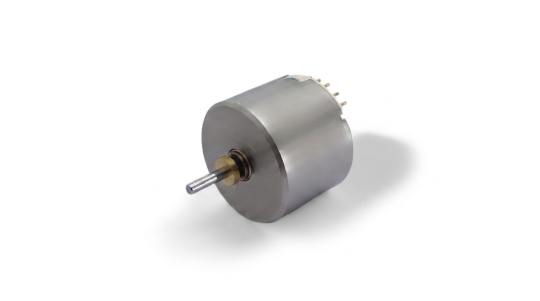
View the Brushless Motors Product List
In motors, bearings support rotating parts such as the rotor and shaft, playing a key role in maintaining stable rotation. The type, precision, lubrication condition, and installation condition of the bearings are among the factors that influence the motor’s vibration, noise, rotational accuracy, and lifespan.
Finally, we will explain the impact bearings have on motor performance and the key points to consider during motor selection.
The Impact of Bearings on Motor Performance
In motors, bearings support the rotor and shaft in the proper position, thereby maintaining stable rotation. Particularly in applications requiring high-speed rotation, quiet operation, and rotational accuracy, the performance and condition of the bearings are critical factors that determine the overall characteristics of the motor.
If the precision, internal clearance, lubrication condition, or mounting condition do not match the operating conditions, shaft runout and friction may increase, potentially leading to vibration, noise, and heat generation. Persistent lubrication issues or excessive loads can also cause premature bearing failure.
To ensure the performance and lifespan required of a motor, it is important to select bearings suitable for the application, taking into account requirements such as rotational speed, load, and quiet operation.
Key Points for Motor Selection
When selecting bearings for motors, it is important to consider not only rotational speed and load but also size, required lifespan, operating temperature, and quiet operation. First, verify that the bearing can handle the motor’s maximum rotational speed, and also consider the magnitude and direction of the loads applied to the shaft.
Since space is limited in compact motors, dimensions such as shaft diameter, outer diameter, and width are also critical factors. For applications requiring low noise levels, it is necessary to verify vibration and noise levels; for use in harsh temperature environments, lubricants and sealing methods must also be evaluated.
Ultimately, you should compare these conditions against the motor’s overall specifications to narrow down the selection to suitable bearings.
Summary

Bearings are critical components that not only support rotating shafts and reduce friction but also affect the rotational accuracy, vibration, noise, and lifespan of machinery and motors. To ensure stable performance, it is necessary to select the type and specifications appropriate for the application, taking into account factors such as load, rotational speed, dimensions, and operating environment.
C.I. Takiron Corporation handles coreless motors and Brushless motors. If you are having trouble with motor selection based on your application, required rotational speed, torque, or size, please feel free to consult with us regarding product specifications and selection.
Product Information & Inquiries
For more details on C.I. Takiron’s micro motor products, please visit the website below.
- Product Site: https://cik-ele.com/en/
- Coreless Motors: https://cik-ele.com/en/products/list/coreless_motor/
- Brushless Motors: https://cik-ele.com/en/products/list/brushless_motor/
- Geared Motors: https://cik-ele.com/en/products/list/gearhead/
- Encoders: https://cik-ele.com/en/products/list/encoder/
If you are having trouble selecting a small motor for your product development, please feel free to contact us via the inquiry form. Our technical staff will discuss your application and requirements with you and propose the optimal solution.
- Inquiries: https://cik-ele.com/en/contact/