


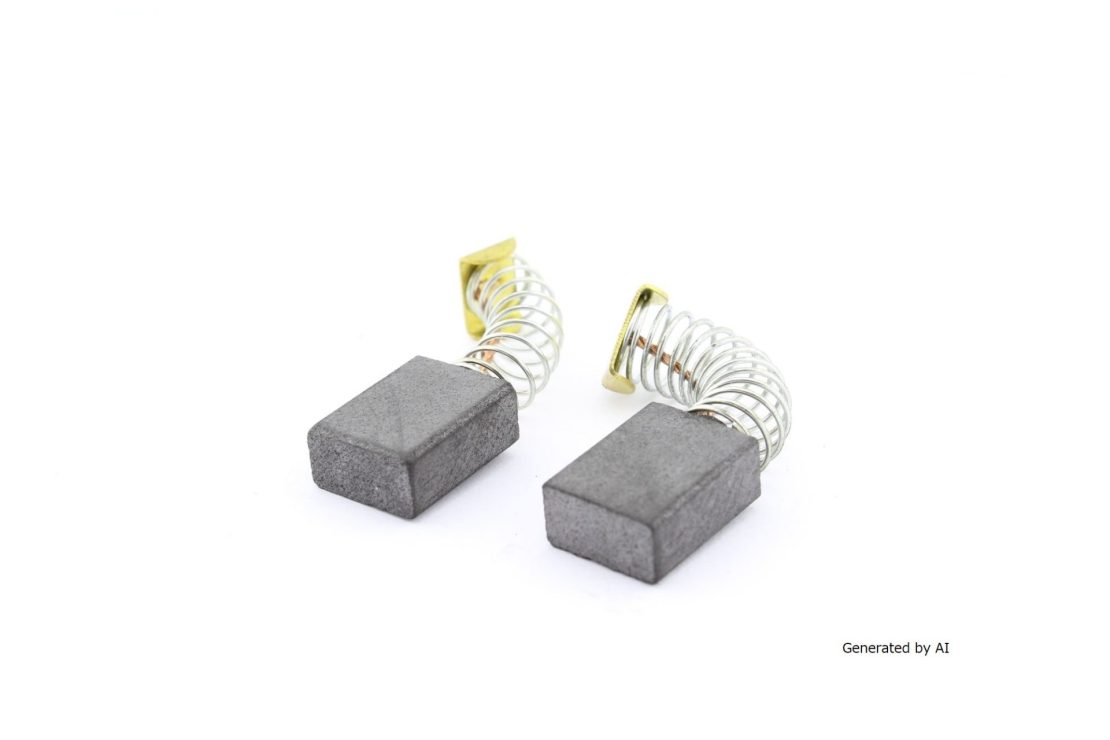
Motor carbon brushes are components that transmit electric current through sliding contact with the commutator (or slip ring); in DC motors, they work in conjunction with the commutator to maintain rotation. They are used in a wide range of equipment, from industrial motors to power tools. If carbon brushes wear out or commutation becomes unstable, it can lead to sparking or damage to the commutator, making them critical from the perspective of maintenance and downtime risks.
Carbon brush materials include electrographite, natural graphite, and metal graphite, among others, and selecting the appropriate material based on the application and operating conditions is essential. Understanding how to assess lifespan and replacement timing based on brush wear, as well as how to diagnose motor malfunctions caused by commutation sparks, enables the early detection of warning signs, helping to reduce the risk of unexpected shutdowns and support preventive maintenance.
This article explains everything from the basic structure and role of carbon brushes to methods for determining their lifespan and selection criteria based on application*.
*This article covers general information about motors and is not intended to explain the features of our company’s motors.
| Supervised by: C.I. TAKIRON Corporation Electronic Devices Sales Group This article has been supervised based on the advanced technical expertise and insights we have cultivated since our founding in 1919 as a leading company in plastic processing. Our department continuously analyzes market trends and the latest technologies in ultra-compact, high-precision micro motors, focusing on providing high-value-added information to designers and developers. As a team of experts with in-depth knowledge of product characteristics, we support our customers’ problem-solving and technological innovation by delivering accurate and practical content. |
Basic Knowledge of Carbon Brushes for Motors
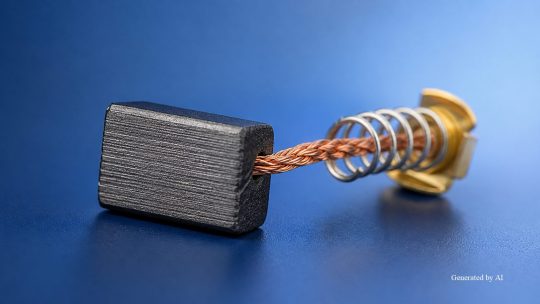
Understanding the structure, materials, and role of carbon brushes within a motor provides a basis for product selection and inspection decisions, thereby aiding in maintenance.
Topics Covered in This Section
- Structure and Materials of Carbon Brushes
- The Role of Carbon Brushes in Motors
- Characteristics of Carbon Brushes by Material
Here, we will explain, in order, the materials and mechanisms of the components that make up carbon brushes, their functions in both DC motors and AC motors, and their suitability for various applications based on material type.
Structure and Materials of Carbon Brushes
A carbon brush is a block-shaped component made from a carbon-based material (graphite-based). For certain grades, such as metallic graphite, metal powders like copper or silver are mixed in to enhance conductivity, and the material is then molded into shape.
In addition to the brush body, they consist of pigtails (lead wires) that transmit electric current to external circuits, springs that press the brushes against the commutator surface, and connection parts such as terminal fittings as needed. These components are housed in a brush holder, and the mechanism ensures that the brushes remain in close contact with the surface of the commutator or slip ring under spring pressure.
Graphite’s self-lubricating properties—which reduce friction on sliding surfaces—help minimize friction and wear during rotation, ensuring stable electrical contact. Since the balance of conductivity, wear resistance, and lubricity varies depending on the material composition ratio, the design must be tailored to meet the motor’s specifications.
The Role of Carbon Brushes in a Motor
Carbon brushes are responsible for transmitting electric current from the stator (the stationary part of the motor) to the rotor (the rotating part). In DC motors, the commutator and brush contact work together to perform the commutation action, which reverses the direction of the electric current flowing through the windings in response to rotation. This commutation action reverses the winding current to ensure that the torque is always in the same direction, enabling continuous rotation of the motor.
Characteristics of Carbon Brushes by Material
Carbon brush materials are classified into several categories depending on their application. The five most common types, along with their main materials and characteristics, are as follows.
| Material | Main Characteristics |
| Electrical Graphite | Graphitized at temperatures of 2,500°C or higher. Offers excellent rectification performance, with resistivity adjustable within the range of 10–70 μΩ·m. Expensive |
| Natural Graphite | Low coefficient of friction |
| Carbon-graphite type | High mechanical strength, hardness, and heat resistance; resistivity can be adjusted over a wide range |
| Resin-bonded | Manufactured using synthetic resin as a binder and heat-treated at the resin’s curing temperature. Suitable for high-speed applications |
| Metal-graphite type | Because metal powders are used, these have lower resistivity and higher allowable electric current density than other materials |
Electrical graphite is expensive because it undergoes a graphitization process at high temperatures of 2,500°C or higher, but it is a material with excellent conductivity and durability. On the other hand, metal-graphite is a grade that contains metal components and is used in designs intended for low-resistance, high-electric-current conditions depending on the application. Selecting the appropriate material based on the motor’s rotational speed, current rating, and operating environment directly leads to optimized performance and lifespan.
Lifespan and Replacement Timing for Motor Carbon Brushes*
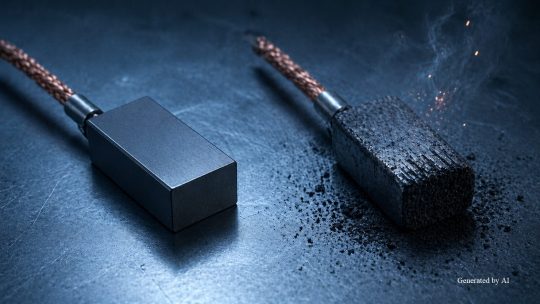
Carbon brushes are consumable parts that experience brush wear with use, and replacing them at the appropriate time ensures stable motor operation.
Topics Covered in This Section
- How to Determine the Lifespan of Carbon Brushes
- Diagnosing Motor Malfunctions Based on Commutation Sparks
- Carbon Brush Replacement Procedures and Precautions
Here, we explain how to check the wear condition, diagnose malfunctions based on commutation sparks, and provide specific replacement procedures and points to note.
*Our motors are not designed to allow for brush replacement.
How to Determine the Lifespan of Carbon Brushes
The lifespan of carbon brushes varies depending on the type of motor and operating conditions. In commutator motors (universal motors) used for power tools, rotational speeds can reach 10,000 to 20,000 r/min, and the lifespan ranges from several tens of hours to approximately 200 hours.On the other hand, magnet motors typically operate at speeds of 2,000 to 3,000 r/min—lower than those of commutator motors—and their lifespan is generally estimated to be around 1,000 to 2,000 hours. There are several methods for determining lifespan.
[Key Checkpoints for Determining Lifespan]
- Degree of Wear Relative to the Wear Limit Line (Limit Mark)
- Color change in the pigtail copper wire (iridescent → tendency toward overload; brown or silver → on the verge of failure)
- Occurrence of unstable rotation or power loss
- Increased noise or vibration
We recommend replacing the motor before it reaches the wear limit (minimum length or replacement standard) specified by the manufacturer. As wear progresses, contact conditions deteriorate, which may lead to abnormal commutator and brush wear, as well as poor commutation (increased sparking).
Motor Fault Diagnosis Based on Commutator Sparks*
Commutator sparks occur at the contact points between the commutator and carbon brushes when electric current is flowing. Commutator sparks are rated by grade; under normal conditions, they range from Grade 1 to Grade 4. If large sparks equivalent to Grades 5–8 occur, the motor may be malfunctioning. The main causes of large sparks are as follows:
| Cause | Specific Conditions |
| Overload | Overload |
| Poor Brush Contact | A condition in which contact may be deteriorating due to insufficient brush contact force (insufficient spring pressure) or a defective brush holder (damage, deformation, misalignment, etc.) |
| Commutator Wear and Scratches | A condition in which wear or damage to the segment surface may have caused roughness, unevenness, or steps on the surface |
| Coil abnormalities | A condition where a winding break (open circuit) or a short circuit (short between turns, layer short, etc.) may have occurred |
If large sparks are left unchecked, they will accelerate abnormal brush wear and commutator wear, leading to a decline in motor performance. Since this could also lead to a fire, if you observe sparks of size 5 or larger, stop operation immediately and investigate the cause.
Carbon Brush Replacement Procedure and Precautions
When replacing carbon brushes, follow the manufacturer’s instructions (or the user manual) and ensure the power is disconnected before proceeding. Access the brush assembly according to the model’s design and replace the brushes with new ones. It is essential to strictly adhere to the specific procedures outlined in each product’s user manual.
The key points to observe during replacement are as follows.
[Precautions During Replacement]
- Replace both left and right brushes simultaneously (to prevent uneven contact pressure and sparking that can result from replacing only one side)
- Use genuine parts or brushes with the specified part number
- Verify that the new brushes slide smoothly within their holders
- Also inspect the commutator surface for scratches or irregularities
Using compatible products or substitutes that only match the size will degrade motor performance and shorten its lifespan. Since the material and spring pressure of the brushes are specifically designed to match the motor’s characteristics, carelessly replacing them with compatible products is dangerous and may lead to motor failure or fire.
After replacement, check the sliding and contact conditions in accordance with the instruction manual to ensure that the brushes are firmly in contact with the commutator surface and move smoothly within the holder without snagging.
*Our motors are not designed to allow for brush replacement.
How to Select and Maintain Carbon Brushes Suitable for Motors
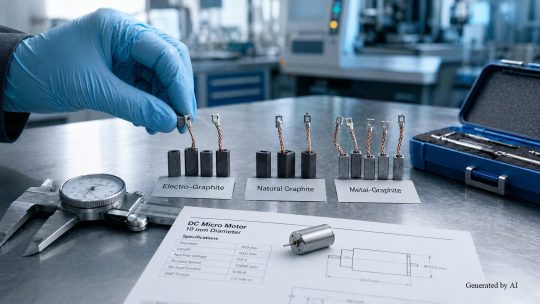
The accuracy of carbon brush selection and maintenance affects commutation performance, brush wear, and the risk of motor stoppage, and is directly related to the motor’s operational stability and lifespan.
Topics Covered in This Section
- Carbon Brush Selection Criteria by Motor Application
- Daily Management and Maintenance of Carbon Brushes
- Application Examples for Industrial and Power Tool Motors
Here, we explain everything from the principles of material selection based on rotational speed, electric current values, and operating environments, to specific procedures for periodic inspections and application examples by use case.
Selection Criteria for Carbon Brushes by Motor Application
When selecting carbon brush materials, it is essential to choose a material that matches the motor’s specifications and operating conditions. Since characteristics such as resistivity, coefficient of friction, and mechanical strength vary by material, it is necessary to assess their suitability for the specific application.
For example, metal graphite—which has a high electric current density—is used in automotive motors and starters; carbon graphite—which offers high mechanical strength and heat resistance—is used in AC motors for power tools; and natural graphite—which has a low coefficient of friction—is used in high-speed slip rings.
Since selecting the wrong material can lead to a shortened brush lifespan or reduced motor performance, it is necessary to review the operating conditions and verify them at
Daily Management and Maintenance of Carbon Brushes
Regular inspections are effective for maintaining the stable performance of carbon brushes. Since the condition of the brushes and commutator is affected by mechanical, electrical, and environmental (physical and chemical) factors, regular inspections are important. The main items to check during an inspection are as follows.
[Checklist for Periodic Inspections]
- Degree of wear relative to the wear limit line
- Presence of scratches, irregularities, or blackening on the commutator surface
- Accumulation of carbon dust (remove with compressed air)
- Uniformity of spring pressure and contact condition
- Looseness or deformation of the brush holder
Care must be taken regarding carbon dust accumulation. If carbon dust generated from worn brushes accumulates inside the frame or brackets, it may lead to insulation failure or short circuits. Remove dust using a vacuum cleaner or similar device, and if necessary, clean the rotor and stator from both directions using compressed air.
Application Examples in Industrial and Power Tool Motors
The selection of carbon brush materials is optimized for each specific application. Here are some representative examples.
In large industrial DC motors, electrical graphite is used for its high conductivity and stable sliding performance, and the design supports long periods of continuous operation. It is widely used in environments such as large and medium-sized industrial equipment where high reliability is required.
On the other hand, universal motors for power tools such as grinders and drills use carbon graphite-based brushes, which are resistant to load fluctuations and vibration. While the lifespan of the brushes may be shorter in high-speed power tools like grinders and drills, the ease of replacement actually varies depending on the model’s design.
In motors for automotive and other electrical systems, metal graphite with low resistivity is used. In fuel pump motors, carbon materials with excellent chemical resistance are used for both the commutator and the brushes as a countermeasure against commutator corrosion caused by biofuels and low-quality gasoline.
Summary
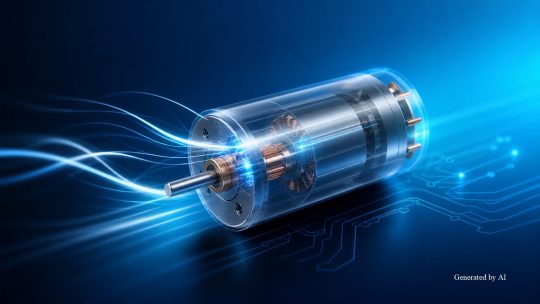
Carbon brushes are components that transmit electric current through sliding contact with the commutator or slip ring. In DC motors, they work in conjunction with the commutator to maintain rotation. Since characteristics vary depending on material categories—such as electrical graphite, natural graphite, and metallic graphite ( )—it is essential to select the appropriate type based on rotational speed, current density, and operating environment.
Regular maintenance—such as checking wear limits, assessing the lifespan by observing commutation sparks, removing carbon dust, and cleaning the commutator surface—helps prevent issues like insulation failure and short circuits, thereby reducing the risk of sudden shutdowns and motor failures. Proper selection and management of carbon brushes are critical for stable operation, as they can affect commutation performance and maintainability.
Product Information & Inquiries
For more details on C.I. Takiron’s micro motor products, please visit the website below.
- Product Site: https://cik-ele.com/en/
- Coreless Motors: https://cik-ele.com/en/products/list/coreless_motor/
- Brushless Motors: https://cik-ele.com/en/products/list/brushless_motor/
- Geared Motors: https://cik-ele.com/en/products/list/gearhead/
- Encoders: https://cik-ele.com/en/products/list/encoder/
If you are having trouble selecting a small motor for your product development, please feel free to contact us via the inquiry form. Our technical staff will discuss your application and requirements with you and propose the optimal solution.
- Inquiries: https://cik-ele.com/en/contact/