

A BLDC motor (Brushless DC Motors) is a motor that removes the brushes and commutator from a conventional Brushed DC motor and achieves rotation through electronic control. Due to characteristics such as long service life, low noise, and high energy efficiency, their adoption is expanding across a wide range of fields, including home appliances, Industrial equipment, and automotive components. On the other hand, there are several points to consider when implementing them, such as the need for a dedicated control circuit for operation.
This article explains the basic structure and operating principles of BLDC motors, their differences from Brushed DC Motors, their advantages and considerations, and their typical applications. This information will serve as a useful reference when selecting a motor.
| Supervised by: C.I. TAKIRON Corporation Electronic Devices Sales Group This article has been supervised based on the advanced technical expertise and insights we have cultivated since our founding in 1919 as a leading company in plastic processing. Our department continuously analyzes market trends and the latest technologies in ultra-compact, high-precision micro motors, focusing on providing high-value-added information to designers and developers. As a team of experts with in-depth knowledge of product characteristics, we support our customers’ problem-solving and technological innovation by delivering accurate and practical content. |
目次:
Basic Structure and Operating Principles of BLDC Motors
To understand the characteristics of BLDC motors, it is essential to first grasp the basics of their structure and operating principles.
Topics Covered in This Section
- Definition and components of BLDC motors
- How a BLDC Motor Rotates
- Differences between inner-rotor and outer-rotor types
Below, we will explain the components of a BLDC motor, its operational sequence, and its classification by structure in order.
Definition and Components of BLDC Motors
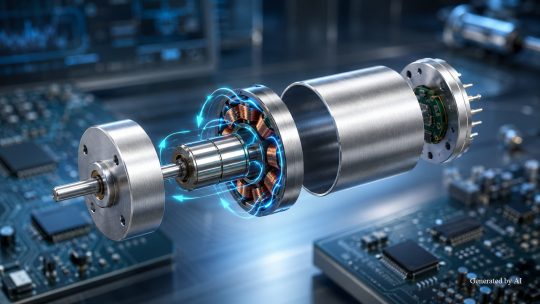
The “BLDC” in BLDC motors stands for “Brushless Direct Current,” meaning Brushless DC motors. BLDC motors are broadly classified into two types: inner-rotor and outer-rotor. In Micromotors, the inner-rotor type—which features permanent magnets in the rotor and coils in the stator—is the mainstream design.
A key structural feature of BLDC motors is that the configuration of the stator and rotor is reversed compared to Brushed DC motors. Since permanent magnets are placed on the rotor and coils on the stator, there is no need to pass electric current through the rotor, eliminating the need for brushes and a commutator. Instead, the motor is driven by an external electronic control circuit that switches the power supply to the coils.
How a BLDC Motor Rotates
The mechanism by which a BLDC motor rotates lies in the control of the current supplied to the three coils (U-phase, V-phase, and W-phase) located in the stator.An inverter circuit switches the direction and timing of the electric current flowing through the coils to generate a rotating magnetic field. The permanent magnets in the rotor are attracted by this rotating magnetic field, causing the rotor to begin rotating. Switching the electric current requires computational processing by a microcontroller or similar device, which controls the power supply at the optimal timing while detecting the rotor’s position using Hall sensors or similar devices. A key characteristic of BLDC motor operation is that, unlike Brushed DC Motors, it will not rotate simply by connecting it directly to a power source.
Differences Between Inner-Rotor and Outer-Rotor Types
BLDC motors are classified into two types—internal rotor and external rotor—based on the arrangement of the rotor and stator. The main differences are as follows.
| Item | Inner-rotor type | Outer-rotor type |
| Rotor Position | Inside | Outer |
| Size characteristics | Suitable for miniaturization | High degree of freedom in magnet design |
| Moment of inertia | Small | Large |
| Controllability | High | Relatively low |
| Typical Applications | Precision equipment and industrial equipment | Fans and disk drives |
Inner-rotor types are suitable for miniaturization because the rotor is located on the inside, and their low moment of inertia enables highly responsive control. On the other hand, outer-rotor types have the rotor positioned on the outside, offering greater flexibility in magnet size and placement, making them suitable for applications requiring constant-speed rotation, such as fans. Selecting the appropriate structure based on the application is fundamental to maximizing the motor’s performance.
Differences from and Precautions Regarding Brushed DC Motors
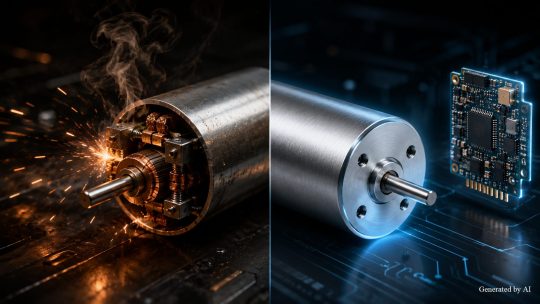
Compared to Brushed DC motors, BLDC motors offer several technical advantages in terms of lifespan, efficiency, and noise.
Topics covered in this section
- No brush wear results in a long service life
- Superior energy conversion efficiency
- Requires a drive circuit, resulting in a cost difference
We will examine not only the benefits but also the need for control circuits and cost considerations.
No brush wear and a long service life
Since BLDC motors have no contact points between brushes and the commutator, they are less prone to degradation due to brush wear and feature a motor with a long service life. A comparison of estimated lifespans is as follows.
| Item | Brushed DC Motors | BLDC Motor |
| Estimated lifespan | Several hundred to several thousand hours | Tens of thousands to hundreds of thousands of hours |
| brush wear | Present (replacement required) | None |
| Spark generation | Yes | None |
| Electrical noise | High | Low |
In Brushed DC Motors, sparks are generated by contact between the brushes and the commutator, causing electrical noise that affects surrounding electronic components. BLDC motors have minimal mechanical contact, which suppresses sparks and noise, making them suitable for use with precision equipment that is susceptible to noise.
Excellent Energy Conversion Efficiency
The reason for the high energy conversion efficiency of BLDC motors lies in their design, which eliminates energy loss caused by brush contact resistance. In Brushed DC Motors, electrical resistance occurs at the contact points between the brushes and the commutator, and the voltage drop at these contact points is a major cause of energy loss. Since BLDC motors have no brushes, they can convert input power into rotational energy more efficiently.
Requires a drive circuit, resulting in cost differences
Unlike Brushed DC motors, BLDC motors do not rotate simply by being connected directly to a power source. They require control circuits such as inverter circuits and microcontrollers for operation, and Hall sensors or encoders are used to detect the rotor’s position. Because the design of the control circuit and additional components are required, the initial system cost tends to be higher compared to Brushed DC motors.
However, since they do not require replacement due to brush wear and have a long service life, they often offer a cost advantage in terms of total cost—including maintenance costs—for applications involving continuous operation. When implementing these motors, it is essential to evaluate both initial and operating costs.
Main Applications and Selection Criteria for BLDC Motors
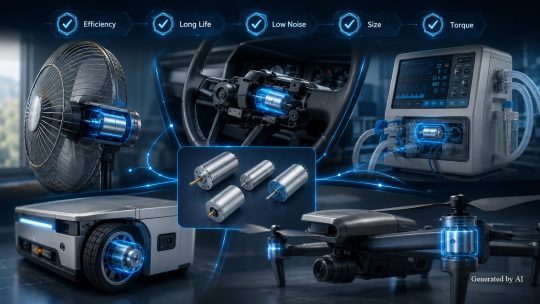
Leveraging their long service life, low noise, and high energy efficiency, BLDC motors are used in a wide range of fields, from home appliances to industrial equipment.
Contents of this section
- Typical application examples of BLDC motors
- Background of the ongoing shift away from brushed motors
- How to Select the Right Motor for Your Application
In recent years, driven by the need for energy saving and improved reliability, the replacement of Brushed DC Motors has been accelerating. We will examine adoption examples and selection criteria.
Typical Applications of BLDC Motors
The adoption of BLDC motors is expanding across various sectors, including home appliances, industry, healthcare, and automotive. Typical applications are as follows.
| Sector | Major Application Examples |
| Home Appliances | Fan drives for air conditioners and refrigerators, direct drives for washing machines, electric fans, vacuum cleaners |
| Industrial equipment | Motors for AGVs and other robots, logistics equipment, winches |
| medical equipment | Blood pumps, ventilators, ECMO |
| Automotive | Power steering, active stabilizers, and other constantly moving parts |
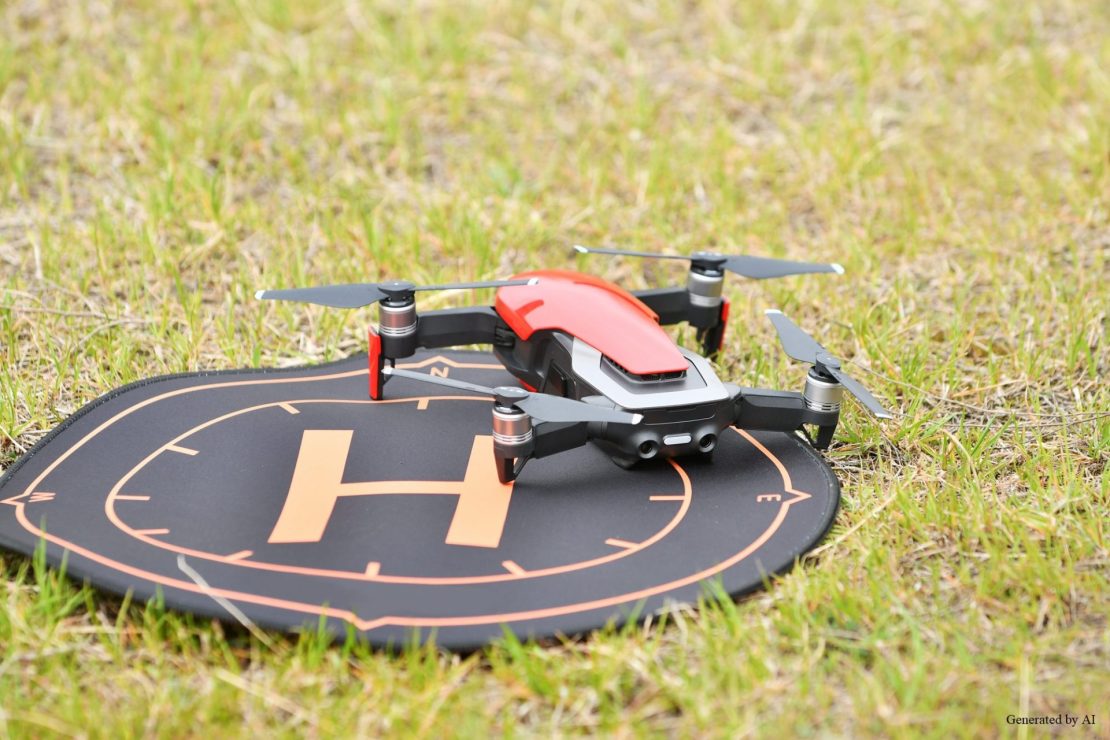
| Other | Drone propellers, gimbal control, power tools |
Background of the Shift Away from Brushed Motors
The growing shift toward BLDC motors is driven by increasing demand for energy saving and improved equipment reliability. While Brushed DC motors required maintenance and part replacements due to brush wear and commutator wear, BLDC motors eliminate this issue, offering significant advantages, particularly in applications requiring continuous operation.
In addition to their long service life and low maintenance requirements, stricter energy saving regulations and the growing need for long-term product operation are driving the shift toward BLDC motors. The adoption of BLDC motors is expected to expand further in the future, particularly in applications requiring stability, such as medical equipment and automotive components.
How to Select the Right Motor for Your Application
When considering the introduction of BLDC motors, the basic process involves first clarifying the requirements of your own products and then selecting the appropriate motor specifications. The main items to confirm during the selection process are as follows.
[Key Considerations for Motor Selection]
- Required torque and speed
- Size constraints (e.g., motor outer diameter and length)
- Control method (presence of sensors, control accuracy)
- Operating environment (temperature, vibration, continuous operating time)
Depending on the application, other types of DC motors, such as Coreless motors, may be more suitable than BLDC motors. For example, Brushed DC Motors may be appropriate for applications with low operating frequency where cost reduction is a priority; BLDC motors are not always the optimal solution.
At C.I. Takiron Corporation, we design and develop small DC motors, including Coreless motors, Brushless motors, Geared motors, and encoders, and we propose the optimal motor tailored to your specific application and requirements. We welcome inquiries regarding motor selection via our contact form.
Summary
BLDC motors eliminate brushes and commutators, achieving rotation through electronic control. With no brush wear, a long service life, excellent energy conversion efficiency, and low electrical noise, their adoption is expanding across a wide range of fields, from home appliances to industrial equipment, medical equipment, and automotive components.
However, since they require control circuits such as inverter circuits and microcontrollers for operation, the initial system cost is higher compared to Brushed DC Motors—a point that should be considered during implementation. When selecting a motor, it is essential to clarify requirements such as required torque, speed, size, and operating environment, and to compare and evaluate not only BLDC motors but also other options, such as Coreless motors.
Product Information & Inquiries
For more details on C.I. Takiron’s micro motor products, please visit the website below.
- Product Site: https://cik-ele.com/en/
- Coreless Motors: https://cik-ele.com/en/products/list/coreless_motor/
- Brushless Motors: https://cik-ele.com/en/products/list/brushless_motor/
- Geared Motors: https://cik-ele.com/en/products/list/gearhead/
- Encoders: https://cik-ele.com/en/products/list/encoder/
If you are having trouble selecting a small motor for your product development, please feel free to contact us via the inquiry form. Our technical staff will discuss your application and requirements with you and propose the optimal solution.
- Inquiries: https://cik-ele.com/en/contact/