


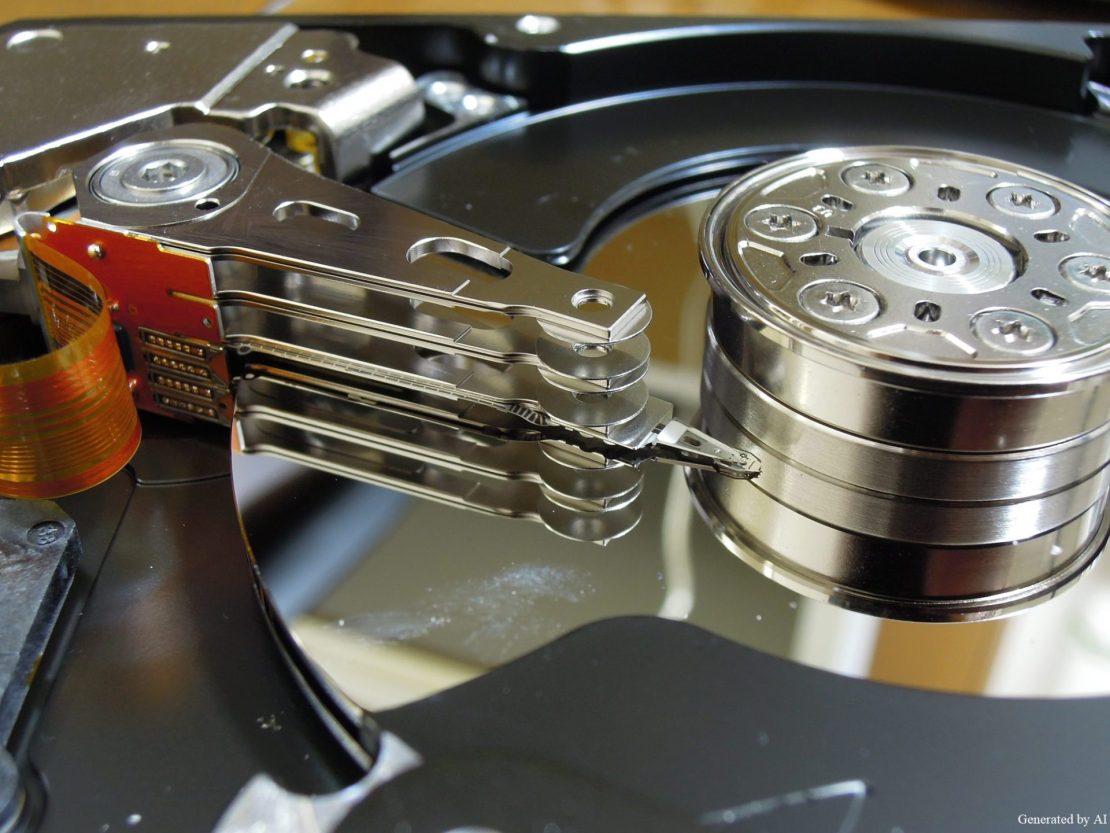
Actuators play a key role in moving machinery across a wide range of fields, including manufacturing, robotics, and medical equipment.The term “actuator” is a general term for devices that use energy sources such as electricity, hydraulics, or pneumatics to move moving parts. They are widely used in everyday scenarios, such as the opening and closing mechanisms of automatic doors and the joint drives of robotic arms. While the term “actuator” is used broadly, there are multiple types—including electric, pneumatic, and hydraulic—and their mechanisms and optimal operating ranges vary.
This article provides a systematic explanation of actuators, covering everything from their basic definition and the mechanisms of each type to their typical applications. We also outline key selection criteria based on specific applications, so you can use this information as a reference for product design and component selection.
| Supervised by: C.I. TAKIRON Corporation Electronic Devices Sales Group This article has been supervised based on the advanced technical expertise and insights we have cultivated since our founding in 1919 as a leading company in plastic processing. Our department continuously analyzes market trends and the latest technologies in ultra-compact, high-precision micro motors, focusing on providing high-value-added information to designers and developers. As a team of experts with in-depth knowledge of product characteristics, we support our customers’ problem-solving and technological innovation by delivering accurate and practical content. |
目次:
Definition and Basic Mechanism of Actuators
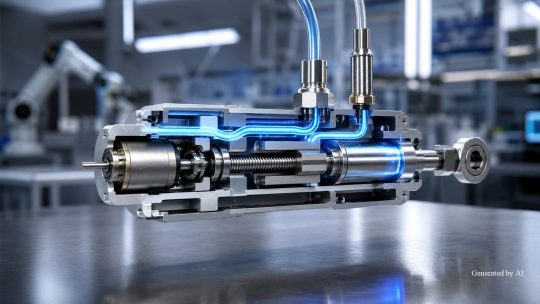
An actuator is a drive device used in fields such as manufacturing, robotics, medical equipment, and the automotive industry. It functions by converting input energy into physical motion and is incorporated as an essential element for controlling the operation of various machines. In everyday examples, actuators are built into the opening and closing mechanisms of automatic doors and the joints of robotic arms, and they are utilized in a wide range of applications beyond the industrial sector.
To fully understand actuators, it is necessary to first grasp their definition and role, and then systematically understand their internal structure and types of operation.
Contents of this section
- The role of actuators
- Basic structure for converting energy into motion
- The three types of motion produced by actuators
From here, we will examine, in order, the definition and role of actuators, the relationship between power sources and drive mechanisms, and the three types of motion: linear, rotary, and oscillatory.
The Role of Actuators
An actuator is a drive device that converts energy or signals received from an external source into physical motion. It is referred to as an “actuator” in English and as a “driving device” or “operating device” in Japanese. It is the component within machines and robots that actually generates “motion.” Its applications span a wide range of fields, from the transport and positioning of workpieces on factory production lines to the precise motion control of medical equipment.
Basic Structure for Converting Energy into Motion
The basic structure of an actuator that converts energy into motion consists of two elements: a “power source” and a “drive mechanism (transmission mechanism).” The power source is the component that converts energy into force. In electric actuators, this is a motor; in pneumatic actuators, it is compressed air; and in hydraulic actuators, it is the pressure of the hydraulic fluid.On the other hand, the drive mechanism is the part that transmits the force generated by the power source to produce the desired motion; typical transmission components include ball screws, lead screws, gears, and belts. For example, in an electric actuator, the desired motion is achieved through mechanisms such as converting the motor’s rotational force into linear motion via a ball screw or adjusting torque via gears.
The Three Types of Motion Produced by Actuators
Actuators produce three types of motion: linear motion, rotary motion, and oscillating motion. The main differences are as follows.
| Motion Type | Description | Typical Applications |
| Linear Motion | Reciprocating motion in one direction, like a piston | Conveyor systems, press machines, lifts |
| Rotary Motion | Continuous rotation around a motor shaft | Pumps, fans, lens drives |
| Oscillatory motion | Movement that rotates back and forth within a fixed range of rotational angles | Valve opening/closing, robot joints |
Selecting the motion type that suits the application is a key consideration when evaluating the introduction of actuators. In situations where linear and rotational motion must be combined, multiple actuators may be linked and controlled in unison.
Main Types and Characteristics of Actuators
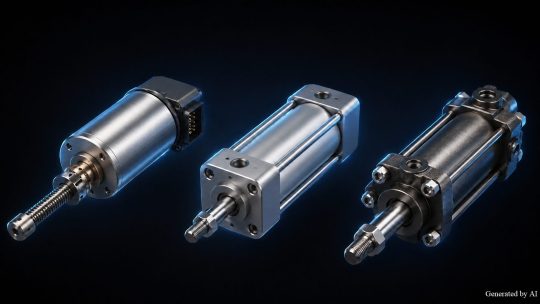
Actuators are broadly classified into three types based on their power source: “electric actuators” powered by electric motors, “pneumatic actuators” driven by compressed air, and “hydraulic actuators” that utilize hydraulic fluid pressure.
A comparison of the characteristics of these three types of actuators is as follows.
| Comparison Criteria | Electric | Pneumatic | Hydraulic |
| Control Accuracy | High (multi-point positioning possible) | Low (primarily two-point operation) | Moderate (thrust and speed control are easy) |
| Output | Moderate | Moderate | High |
| Operating speed | Medium to high | High | Low to medium |
| Maintenance | Minimal | Low | Hydraulic fluid management required |
| Installation Environment | Highly versatile | Suitable for explosion-proof and clean environments | Requires measures to prevent oil leaks |
It is necessary to compare the strengths and limitations of each drive system against the intended application and installation environment to select the optimal drive system.
Topics Covered in This Section
- Mechanism and features of electric actuators
- Mechanism and characteristics of pneumatic actuators
- Mechanism and characteristics of hydraulic actuators
From here, we will explain the operating principles and strengths of each type, providing information to help you determine the best choice for your specific application.
Mechanism and Characteristics of Electric Actuators
An electric actuator is a drive device that converts the rotational force of an electric motor into linear or rotational motion via transmission mechanisms such as ball screws or gears. It operates by converting electrical energy into mechanical energy. Its main features are as follows.
[Key Features of Electric Actuators]
- Precise control of position, speed, and torque
- Support for multi-point positioning
- Low maintenance frequency during normal operation
- High energy conversion efficiency
Electric actuators are often used in applications that require precise positioning and speed control.
Mechanism and Features of Pneumatic Actuators
Pneumatic actuators are devices that use compressed air from a compressor as a power source and are driven by the force that pushes the piston within the cylinder. Also known as air cylinders, they consist of simple components such as a cylinder tube, piston, and piston rod.
While capable of high-speed operation, their compression characteristics make them unsuitable for precise positioning at intermediate points. This drive system is well-suited for simple motion patterns, such as high-speed movement between two points or gripping actions.
Mechanism and Features of Hydraulic Actuators
Hydraulic actuators are devices that use the pressure of hydraulic fluid as an energy source to drive a piston; they are also known as hydraulic cylinders. Their strength lies in their ability to generate large forces and torques despite their compact size, and they are used in fields requiring high thrust, such as construction machinery, presses, and machine tools.
Typical Applications and Selection Criteria for Actuators
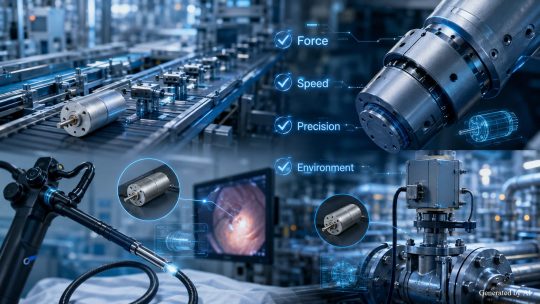
Actuators support automation across a wide range of fields, from factory production lines to Industrial robots and medical equipment. However, since the required performance and installation conditions vary significantly depending on the application, it is necessary to accurately identify the requirements and select the appropriate type before implementation. Particularly for electric actuators, a comprehensive assessment is required that considers not only the drive system but also the specifications of the power source.
Topics Covered in This Section
- Differentiated Use by Process Step on Manufacturing Lines
- Application examples in robots and medical equipment
- Factors to consider when selecting an actuator
From here, we will explain application scenarios in representative industrial sectors and the evaluation criteria to keep in mind during selection, in order.
Differentiating Applications by Process on Manufacturing Lines
On manufacturing lines, electric and pneumatic actuators are selected based on the requirements of each specific process. The following table lists typical processes and their recommended actuator combinations.
[Main Processes in Manufacturing Lines]
- Handling Processes: Electric actuators are used for gripping high-mix workpieces or workpieces prone to deformation
- Conveying Process: Electric actuators are suitable for conveying that requires multi-point positioning
- Clamping Process: Air cylinders are used for high-speed gripping between two points
- Press-fitting process: Electric actuators are used for force control in press-fitting operations that require load control
It is important to select a drive system suited to the characteristics of the process.
Application Examples in Robots and Medical Equipment
Industrial robots are defined in JIS B 0134:2015 as “automatically controlled, reprogrammable, multipurpose manipulators that are programmable in three or more axes and are used for industrial automation applications, either fixed in one location or equipped with mobility.” Actuators are one of the components that make up these manipulators.The actuators in each joint of a robot may require specific response characteristics and rotational properties depending on the application. In the medical field, actuators and motors are incorporated into various devices, such as dental treatment equipment and endoscopes, where high levels of reliability and operational precision are required.
Factors to Consider When Selecting an Actuator
When selecting an actuator, it is necessary to comprehensively evaluate multiple criteria. The main evaluation items are as follows.
| Evaluation Criteria | Items to Verify |
| Operating Type | Determine whether linear, rotary, or oscillating motion is required |
| Thrust/Torque | Magnitude of force required to drive the target object |
| Operating Speed | The cycle time required by the process or application |
| Positioning accuracy | Permissible error range for the stopping position |
| Installation space | Dimensions compatible with equipment enclosures or internal installations |
| Operating environment | Temperature, humidity, explosion-proof requirements, cleanliness |
| Lifespan and durability | Requirements for continuous operating time and number of cycles |
For electric actuators, the specifications of the motor serving as the drive source are also a key consideration. Specifications must be evaluated based on the motor’s inherent technical characteristics, such as smooth rotation achieved through cogging-free operation, low-voltage startup, and low-electric-current design.
Summary
Actuators are drive devices that convert energy from sources such as electricity, pneumatics, and hydraulics into mechanical motion, and are utilized in a wide range of fields, including manufacturing production lines, industrial robots, and medical equipment.Each type—electric, pneumatic, and hydraulic—has its own strengths and limitations, so it is essential to select the appropriate type based on requirements such as operating mode, thrust, speed, precision, and installation environment. For electric actuators, motor selection must also take into account the specifications of the motor serving as the drive source.
If you are looking for compact, high-precision Micromotors, please feel free to contact C.I. Takiron Corporation, which handles coreless motors, Brushless motors, and Geared motors.
Product Information & Inquiries
For more details on C.I. Takiron’s micro motor products, please visit the website below.
- Product Site: https://cik-ele.com/en/
- Coreless Motors: https://cik-ele.com/en/products/list/coreless_motor/
- Brushless Motors: https://cik-ele.com/en/products/list/brushless_motor/
- Geared Motors: https://cik-ele.com/en/products/list/gearhead/
- Encoders: https://cik-ele.com/en/products/list/encoder/
If you are having trouble selecting a small motor for your product development, please feel free to contact us via the inquiry form. Our technical staff will discuss your application and requirements with you and propose the optimal solution.
- Inquiries: https://cik-ele.com/en/contact/