


In today’s world, where reducing electricity consumption is a priority, motors of high efficiency are gaining increasing attention.
High-efficiency motors are a technology that contributes to energy saving and cost reduction by efficiently converting electrical power into mechanical power.
In this article, we will provide a detailed explanation of the basic mechanisms and types of high efficiency motors, as well as the benefits and considerations when implementing them. Furthermore, we will introduce the features of Takiron CI’s Coreless motors and Brushless motors as options for improving efficiency in compact motors.
*Please note that our company does not handle motors of high efficiency.
| Supervised by: C.I. TAKIRON Corporation Electronic Devices Sales Group This article has been supervised based on the advanced technical expertise and insights we have cultivated since our founding in 1919 as a leading company in plastic processing. Our department continuously analyzes market trends and the latest technologies in ultra-compact, high-precision micro motors, focusing on providing high-value-added information to designers and developers. As a team of experts with in-depth knowledge of product characteristics, we support our customers’ problem-solving and technological innovation by delivering accurate and practical content. |
目次:
Basics and Types of High-Efficiency Motors
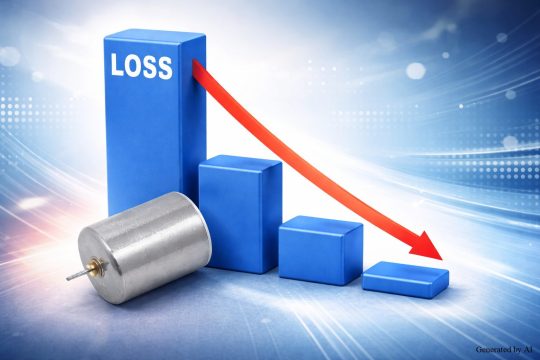
We will explain the fundamentals of high efficiency motors, from their definition to efficiency class standards and major types.
Contents of this section
- Overview of High-Efficiency Motors
- Efficiency Classes and IE Standards
- Main Types of High-Efficiency Motors
Below, we will examine each of these topics in detail.
Overview of High-Efficiency Motors
High-efficiency motors are designed to minimize losses when converting electrical power into mechanical power.
By reducing the energy lost as heat in conventional motors, they can perform more work with the same amount of electrical power.
Inside a motor, various types of losses occur, including copper losses (losses due to the resistance of the windings), iron losses (losses due to changes in the magnetic flux), and mechanical losses (friction and air resistance). High efficiency motors can comprehensively reduce these losses through the use of high-quality electrical steel, thicker windings, and improved bearings.
As a result, they achieve both energy saving and cost reductions simultaneously.
Improved energy conversion efficiency leads to reduced electricity costs and lower CO₂ emissions over the long term, contributing to a reduced environmental impact.
Efficiency Classes and IE Standard
Motor efficiency levels are defined by the International Electrotechnical Commission (IEC) standard IEC 60034-30-1 and are classified into five levels, ranging from IE1 (standard efficiency) to IE5 (high efficiency). In Japan, efficiency classes based on this IEC standard are also adopted.
The characteristics of each class are as follows.
| Efficiency Class | Classification | Characteristics |
| IE1 | Standard Efficiency | Reference level for conventional motors |
| IE2 | high efficiency | Motors with improved efficiency compared to the standard |
| IE3 | Premium Efficiency | Equivalent to Japan’s Top Runner standard* |
| IE4 | Super Premium Efficiency | Achieves even higher efficiency |
| IE5 | Ultra-High High Efficiency | The highest efficiency level currently available |
As the IE class increases, efficiency improves under identical conditions. While actual electricity costs and CO2 reduction benefits vary depending on output, load factor, operating time, and electricity rates, even a few percentage points of improved efficiency can lead to total cost savings for equipment that operates for long periods.
This standard allows users to perform motor selection based on objective criteria.
*Top Runner: https://www.enecho.meti.go.jp/category/saving_and_new/saving/enterprise/equipment/
Main Types of High-Efficiency Motors
There are various types of high efficiency motors depending on the application and scale.
Typical examples include three-phase induction motors, permanent magnet motors, and Brushless DC Motors.
Three-phase induction motors rated IE3 or higher are widely used in large industrial equipment and are employed to drive pumps, fans, compressors, and similar machinery. These motors are highly robust and offer the durability and reliability required for long-term continuous operation.
On the other hand, Brushless motors and Coreless motors are suitable for small equipment and applications requiring precise control. These motors offer excellent responsiveness and produce minimal cogging torque, enabling smooth rotation.
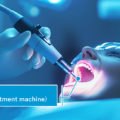
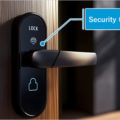
They are selected for fields requiring high precision, such as medical equipment, optical equipment, and security equipment.
Selecting the appropriate motor type for the application is key to achieving high efficiency and improved performance.
To optimize the entire system, it is necessary to fully consider the characteristics of the driven object and its operating patterns.
Three Benefits of Adopting High-Efficiency Motors

We will explain the specific benefits of adopting motors of high efficiency from three perspectives.
Contents of this section
- Electricity Savings Through Energy Saving
- Improved Cost-Effectiveness Through Long-Term Use
- Extended Equipment Lifespan Through Reduced Temperature Rise
Although an initial investment is required, the benefits gained during operation are significant, and a sufficient return on investment can be expected.
Electricity savings through energy saving
High-efficiency motors have a higher energy conversion efficiency than standard-efficiency motors, allowing for reduced power consumption even at the same output. This is because there are fewer losses during the process of converting electricity into mechanical power.
Top Runner Standard motors (IE3 equivalent) have been reported to reduce losses by approximately 35% compared to standard motors. If all industrial motors nationwide were replaced with Top Runner Standard motors , an annual reduction of 15.5 billion kWh in electricity consumption is projected. Converted based on an annual electricity consumption of approximately 3,950 kWh per household, this is equivalent to the annual electricity consumption of about 3.9 million households.
Even in the case of compact motors, coreless and Brushless motors are more efficient than conventional brushed motors, leading to extended operating times in battery-powered devices.
They offer significant benefits in applications requiring power efficiency, such as medical equipment and security equipment.
Improved cost-effectiveness through long-term use
Although high efficiency motors have a higher initial cost than standard motors, continued use reduces operating costs through cumulative energy saving benefits.
As electricity cost savings accumulate, the initial investment can be recouped after a certain period. The payback period is particularly short for equipment with long operating hours.
In applications with high utilization rates, such as pumps and fans that operate continuously for 24 hours, the annual electricity savings are greater compared to standard motors, so the economic benefits tend to be significant.
From a total cost perspective, upgrading to motors of high efficiency is more economical than continuing to use standard motors. Furthermore, when combined with the extended equipment lifespan discussed below, overall economic efficiency improves, including reductions in maintenance and replacement costs.
Extended Equipment Lifespan Through Reduced Temperature Rise
High-efficiency motors lose less energy as heat, thereby suppressing temperature rise during operation.
Keeping the motor temperature low slows down the deterioration of the winding insulation and the wear of the bearings, thereby achieving a long service life.
Generally, it is said that a 10°C drop in motor winding temperature doubles the lifespan.
Since high efficiency motors have lower heat generation, this not only reduces the cost of cooling equipment but also reduces the frequency of motor replacements, resulting in cost savings. The preventive maintenance benefits of an extended lifespan are particularly highly valued for equipment that is difficult to access or on production lines where downtime leads to significant losses.
Points to Consider When Introducing High-Efficiency Motors and Options for Compact Motors

Here, we outline key considerations for implementation and introduce solutions with high efficiency for small equipment.
Topics Covered in This Section
- Verifying Motor Size and Installation Space
- Changes in Rotational Speed and Starting Electric Current
- High-Efficiency Motor Options for Compact Equipment
With proper selection, you can achieve both high efficiency and improved performance.
Checking Motor Size and Installation Space
High-efficiency motors tend to have larger outer diameters and overall lengths than standard motors due to the use of high-quality electrical steel and thicker windings.
When replacing existing equipment, it is necessary to check the mounting dimensions and potential interference with surrounding equipment in advance.
In addition to the motor’s mounting dimensions, you must also consider wiring space and space for cooling. Depending on the installation environment, it may be necessary to modify the mounting frame or reposition piping.
If you wish to achieve both compactness and high efficiency, consider options such as Coreless motors.
Because coreless motors lack an iron core, they are compact yet highly efficient.
They are suitable for applications with strict space constraints, such as medical equipment and optical equipment.
Changes in Rotational Speed and Starting Electric Current
Because high efficiency motors have lower losses, three-phase induction motors rated IE3 or higher tend to have higher rotational speeds than standard motors (the increase varies depending on conditions such as the number of poles, rating, and slip).
In fluid machinery such as pumps and fans, this increase in rotational speed leads to increased flow rate, which may result in a higher load. Additionally, electric current tends to be higher, so it is necessary to verify the capacity of the power distribution equipment. If the existing power supply equipment cannot handle this, the wire gauge and circuit breaker capacity must be reviewed.
In pumps and fans, increased output may also lead to higher power consumption, so appropriate measures are required. For this reason, measures such as inverter control are necessary.
By using an inverter in conjunction with the motor, the speed can be controlled appropriately, achieving optimal operating efficiency while suppressing starting electric current. Combining the motor with an inverter enables flexible operation tailored to the load.
Options for High-Efficiency Compact Motors
For small devices such as medical equipment, optical equipment, and security equipment, Coreless motors and Brushless motors are leading options for improving efficiency. These motors deliver high efficiency despite their compact size and are ideal for applications requiring precise control.
Takiron CI’s Coreless motors are cogging-free and highly responsive, enabling low-voltage startup and low power consumption.
Their core-less design provides smooth rotational characteristics, enabling high-precision control while minimizing vibration and noise. Some models can start at an extremely low voltage of just 1.0 V, contributing to power savings in battery-powered devices.
Despite their compact size, they deliver high efficiency and are used in a wide range of fields, including medical endoscopes, camera shutter mechanisms, and electronic locks.
For detailed specifications and case studies, please contact us via the inquiry form. We will propose the optimal solution tailored to your specific applications and requirements.
Summary
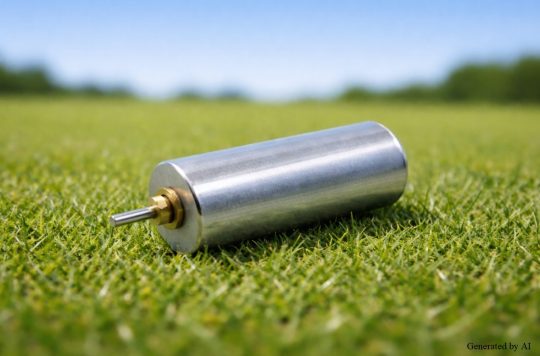
High-efficiency motors are a technology that generates power efficiently while minimizing power loss, offering three major benefits: energy saving, improved cost-effectiveness, and extended equipment lifespan.
Efficiency classes are defined based on IEC standards, and adoption is progressing across a wide range of applications, from large industrial motors to compact motors.
While care must be taken regarding changes in size and rotational speed during installation, significant energy saving can be expected with proper selection.
For small devices, there are options such as Takiron CI’s coreless motors and Brushless motors that are compact yet have high efficiency.
Optimal motor selection for your application ensures both energy saving and high performance.
Product Information & Inquiries
For more details on C.I. Takiron’s micro motor products, please visit the website below.
- Product Site: https://cik-ele.com/en/
- Coreless Motors: https://cik-ele.com/en/products/list/coreless_motor/
- Brushless Motors: https://cik-ele.com/en/products/list/brushless_motor/
- Geared Motors: https://cik-ele.com/en/products/list/gearhead/
- Encoders: https://cik-ele.com/en/products/list/encoder/
If you are having trouble selecting a small motor for your product development, please feel free to contact us via the inquiry form. Our technical staff will discuss your application and requirements with you and propose the optimal solution.
- Inquiries: https://cik-ele.com/en/contact/