


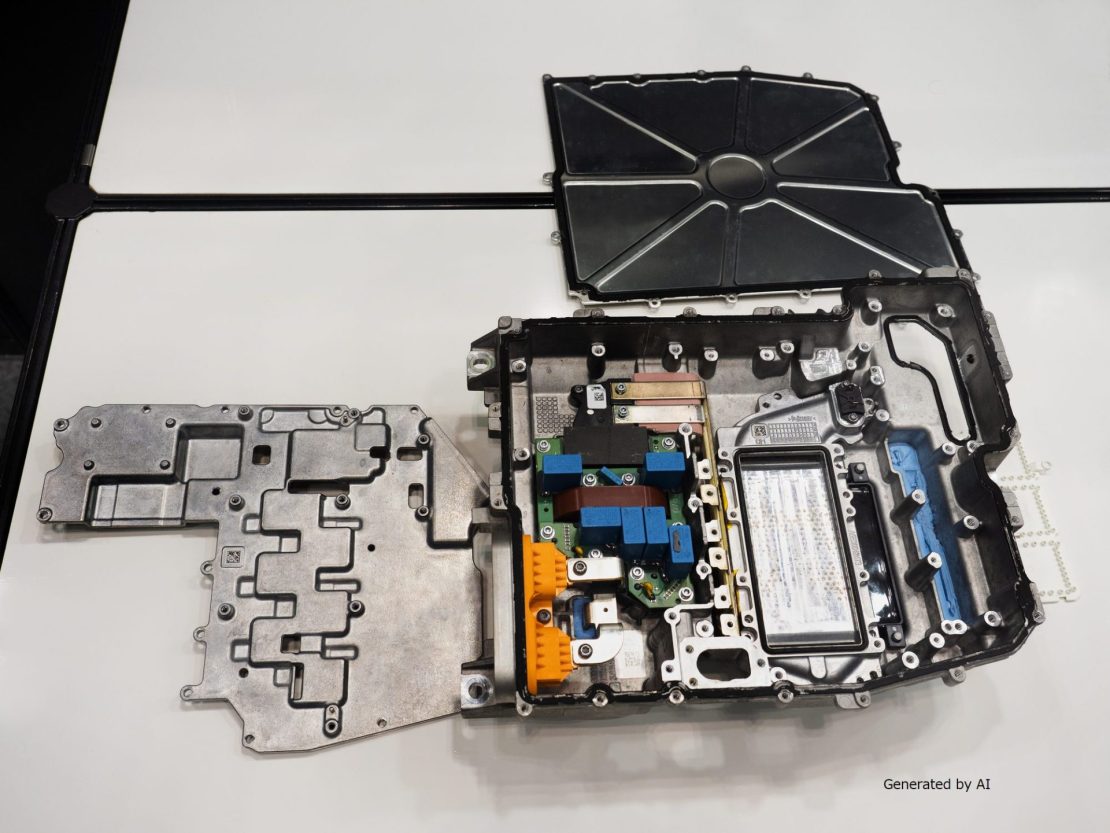
Inverters are power conversion devices used across a wide range of fields, from home appliances to Industrial equipment. They are recognized as a core technology supporting both daily life and industrial operations, enabling energy saving operation of air conditioners and refrigerators, motor control in factories, and smooth acceleration and deceleration in elevators. However, there are few opportunities to systematically understand the internal structure of these devices or how they interact with motors.In this article, we will explain everything step by step—from the basic definition and mechanism of inverters to their role in motor control, real-world application examples, and key points to keep in mind during implementation. We have organized the knowledge essential for design decisions for engineers involved in motor selection and specifications review.
| Supervised by: C.I. TAKIRON Corporation Electronic Devices Sales Group This article has been supervised based on the advanced technical expertise and insights we have cultivated since our founding in 1919 as a leading company in plastic processing. Our department continuously analyzes market trends and the latest technologies in ultra-compact, high-precision micro motors, focusing on providing high-value-added information to designers and developers. As a team of experts with in-depth knowledge of product characteristics, we support our customers’ problem-solving and technological innovation by delivering accurate and practical content. |
目次:
Definition and Basic Mechanism of Inverters

An inverter is a device that converts electrical power to drive a motor. Gaining an overall understanding of the device itself first will facilitate a better understanding of motor control and practical application examples covered later in this article. In this chapter, we will systematically explain the definition and role of inverters, their internal structure, and how they differ from converters—a term with which they are often confused. Let’s start by covering the fundamentals of how they work.
Contents of This Section
- Definition and Role of Inverters
- Basic Structure of an Inverter
- Differences Between Inverters and Converters
Understanding each of these points will allow you to accurately grasp the role inverters play in motor control.
Definition and Role of an Inverter
An inverter is a power conversion device that converts direct current (DC) to alternating current (AC). Direct current (DC) flows in a single, constant direction, while alternating current (AC) flows in a direction that reverses periodically. Inverters not only convert between these two forms of electricity but are also characterized by their ability to freely adjust the voltage and frequency of the output AC.
The reason for this adjustment capability lies in the need for motor control and energy saving for home appliances. By converting the power to AC, changing the frequency alters the rotational speed of the connected motor, allowing for precise speed control tailored to operating conditions. Frequency is the number of times an AC wave repeats per second, measured in Hz (hertz) .
Their applications range from household appliances to industrial sectors. In addition to everyday products such as air conditioners, refrigerators, and induction cooktops, inverters are also incorporated into industrial machinery that drives pumps and fans. For example, in air conditioners, the speed of the compressor motor is adjusted according to the room temperature, enabling operation that uses only the necessary amount of power. As the room temperature approaches the set point, the motor speed is reduced, minimizing wasted power consumption.
An inverter is a device that combines power conversion and output control. It is widely adopted across various fields as the foundation for motor control and energy saving operation.
Basic Structure of an Inverter
The basic structure of an inverter consists of three parts: a converter section that converts AC to DC, a smoothing circuit that stabilizes the voltage, and an inverter section that generates AC at a desired frequency from DC.
The reason for this three-part configuration is that the AC power supplied to homes and factories is first converted to DC and then reconverted to the desired AC. By using a method that goes through DC rather than direct AC conversion, the output frequency and voltage can be freely set.
The functions of each section are as follows.
| Components | Main Function |
| Converter Section | Converts the input AC to DC |
| Smoothing Circuit | Stabilizes the converted DC voltage by suppressing voltage fluctuations |
| Inverter Section | Reconverts DC to AC at a specified frequency and voltage |
The generation of AC in the inverter section utilizes the switching operation of semiconductor devices. Switching refers to the action of rapidly turning the electric current on and off; by adjusting the interval between on and off states, the desired AC waveform is produced. Semiconductor devices are electronic components that control the flow of electricity.
The basic framework of an inverter system consists of the converter section, smoothing circuit, and inverter section working in coordination to generate an AC waveform through semiconductor switching. Stable power conversion and precise output control are supported by this overall structure.
The Difference Between Inverters and Converters
The difference between an inverter and a converter lies in the direction of power conversion. An inverter converts direct current (DC) to alternating current (AC), while a converter converts AC to DC. Although the names are similar and are often confused, their roles are exactly opposite.
The reason for this reversal in direction is that they are designed for different applications. A converter transforms an AC power supply into DC power that can be used inside electronic devices, while an inverter generates AC power suitable for a specific application from DC power.
The differences between the two can be summarized as follows.
[Differences Between Inverters and Converters]
- Inverter: Converts DC to AC
- Converter: Converts AC to DC
- Both functions are combined within a single device
In fact, the internal structure of an inverter unit also incorporates converter functionality. Since the power supplied from household and industrial outlets is AC, the process begins with the converter section converting it to DC, after which the inverter section generates the desired AC. These two conversion functions are not opposed to each other; rather, they work in coordination as a continuous process.
While inverters and converters differ in the direction of conversion, they are actually used in combination. Understanding the division of roles between the two is essential for grasping the overall operation of the system, and will help you better understand the explanation of motor control in the latter part of this section.
The Relationship Between Inverters and Motors
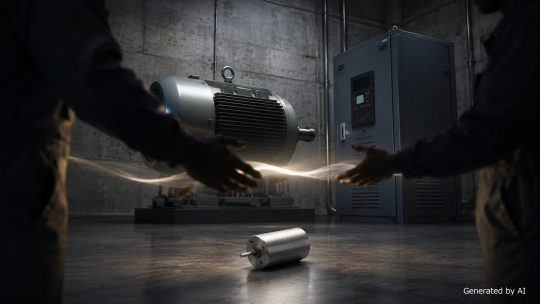
A prime example of where inverters excel is in motor control. The functions of power conversion and output adjustment enable precise control over a motor’s rotational speed. In this chapter, we will explain, in order, the mechanisms for controlling motor speed, the benefits of implementing inverters, and application examples tailored to specific uses. We will organize this information to help you determine whether inverters are suitable for your company’s specific needs.
Contents of This Section
- Mechanisms for Controlling Motor Speed
- Three Benefits of Implementing an Inverter
- Examples of Inverter Applications by Use Case
By tracing the path from the underlying mechanisms to the benefits and specific examples, you will gain a comprehensive understanding of the relationship between inverters and motors.
How Motor Speed Is Controlled
At the heart of the mechanism for motor control is frequency adjustment. Since the speed of an AC motor varies depending on the frequency of the power supply, changing the output frequency with an inverter allows for precise control of the motor’s rotational speed.
The key feature of inverter control lies in its ability to utilize the relationship between frequency and rotational speed. Motors that previously could only operate at a constant speed can now be run across a wide range, from low-speed operation to high speeds. This also enables smooth acceleration from a standstill and the maintenance of speeds tailored to specific applications.
One of the basic control methods for inverters is V/f control. This control method varies the output while maintaining a constant ratio between voltage (V) and frequency (f), and is used for general-purpose speed control. Another control method for inverters is vector control, and the appropriate method is selected based on the application.
Motor control using an inverter is a technology that adjusts the motor’s rotational speed by changing the power supply frequency. Methods such as V/f control enable precise speed control across a wide operating range.
Three Benefits of Implementing an Inverter
Incorporating an inverter into motor control offers benefits in terms of both operational efficiency and stability. The main benefits are summarized below.
[Three Benefits of Introducing Inverters]
- Reduced Power Consumption Through Energy Saving Operation
- Precise speed control
- Stabilized operation by preventing sudden acceleration and sudden stops
Each of these benefits stems from the ability to control the motor’s speed precisely as needed. In terms of energy saving, it is possible to reduce speed according to operating conditions, thereby minimizing excessive power consumption. In air conditioners and industrial machinery, power consumption is expected to be reduced by supplying power tailored to the load. Operational stability is also improved.
Since the speed can be adjusted in increments, designs can be implemented to achieve smooth motion—avoiding sudden acceleration or stopping—in applications such as elevator travel and factory conveyors. Operation that minimizes stress on equipment and reduces vibration also contributes to the stable operation of the facilities.
The benefits of energy saving, speed control, and operational stability have established inverters as a key technology in motor control. As a solution that balances operational quality and efficiency, this configuration is being increasingly adopted across a wide range of fields.
Examples of Inverter Applications by Use Case
When viewed by application, inverters are utilized in various roles across different sectors. From home appliances to industrial equipment and railway vehicles, inverters are incorporated into many scenarios where motors are used.
Typical application examples are as follows.
| Field | Main Applications | Role of the Inverter |
| Home Appliances | Air conditioners and refrigerators | Energy saving operation through speed control |
| Conveying Equipment | Elevators and Conveyors | Control for Smooth Acceleration and Deceleration |
| Industrial equipment | Pumps and Fans | Speed Control Based on Load |
| Rail Vehicles | Electric Trains and Shinkansen Trains | Speed Control of Rolling Stock Motors |
The required performance varies by application. In home appliances, energy saving is prioritized; in material handling equipment, smooth motion is key; and in Industrial equipment, the ability to respond to load fluctuations is essential. VVVF inverters used in railway vehicles—an acronym for Variable Voltage Variable Frequency—are a method of performing motor control by simultaneously varying both voltage and frequency.
Even for the same type of inverter, the required levels of control accuracy and reliability vary depending on the application. Since the specifications required for the incorporated motors also differ by field, design must be based on a thorough evaluation of the application’s specific characteristics
Points to Consider When Introducing Inverters and Evaluating Motor Specifications

Understanding the characteristics of the equipment and selecting components suited to the application leads to operation that maximizes performance. However, while inverters are effective for motor control and energy saving, there are also points that require careful consideration when implementing them. In this chapter, we will systematically outline the points to note when using inverters, how to select types and control methods, and key considerations for Micromotors specifications by application. We will examine these as reference material for design decisions.
Contents of This Section
- Precautions When Using Inverters
- How to Select Inverter Types and Control Methods
- Key Considerations for Micromotor Specifications by Application
By understanding these points—from precautions to selection methods and motor specifications—you will be better equipped to determine the suitability of a motor for your specific application.
Precautions When Using Inverters
Key considerations when using inverters include noise, harmonics, and heat generation. The switching operation of semiconductor devices involves factors that can affect peripheral equipment.
These factors stem from the nature of the operation, which involves rapidly turning the electric current on and off. Electrical noise and harmonic electric currents—which differ from the fundamental frequency—are phenomena generated during the switching process. Harmonics refer to current components that are integer multiples of the fundamental frequency. Heat generation resulting from the operation of the equipment is also a factor that must be considered.
Measures to address these concerns include reviewing the installation environment and wiring, as well as utilizing filters. By implementing wiring practices that suppress noise transmission and installing filters to mitigate the effects of harmonics, it is possible to operate the equipment while minimizing the impact on peripheral devices. To address heat generation, securing sufficient installation space that allows for proper heat dissipation is a key consideration.
By understanding the considerations regarding noise, harmonics, and heat generation, and implementing countermeasures that take the environment and wiring into account, you can consistently maximize the inverter’s performance. It is essential to incorporate these countermeasures from the planning stage of the installation.
How to Select Inverter Types and Control Methods
The selection of inverter types and control methods depends on the required control accuracy and intended application. Inverters are classified along two axes—circuit configuration and control method—and are selected based on the motor to be paired with them and the intended use.
The main classifications are as follows.
| Classification Criteria | Type | Features |
| Circuit Configuration | Voltage-type / Electric current type | Classification by Output Power Form |
| Control Method | V/f Control | Supports general-purpose speed control |
| Control Method | Vector control | Supports high-precision positioning and high-speed response |
Circuit types are classified based on how the output power is handled. Voltage-controlled circuits regulate voltage, while current-controlled circuits regulate electric current; the appropriate type is selected based on the application. When selecting a control method, the required performance serves as the criteria for decision-making. V/f control is generally considered suitable for general-purpose speed control, while vector control is recommended for applications requiring precise positioning and rapid response.
The basic approach to selecting an inverter is to choose a combination suited to the application by considering both the circuit type and the control method. Clarifying the required control accuracy helps in determining the most suitable method.
KEY CONSIDERATIONS FOR MICROMOTOR SPECIFICATIONS BY APPLICATION
Key considerations for Micromotors specifications by application involve focusing on the Micromotor itself, which will be paired with the inverter. The overall performance of the system is determined by the specifications of both the inverter and the Micromotor.
The specifications required of a motor vary depending on the application. Examples include equipment requiring miniaturization, precision instruments requiring low vibration, control mechanisms requiring rapid response, and battery-powered devices that must operate at low voltages.
Here is a summary of motor options for precision applications.
| Application Areas | Key Specifications | Potential Motor Options |
| medical equipment | Low vibration, high reliability | Coreless motors |
| optical equipment | Responsive and Low-Vibration | Coreless motors |
| security equipment | Low-voltage operation and long service life | Coreless motors |
| Hobby equipment (servos, etc.) | Long service life, low vibration, quiet operation | Brushless motors |
Coreless motors feature a design without an iron core, resulting in minimal cogging and excellent responsiveness that allows for rapid start-up and stop-up. For this reason, they are used in precision applications where reliability is paramount, such as medical equipment. Since they can start up at low voltages, their design also makes them suitable for security equipment such as battery-powered electronic locks.Brushless motors have a long service life with no brush wear or commutator wear. Since they have no mechanical contacts, they operate with low vibration and quiet operation, making them ideal for continuous-drive applications such as servos.
Even if your requirements are not yet finalized during the Micromotors specification review phase, we can provide consultation based on your intended application and operating environment. At C.I. Takiron Corporation, our technical staff will discuss your application with you and propose solutions that meet your requirements. Please use the inquiry form to contact us regarding specification reviews or customization.
Summary

An inverter is a power conversion device that converts direct current (DC) to alternating current (AC), allowing the output voltage and frequency to be adjusted as needed. It is used in combination with a converter—which performs the reverse conversion—within a single unit. When incorporated into motor control, it offers benefits such as energy saving operation, precise speed control, and operational stability achieved by preventing sudden acceleration and deceleration. This technology is utilized across a wide range of fields, from home appliances to Industrial equipment.On the other hand, when implementing inverters, it is necessary to consider noise and harmonics, as well as select circuit and control methods appropriate for the specific application. To maximize the performance of the entire system, it is also essential to evaluate the specifications of the motor with which the inverter will be paired. Since the specifications of Micromotors required for precision applications—such as medical, optical, and security equipment—vary depending on the specific use, it is helpful to proceed step-by-step, starting with a thorough analysis of the requirements.
Product Information & Inquiries
For more details on C.I. Takiron’s micro motor products, please visit the website below.
- Product Site: https://cik-ele.com/en/
- Coreless Motors: https://cik-ele.com/en/products/list/coreless_motor/
- Brushless Motors: https://cik-ele.com/en/products/list/brushless_motor/
- Geared Motors: https://cik-ele.com/en/products/list/gearhead/
- Encoders: https://cik-ele.com/en/products/list/encoder/
If you are having trouble selecting a small motor for your product development, please feel free to contact us via the inquiry form. Our technical staff will discuss your application and requirements with you and propose the optimal solution.
- Inquiries: https://cik-ele.com/en/contact/