
Micromotor Product Site


Exporting to Europe, USA, and Asia.
Dealers available in North America, Europe, and Asia.
In this column, engineers from C.I. Takiron share their expertise on micro motors (coreless motors, brushless motors, and gearheads). We hope this information will assist you in selecting motors for a wide range of applications, including medical devices, industrial tools, and optical equipment.
This guide provides a detailed explanation of the technical considerations for motor selection, aimed at product development engineers and design engineers. We address common questions such as, “I don’t know which motor to choose,”and “I want to understand the difference between coreless and brushless motors.”
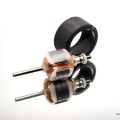
In the design and maintenance of mechanical components, “wear” significantly affects component lifespan and product quality. Wear is the phenomenon in which a surface is gradually worn down due to contact and relative motion between solids. In mechanisms involving friction—such as drive components and bearings—measures to counteract wear are essential. The progression of wear causes dimensional changes and performance degradation in parts, and ultimately poses a risk of affecting the reliability of the entire equipment. There are several types of wear, each with different mechanisms of occurrence and corresponding countermeasures. In this article, we will explain the basic definition of wear, the mechanisms behind its occurrence, typical forms of wear and their characteristics, and methods to suppress wear. We hope…
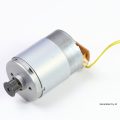
DC motors are motors that use a DC power supply to generate rotational motion.They convert electrical energy into mechanical energy and are used in a wide range of fields, from industrial equipment to medical equipment and automotive electrical components. DC motors come in brushed and Brushless DC Motors varieties, each with different structures and characteristics. Brushed DC motors require no drive circuit and are low-cost, while Brushless DC Motors offer a long service life and excellent quiet operation; they can be selected based on the application and required performance. Furthermore, a clear understanding of the differences between DC motors and AC motors—which operate on alternating current—will help you with motor selection for your application. While DC motors offer greater flexibility…
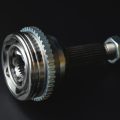
In manufacturing equipment and industrial equipment, couplings (shaft couplings) are used to accurately transmit power from a motor to a driven shaft. A coupling is a mechanical component that connects the drive shaft and the driven shaft, serving functions such as absorbing mounting misalignment and dampening vibrations. However, there are several types of couplings—including jaw-type, disc-type, and bellows-type—and selection must be based on the specific application and required characteristics. This article provides a systematic explanation ranging from the basic functions of couplings to their main types and characteristics, as well as key points for selection. It also summarizes how to pair couplings with motors—essential knowledge for maximizing coupling performance during motor selection. Supervised by: C.I. TAKIRON Corporation Electronic Devices…
Moment of inertia is a physical quantity that indicates how easily a rotating object can be set in motion or brought to a stop, and it is an essential factor in motor design calculations. During motor selection, it is necessary to correctly calculate the load’s moment of inertia and estimate the required torque and acceleration/deceleration performance. If the moment of inertia is estimated incorrectly, depending on the motor type and operating conditions, this can lead to overshoot or undershoot during startup and stopping, control instability, or even operational failure. In this article, we will explain step-by-step everything from the basic definition of moment of inertia and its relationship to torque, to calculation formulas for typical motor configurations, and key points…
One of the most critical factors determining a motor’s performance is its “winding.” Windings consist of conductors—such as copper or aluminum wire—wound into coils. When an electric current flows through them, they generate a magnetic field. Through interaction with other magnetic fields (such as those from permanent magnets or other windings), they produce the rotational force that drives the motor, making them the heart of the motor.In motors used across a wide range of fields—from industrial motors to medical equipment, optical equipment, and security equipment—the materials, types, winding methods, and design of the windings directly impact performance, efficiency, durability, and reliability. This article systematically explains the knowledge that B2B engineers need to know, ranging from the basic principles of motor…
In product and mechanical design, the concept of the “safety factor” is crucial for preventing component breakage and failure. The safety factor is an indicator that specifies the margin of safety to be maintained relative to the actual load applied to materials or components, serving as a criterion for ensuring product reliability. When performing motor selection, setting an appropriate safety factor for the anticipated load is essential for extending the lifespan of the product and reducing the risk of failure. In this article, we provide an easy-to-understand explanation for beginners, covering everything from the basic definition of the safety factor to calculation methods, how to determine it in practice, and guideline values for mechanical design. Supervised by: C.I. TAKIRON…
In the design of products powered by motors—such as industrial equipment, medical equipment, and optical equipment—the “gear reducer” is a critical component that determines performance. It is incorporated into many devices to achieve high torque output and precise positioning control that cannot be obtained from a motor alone. However, many design engineers likely have questions such as “What exactly is a gear reducer?”, “Which type should I choose?”, and “What are the optimal specifications for my product?” Selecting the wrong gear reducer can lead to risks such as operational failures due to insufficient torque, design changes caused by oversized units, and even a shortened lifespan for the product. In this article, we will explain the practical knowledge needed during the…
In the development of devices that use Micromotors or compact motors, “gearheads” are widely used to achieve the required rotational speed and torque. Also known as reduction gears, gearheads are gear mechanisms that connect to the motor’s output shaft to reduce rotational speed while increasing torque. In this article, we provide a detailed explanation—from the basics of gearheads to practical selection criteria—for engineers struggling with gearhead selection. Supervised by: C.I. TAKIRON Corporation Electronic Devices Sales Group This article has been supervised based on the advanced technical expertise and insights we have cultivated since our founding in 1919 as a leading company in plastic processing. Our department continuously analyzes market trends and the latest technologies in ultra-compact, high-precision micro motors,…

Motors are devices that convert electrical energy into mechanical energy, and they are essential components in the development of B2B products such as medical equipment, industrial robots, and optical equipment. However, many developers likely face technical challenges such as “Which motor is best suited for medical device applications?”, “Which type should be chosen to minimize vibration and noise?”, and “How can we achieve both miniaturization and high torque?” This article explains everything from the basic principle of motor operation to specific application examples by industry sector, as well as the optimal motor selection criteria for each application. We will also introduce, with real-world examples, how Coreless motors can solve challenges in the development of medical equipment and precision equipment, where…

In medical pumps used in clinical settings—such as infusion pumps, insulin pumps, and hemodialysis machines—motors that deliver medications and blood with precision are essential. Since even the slightest deviation in flow rate directly affects patient safety, these motors must offer high precision and reliability.Furthermore, with the spread of home healthcare and growing demand for portable devices, requirements for miniaturization, quiet operation, and energy efficiency are increasing year by year. On the other hand, as miniaturization progresses, trade-offs in noise and performance are more likely to occur, making motor selection a critical factor that determines the overall performance of medical equipment. In this article, we will first outline the role of motors in medical pumps and the performance requirements they must…